
Jakarta Councillor Calls for Waste Management Revolution to Tackle Methane Emissions from Bantargebang Landfill
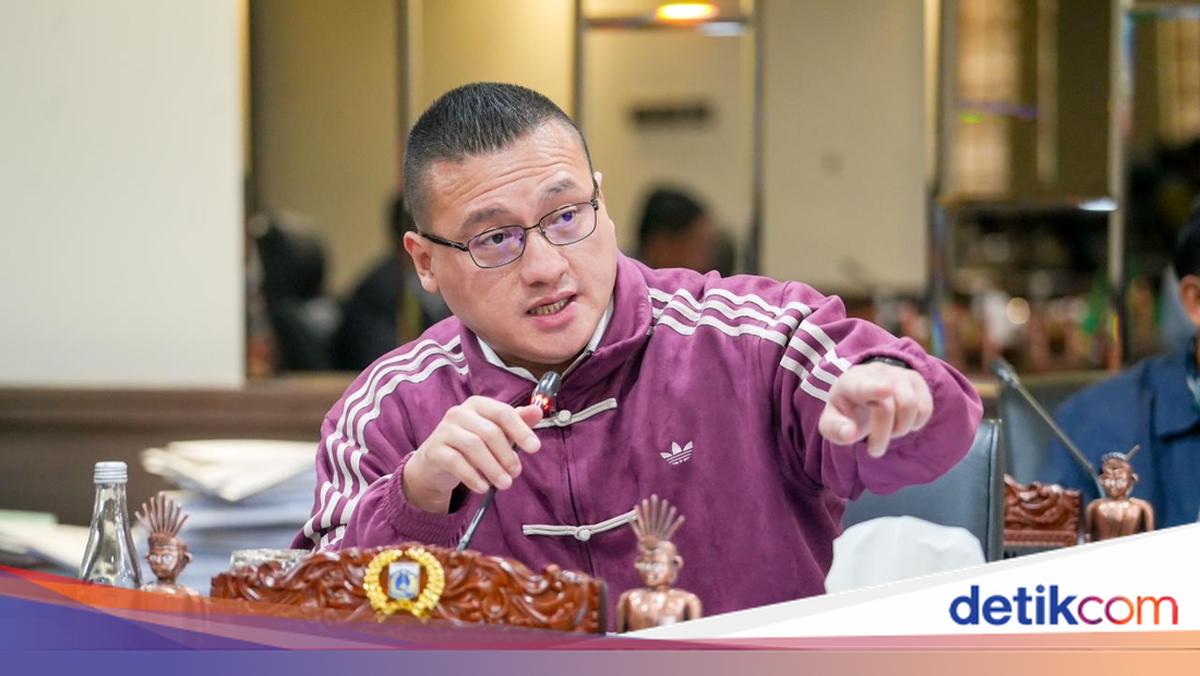
He stated that the garbage problem in Jakarta is no longer just a matter of urban cleanliness, but has evolved into an environmental issue, public health, climate change, and concerns about the future sustainability of Jakarta and its surrounding areas.
“This is a major alarm for Jakarta. When Bantargebang is named as one of the largest contributors to methane gas in the world, we can no longer consider the garbage problem merely a matter of transportation and final disposal. This has become a very serious environmental threat, a public health threat, as well as a long-term ecological threat whose impact can be felt across generations,” said Kenneth in his statement on Saturday (16/5/2026).
The man, affectionately known as Bang Kent, explained that methane gas is one of the greenhouse gases that has a high destructive power to the atmosphere, much stronger than carbon dioxide. The accumulation of organic waste that continues to pile up for decades in Bantargebang produces large amounts of methane emissions due to the process of decomposition without optimal management. This condition is exacerbated by the high volume of Jakarta’s daily waste which reaches thousands of tons per day.
“Jakarta produces a very large amount of waste every day, while our management pattern still relies on the collect-transport-dispose system. As a result, Bantargebang has become a point of accumulation of giant waste that continues to produce methane gas. If this situation is allowed without serious policy transformation, then we are bequeathing a time bomb of environmental problems to our children and grandchildren,” said the member of Commission C of the Jakarta DPRD.
Kent believes that this issue should be a momentum for the DKI Jakarta Provincial Government to make a total change in the waste management system. So far, he said, policy focus is still too much on the downstream, while efforts to reduce waste from the source have not been running optimally.
“We cannot continue to rely on Bantargebang as the main final disposal site. Its capacity is limited, its environmental burden is very heavy, and the surrounding community has also suffered the impact for too long. It is time for Jakarta to carry out a revolution in waste management based on reducing from the source, household sorting, strengthening recycling, to utilizing modern environmentally friendly processing technology,” said the Chairman of IKAL (Ikatan Keluarga Alumni Lemhannas RI) PPRA Batch LXII.
He also emphasized the importance of public education and changes in community behavior. According to him, the waste problem will never be resolved if it is only burdened on the government without active participation from residents.
“Community awareness is an important factor. We must start building a culture of sorting waste from home, reducing the use of single-use plastics, strengthening the circular economy, and making waste management a collective movement of city residents. If community consumption patterns do not change, then the volume of waste will continue to increase and Bantargebang will be increasingly burdened,” he said.
In addition, Kent asked the DKI Provincial Government to accelerate the development of modern waste processing facilities such as Refuse Derived Fuel (RDF), waste to energy, large-scale composting, and optimization of methane gas capture to be converted into energy. According to him, a technological approach must go hand in hand with strengthening environmental regulations and supervision.
“We must be brave to invest in more modern and sustainable waste processing technology. Many countries have turned waste into a source of energy and a new economic source, such as Sweden, Singapore, Japan and China. They utilize sophisticated incinerator technology to convert waste into electricity. Jakarta should also move in that direction. One of them is the methane gas capture scenario, so that it is not just left to be released into the air and can actually worsen global warming,” he said.
Kent also highlighted the social impact that has been felt by the community around Bantargebang, ranging from air pollution, pungent odors, health problems, to a decline in environmental quality. Therefore, according to him, the government has a moral responsibility to ensure that residents around them receive adequate protection and attention.
“Residents around Bantargebang have long been burdened with Jakarta’s waste. Therefore, the state and local governments must be present to ensure that their health is maintained, their environment is improved, and their welfare is increased. There should not be an ecological imbalance where one area bears the impact for the convenience of another area,” he stressed.
He added that the issue of methane emissions from the waste sector is also directly related to DKI Jakarta’s commitment to reducing greenhouse gas emissions and facing the global climate crisis. Therefore, handling Bantargebang should be included in the priority agenda of sustainable development.
“This issue is not just an issue for Jakarta or Bekasi, but has become part of the global challenge of dealing with climate change. Therefore, its management must be serious, measurable, and involve cross-sectoral collaboration, starting from the central government, local governments, the legislature, business, academia, to civil society,” he said.
In addition, Kent asked all parties not to blame each other and start focusing on building concrete long-term solutions. According to him, if major steps are not taken immediately, then the waste crisis and the threat of methane emissions will become a problem that is much more difficult to control in the future.
“This is not the time to pass the buck. What is needed now is the courage to take big and consistent steps. DKI Jakarta must be able to be an example of a modern city that is not only advanced economically, but also responsible for the environment and the future of this earth,” he concluded.