
Jakarta Council Stresses Importance of Updating Regional Tax Data
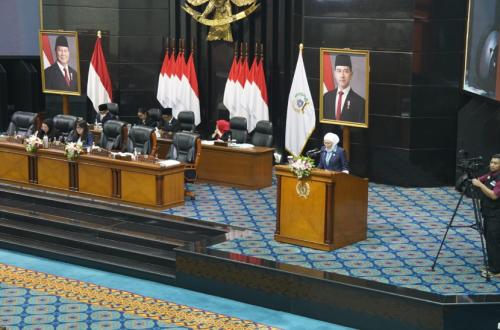
The strengthening of regional tax data governance has become a key focus in the deliberation of the Draft Regional Regulation (Raperda) on the Amendment to Regional Regulation Number 1 of 2024 concerning Regional Taxes and Regional Levies. Refining the database is considered essential to support the optimisation of regional revenue while improving the quality of tax management.
Deputy Chair of the Democratic Party-Perindo Faction in the DKI Jakarta Provincial DPRD, Desie Christyanasari, stated that the amendment to the regulation is technical in nature. However, she noted that every regulatory adjustment must be accompanied by strengthened governance to ensure more effective implementation. “Every change must still be viewed in terms of its impact on overall regional tax management,” Desie said during the faction’s general remarks on the Raperda, Tuesday (14/7/2026).
One concern of the Democratic-Perindo Faction relates to the management of advertisement tax data. She cited findings from the Audit Board of Indonesia (BPK) regarding advertisement tax receivables from three taxpayers amounting to Rp298.91 million, most of which has been settled, but the updates have not been fully reflected in the DKI Jakarta Regional Revenue Agency (Bapenda) system. According to Desie, this value is relatively small compared to the total potential regional revenue. However, the finding serves as input to continue strengthening the process of data updating and receivable reconciliation.
“These findings indicate that data updating and receivable reconciliation are still not running optimally. As a result, tax data does not yet fully reflect the actual conditions,” Desie said. She added that similar attention is also needed in the management of Rural and Urban Land and Building Tax (PBB-P2) and Motor Vehicle Tax (PKB). According to her, an accurate database will support the formulation of more precise regional fiscal policies.
Furthermore, the Democratic-Perindo Faction requested an explanation regarding the readiness of the DKI Jakarta Provincial Government in verifying the potential revenue from Motor Vehicle Fuel Tax (PBBKB). “The DKI Jakarta Provincial Government needs to strengthen the quality of tax data, accelerate the completion of Advertisement Tax receivable reconciliation in accordance with BPK recommendations, and build a more reliable verification system for PBBKB revenue potential,” Desie said.
On the same occasion, the Democratic-Perindo Faction also expressed its support for the policy of exempting the Specific Goods and Services Tax (PBJT) on electricity for houses of worship, nursing homes, orphanages, and similar social institutions. However, Desie noted that this provision is already regulated in Government Regulation Number 4 of 2023, so national regulatory developments must continue to be anticipated in the formulation of regional policies. “National regulatory developments must be monitored and accommodated more quickly so as not to create legal uncertainty,” Desie said.
The Democratic-Perindo Faction also paid attention to the change in the tariff formula for the Building Construction Approval Retribution (PBG), which refers to Government Regulation Number 16 of 2021. According to Desie, regulatory harmonisation must continue to be strengthened so that the public and business actors obtain certainty in the licensing process. Additionally, the faction requested the DKI Jakarta Provincial Government to provide an overview of the fiscal impact of the policy exempting state educational units from waste management service levies. Desie stated that every incentive or tax and levy exemption policy must be accompanied by an impact assessment to ensure the quality of public services is maintained.