
Jakarta Council Special Committee Studies 'Jumbo Biopori' Construction in Response to Kali Gendong Waste Crisis
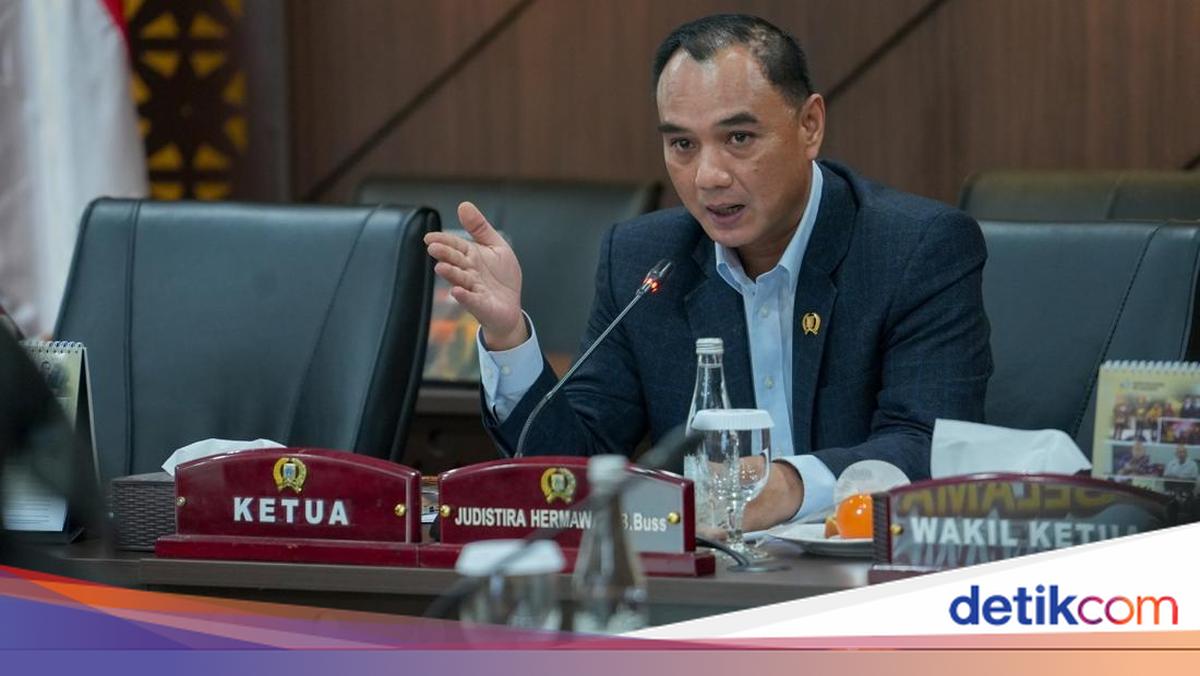
Jakarta Governor Pramono Anung has revealed that one of the causes of the rubbish pile-up in Kali Gendong, Penjaringan, North Jakarta, was the closure of the Bantargebang Integrated Waste Treatment Plant (TPST). In response, the Jakarta DPRD’s Special Committee (Pansus) on Waste Management will maximise the construction of jumbo biopori absorption holes. Pansus Waste Management Chairman Judistira Hermawan initially stated that the Bantargebang TPST is currently overloaded. To minimise waste accumulating in waterways and on roads, he requested that relevant regional work units (SKPD) and the Environmental Agency (DLH) utilise existing Temporary Disposal Sites (TPS). “Regarding the waste pile-up in Kali Gedong, North Jakarta, I will immediately coordinate with the SKPDs, the Environmental Agency, the Water Resources Agency (SDA), and the North Jakarta Mayor so this is handled promptly. In a situation like this, we will ask the relevant ranks to guard the waterways or reservoirs, and I think all regions should also ensure waste does not fill up the roads,” Judistira told reporters on Monday. He mentioned the construction of Waste-to-Energy (PSEL) plants in Jakarta, which will take two to three years. During that period, his team will maximise TPS facilities and study the construction of jumbo biopori to handle the capital’s waste. “Jakarta is planned to build three or four waste management facilities that generate electricity, known as PSEL. The Governor has conveyed that, but until all of them are built, which will take roughly two to three years, the Pansus on Waste Management will ensure, together with the Environmental Agency, that waste management facilities in Jakarta are maximised. We have 31 Reduce-Reuse-Recycle TPS (TPS 3R) across Jakarta, in addition to depots owned by the Environmental Agency, and we also have the RDF plant in Rorotan and the RDF plant in Bantargebang,” he said. “All of these must function optimally, and the Pansus is currently studying the possibility of constructing Jumbo Biopori in various areas of Jakarta, whether in parks or on assets of regionally owned enterprises (BUMD). This is being studied, and of course, once again, all of this requires broad support from the entire community through the movement to sort waste at its source,” he added. Previously, Kali Gendong in Penjaringan, North Jakarta, went viral on social media after appearing to be filled with piles of rubbish. In the viral video, several residents were seen littering carelessly. Governor Pramono Anung addressed the issue, stating that the waste pile-up in the area was partly caused by the closure of the Bantargebang TPST. “Indeed, because Bantargebang recently had a problem, waste piles occurred in several places,” Pramono told reporters. Nevertheless, Pramono said the issue has begun to be handled and the pile-up has visibly decreased. “But alhamdulillah, the handling has now been overcome in almost all areas where accumulation occurred, and it is gradually declining,” he explained. Pramono noted that Jakarta sends waste using 1,200 trucks daily, or approximately 9,000 tonnes. Currently, the number is not yet 1,200 but nearly 1,000 waste shipments per day. “And waste sorting significantly reduces the amount of waste that must be transported to Bantargebang. As is known, we are targeting that by 1 August, only residual waste will be sent to Bantargebang,” he said.