
Jakarta Council Special Committee Issues Four Recommendations to Address 9,000 Tonnes of Daily Waste
Jakarta (ANTARA) – The Jakarta Provincial Council’s Special Committee on Waste Management has presented four recommendations to the Jakarta provincial government to improve the city’s waste management, as it generates around 9,000 tonnes of waste each day.
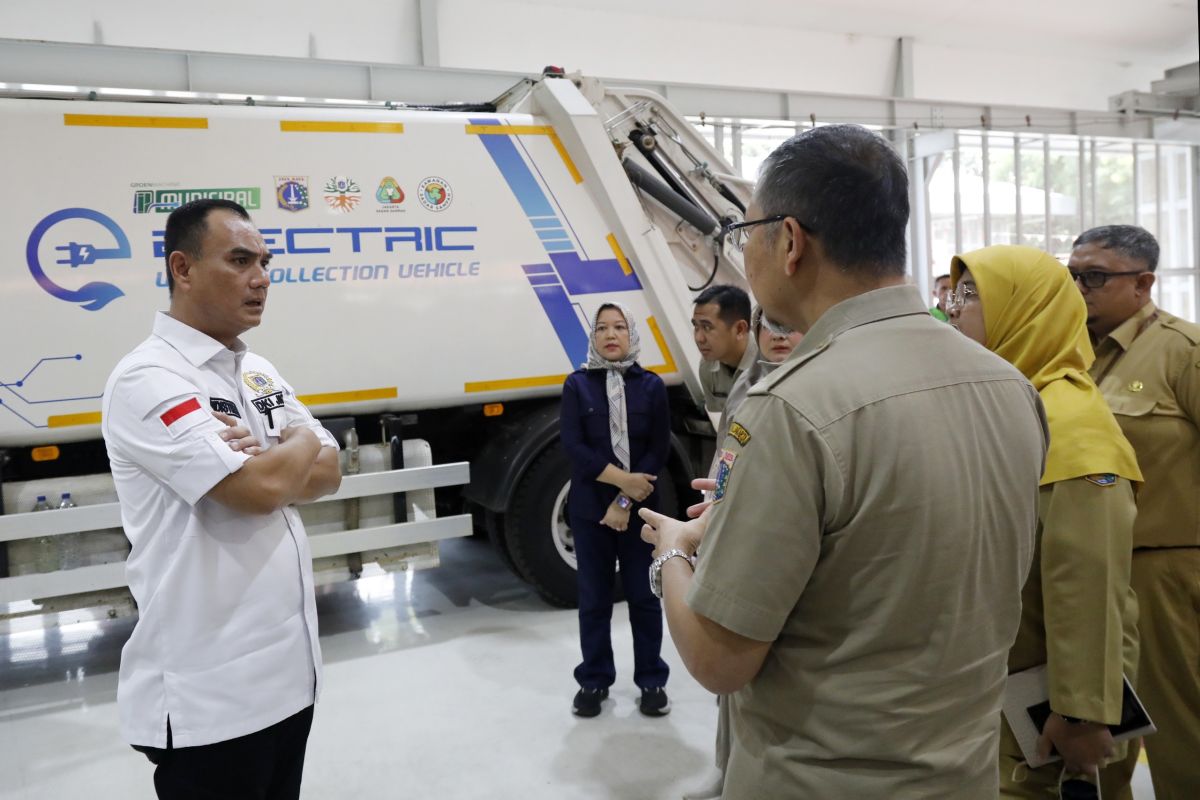
“The recommendations cover public involvement, optimisation of processing technology, renewal of collection vehicles and regulatory improvements,” said Judistira Hermawan, head of the special committee, at a Jakarta Council plenary session on Tuesday.
Judistira said the provincial government was expected to follow up on the committee’s findings to address Jakarta’s daily waste problem, which involves around 9,000 tonnes.
He said the four recommendation clusters were drawn up to promote more comprehensive and sustainable waste management.
“There are four recommendation clusters: first, public involvement; second, technology; third, vehicles for the Environmental Agency; and fourth, regulation,” he said.
In his view, waste cannot be managed adequately through collection and disposal alone. The provincial government needs to strengthen waste reduction at source, ensure processing facilities operate effectively, improve oversight and speed up the provision of necessary infrastructure.
This includes sorting and reducing waste at source, optimising collection and processing facilities, and strengthening supervision.
The special committee also highlighted the need for clear routes for waste sent to various processing facilities. Technology that has already been built, Judistira said, must be integrated into a management system capable of handling waste from households as well as commercial areas.
Key sources of waste in commercial areas include shopping centres, offices, and the hotel, restaurant and café (Horeka) sector.
He said clear waste routes were important to ensure that waste generated in each area could be traced to the facility where it was processed.
Judistira said mapping waste by source, type and processing location was necessary to ensure that all waste generated in Jakarta could be managed in a measurable way.
The special committee called on the provincial government to provide budget support for priority waste management programmes through the 2027 Draft Regional Budget (RAPBD).
The support should also be accompanied by follow-up on administrative sanctions based on compliance with Norms, Standards, Procedures and Criteria (NSPK), as well as the findings of inspections by the Ministry of Environment/Environmental Control Agency (BPLH) of the Republic of Indonesia.
The committee also urged the provincial government to crack down on illegal waste disposal sites and tighten oversight of waste management in commercial areas, including operations run by private companies.
“We emphasise the need to close down illegal disposal sites and supervise waste managers in commercial areas, including private operators, to protect the environment and the public,” he said.
Source: jawawa.id (https://jawawa.id/newsitem/jakarta-council-special-committee-issues-four-recommendations-to-address-9-000-tonnes-of-daily-waste-1791903215)
Originally published by Antara (Indonesian) (https://www.antaranews.com/berita/5784269/pansus-dprd-beri-empat-rekomendasi-tangani-9000-ton-sampah-di-jakarta), translated from Indonesian