
Jakarta Council Intensifies Education on Waste Segregation at Source
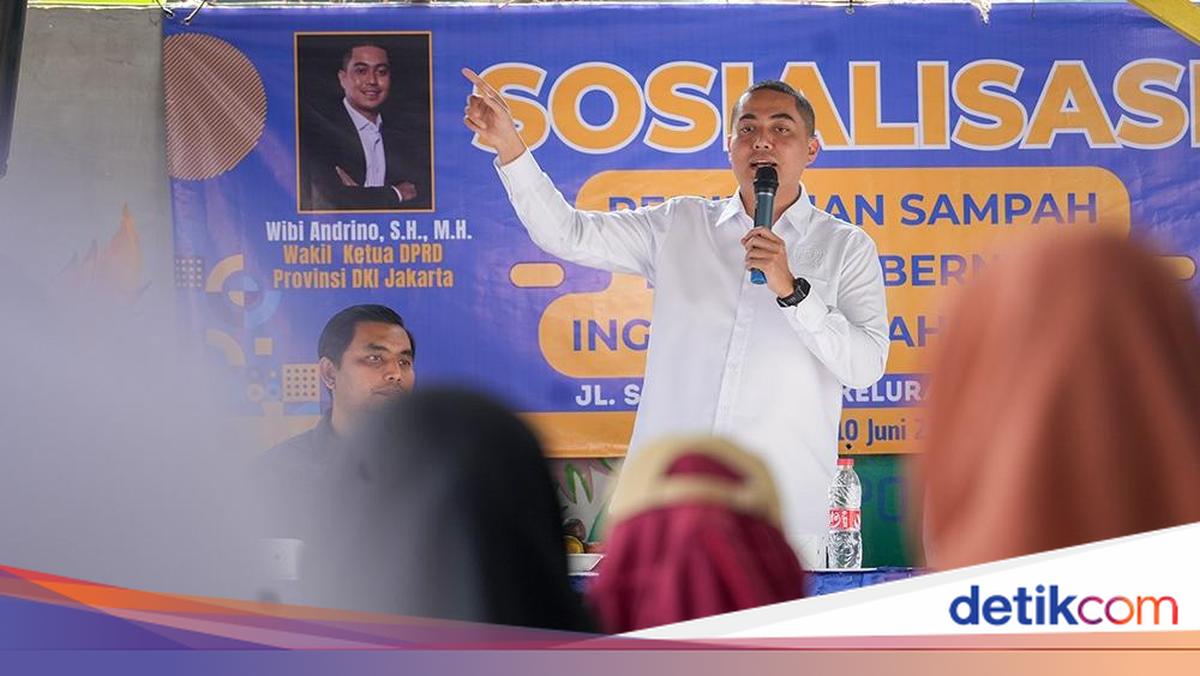
The Jakarta Regional People’s Representative Council (DPRD) is socialising the waste segregation movement to the public as part of a joint effort to address the capital’s waste problem. The DPRD fully supports the policy launched by the Jakarta Provincial Government through a governor’s regulation on source-based waste management.
By getting into the habit of sorting waste from home, the volume of waste ending up in disposal sites can be reduced. Furthermore, this practice also increases the effectiveness of waste management to realise a cleaner, healthier and more sustainable Jakarta.
Vice Chairman of the Jakarta DPRD, Wibi Andrino, said RW 12 Cawang, Kramat Jati, East Jakarta, is one of the pilot areas, in accordance with Governor’s Instruction No. 5 of 2026 on Waste Segregation from the Source.
He explained the programme is a cultural change movement, as the waste problem cannot be solved by relying on the government alone. It requires public awareness and participation. “This is the spirit we must continue to maintain,” said Wibi in his statement on Thursday (11/6/2026).
He made the remark while attending an audience with residents of RW 12, Cawang, Kramat Jati, East Jakarta, on Wednesday (10/6).
To maximise independent waste segregation, Wibi will coordinate with the Jakarta Environmental Agency to assist the residents of RW 12.
According to Wibi, the meeting marked the beginning of stronger collaboration between the community and the government in creating a clean, healthy and sustainable environment. On that occasion, he also invited the younger generation to get involved in the waste segregation movement.
“Because protecting the environment is not just the task of parents or neighbourhood administrators, but the duty of all of us,” said Wibi.
Synergy between the provincial government and residents is crucial to overcoming the waste problem, as waste management by individuals or certain groups cannot be optimal. Solid cooperation is needed among community elements, the government, and the private sector.
“Ideally, the government and the private sector should support waste segregation activities like this,” Wibi stated.
He hopes the success of the independent waste segregation movement in East Jakarta can be replicated massively across all city areas.
Meanwhile, Head of the East Jakarta Environmental Sub-agency, Julius Monangta, appreciated the consistency of RW 12 Cawang residents in independently sorting waste from the source. Residents of RW 12 have successfully separated waste by type, including organic, inorganic, hazardous and toxic materials (B3), and residue. Education and socialisation for residents will continue to ensure all residents can play an active role consistently.
Julius added that this effort aligns with the regional government’s commitment to strengthening cross-sector collaboration in tackling the waste problem from upstream to downstream.