
Jakarta Continues to Raise Child Immunisation Coverage Towards 90%
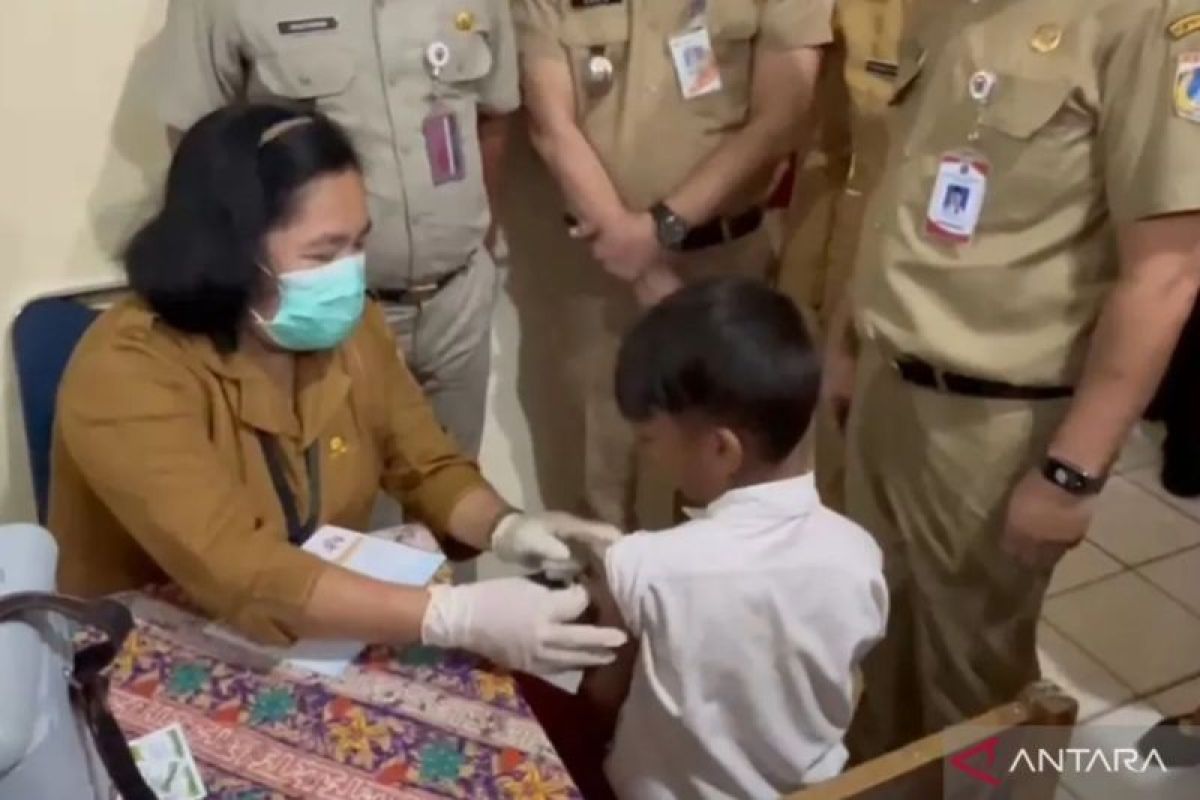
Jakarta (ANTARA) - The Jakarta Provincial Government is continuing efforts to increase child immunisation coverage through the School Children’s Immunisation Month (BIAS) programme, with the aim of reaching 90%.
Sri Puji Wahyuni, head of the Disease Prevention and Control Division at the Jakarta Health Agency, said that according to BIAS immunisation data for August 2026, measles-rubella (MR) vaccine coverage to prevent measles and rubella among Year 1 primary school pupils stood at 88.98%, while coverage of the human papillomavirus (HPV) vaccine to prevent cervical cancer was 89.02%.
“MR (Year 1 primary school) [was given to] 124,035 children (88.98%), and HPV (Year 5 primary school) to 59,230 children (89.02%). With a coverage target of 90%, both types of immunisation still need to be increased,” Sri said in a telephone interview in Jakarta on Monday.
Sri said that, as a follow-up, the Jakarta Health Agency had instructed district and municipal health offices to share coverage data down to the smallest administrative units in their respective areas, so that children who had not been immunised could be identified.
“Healthcare facilities in the network are also expected to support BIAS and disseminate information to the public, particularly parents, to increase participation in immunisation,” she said.
Sri added that coverage figures for diphtheria-tetanus (DT) and tetanus-diphtheria (Td) immunisations were not yet available, as they are scheduled to be administered in November 2026.
Separately, paediatrician dr Tuty Herawati, Sp.A(K), of the Indonesian Paediatric Society’s Jakarta branch, said the organisation was supporting and taking part in BIAS by providing professional guidance.
She also stressed the importance of co-ordination between teachers and parents to ensure the programme achieves optimal coverage in schools.
“Teachers play a role in the BIAS process. Teachers and the school health unit team collect data, accompany children when they receive vaccines and monitor the procedure. The regional government also ensures that the BIAS programme is carried out,” she said.