
Jakarta Composite Index Slumps 3% This Afternoon as Analysts Explain the Reasons
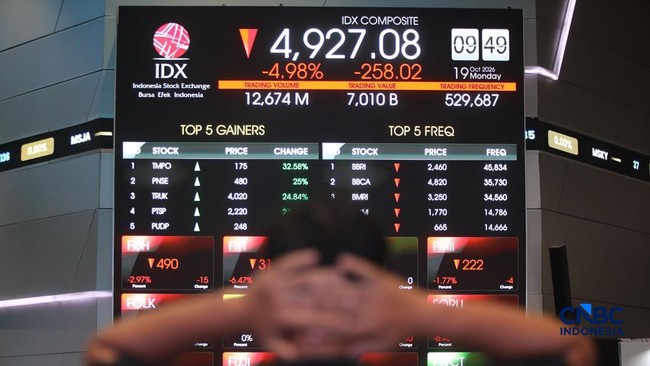
Jakarta, CNBC Indonesia — The Jakarta Composite Index (IHSG) fell further in the second trading session on Tuesday (27 October 2026), declining by as much as 3% shortly before the close. Analysts outlined several factors behind the move.
At 3pm Western Indonesian Time (WIB), the IHSG stood at 5,211.28, down 161.81 points, or 3.01%, according to trading data.
The sharp decline began at around 2pm, when the index dropped from the 5,350 area to below 5,225 within an hour. It touched an intraday low of 5,210.29, while a brief rebound to around 5,275–5,300 was not strong enough to stem the selling pressure.
Trading volume reached 248.57 million lots, with transactions valued at Rp10,083.1 billion, or around Rp10.08 trillion. Refinitiv data showed that infrastructure was the main source of pressure on the IHSG, plunging 6%, followed by basic materials, down 3.5%, and technology, which fell 2.9%.
A senior market analyst at Mirae Asset Sekuritas Indonesia said the pressure on the IHSG should be viewed in light of a combination of global sentiment, foreign fund flows and investors’ rising perception of risk in the domestic capital market. Aggressive selling by foreign investors can intensify pressure on large-cap shares and drag down the index as a whole.
Uncertainty surrounding MSCI’s review of Indonesia’s equity-market classification, as well as efforts to improve transparency and governance in the capital market, could also prompt investors to adopt a wait-and-see stance. A weaker rupiah and uncertainty in global markets add to the pressure, particularly when investors are inclined to reduce their exposure to riskier assets.
The IHSG’s fall of around 3% may also have been amplified by technical factors, including profit-taking, a break below support levels and stop-loss mechanisms triggering further selling. To determine which sentiment was the dominant force in the day’s trading, however, it is necessary to monitor large-cap share movements, the breadth of losses across sectors, transaction data and foreign investors’ net selling.
“Therefore, the IHSG’s decline does not necessarily reflect a deterioration in the fundamentals of all listed companies; it may also indicate a high risk premium and weakening investor confidence in the domestic capital market,” Nafan told CNBC Indonesia.
Research from Indo Premier Sekuritas (IPOT) also said investors were responding to a rise in the yield on 10-year government bonds to 7.52%, its highest level since November 2022. Meanwhile, the rupiah weakened to within about 0.2% of its record low.
According to IPOT’s research, pressure on domestic assets was driven by rising oil prices, which could increase the energy subsidy burden and fiscal pressures. Investor sentiment was also weighed down by concerns that MSCI could downgrade Indonesia’s equity market to Standalone Market status.
“Amid these conditions, foreign investors continued to record net purchases of government bonds totalling US$509 million during October. Negative sentiment nevertheless continued to weigh on the stock market, with the IHSG responding by falling more than 2% in today’s trading,” the firm said in a statement on its official channel.