
Jakarta Composite Index Plunges as Capital Market Reforms Are Put to the Test
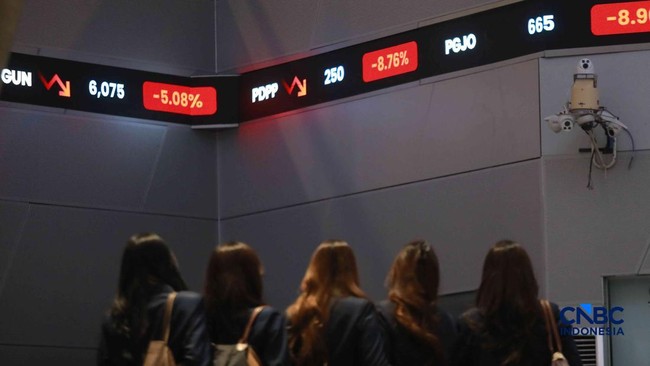
The Jakarta Composite Index’s (JCI) decline in mid-October 2026 was more than bad news for investors. Behind the market turmoil lies a more fundamental issue: the credibility of Indonesia’s capital market governance and the capacity of its authorities are being put to the test.
On Friday, 16 October 2026, the JCI plunged 11.6%. Pressure continued on Monday, 19 October, when the index fell by more than 5%, reaching its lowest level in six years. The turmoil followed MSCI, a global market index provider, opening a review of a proposal to reclassify Indonesia’s stock market from emerging market to standalone market.
The proposal is not yet a final decision. MSCI has opened a review period until 30 April 2027 and said the final decision will be announced by 30 June 2027 at the latest. Even so, the move signals that international market participants consider Indonesia’s capital market governance issues serious.
More Than a Market Correction
The JCI’s decline cannot be explained by a single factor. Share prices are shaped by many influences, from economic conditions and investor expectations to global capital flows. It is therefore inaccurate to treat MSCI’s announcement as the sole cause of the market turmoil. Nevertheless, the timing of the announcement and the scale of the subsequent pressure suggest that the classification issue was an important trigger.
MSCI highlighted issues that touch on the foundations of the capital market: unclear share ownership structures, alleged coordinated trading, and an apparent lack of evidence of adequate and consistent enforcement. These problems affect investors’ ability to assess the shares genuinely available for trading (free float) and to rely on market prices as a basis for investment decisions.
For institutional investors, transparency is not merely an administrative extra. Credible ownership information helps them measure risk, assess liquidity and ensure that share prices reflect an orderly trading process. When the quality of information is in doubt, investors face greater uncertainty in making decisions.
The impact could extend beyond the stock market. Reuters reported that Goldman Sachs estimated potential passive fund outflows of around US$5.6 billion if the reclassification is implemented.
The issue, therefore, is not simply how to restore the index in the short term. More important is how to ensure that the capital market has trustworthy governance and can support economic financing sustainably.
The Challenge of Policy Implementation
The government and capital market authorities have announced several reform measures, including: 1) greater disclosure of information about shareholders with holdings above 1%; 2) more detailed investor classifications; 3) reporting on High Shareholding Concentration (HSC); and 4) a roadmap to raise the minimum free-float threshold to 15%.
However, MSCI considers that these policy announcements have not yet been followed by consistent evidence of material improvement in the market. Concerns over ownership transparency and alleged coordinated trading persist.
This is where the public policy challenge arises. Announcing regulations is one step; ensuring they are implemented, violations are addressed and results can be measured is another. Policy quality cannot be judged solely by the completeness of regulations, but also by institutions’ capacity to apply them consistently.
Effective reform requires at least three things. First, transparent data that enable investors to assess ownership structures and free float more accurately. Second, credible enforcement, including follow-up on suspected manipulation and coordinated trading based on sufficient evidence. Third, clear coordination between institutions, so regulatory changes are not applied piecemeal and information standards remain consistent.
Accountability as a Measure of Reform
This issue is also one of policy accountability. Capital market reform should not be judged solely by compliance with international standards, but also by its ability to protect investors and ensure transparent price formation.
The government needs to distinguish between success in announcing policies and success in delivering change. The public should be told the reform targets, implementation deadlines, responsible institutions and indicators for measuring outcomes. This approach would allow more objective evaluation and help prevent reforms from becoming merely a short-term response to market pressure.
Accountability also requires consistency. Enforcement must not intensify only when markets are volatile, then weaken as public attention fades. Institutional credibility is built through measurable and sustained results, not simply commitments made when pressure mounts.
Seen in this light, MSCI’s announcement should not be viewed solely as a threat to Indonesia’s status in global indices. The process can be an opportunity to assess whether policy design, supervisory capacity and enforcement mechanisms are working as they should.
Restoring Confidence, Not Just the Index
The Financial Services Authority (OJK) has pledged to continue and strengthen capital market reforms following MSCI’s announcement. That commitment matters, but success should not be measured by how quickly a statement is issued or how quickly the JCI rises again.
An index recovery can be driven by sentiment and rapidly changing market conditions. Better governance, by contrast, requires consistent institutional performance: transparent data, effective supervision, credible enforcement and open policy evaluation.
MSCI’s consultation period, which runs until April 2027, gives Indonesian authorities time to demonstrate verifiable progress before a final decision is made. This opportunity should be used to improve market quality, rather than merely respond to temporary pressure.
A healthy capital market is not defined only by the size of its capitalisation or the level of its share index. It requires clear rules, trustworthy information and institutions capable of enforcing rules consistently. The JCI may recover, but the real challenge is to ensure that confidence in Indonesia’s capital market rests on a strong and sustainable foundation.
Source: jawawa.id (https://jawawa.id/newsitem/jakarta-composite-index-plunges-as-capital-market-reforms-are-put-to-the-test-1792407030)
Originally published by CNBC Indonesia (https://www.cnbcindonesia.com/opini/20261019163026-14-777566/ihsg-terjun-bebas-reformasi-pasar-modal-diuji), translated from Indonesian