
Jakarta Broadcasting Regulator Tightens Content Oversight Amid Social Resilience Concerns
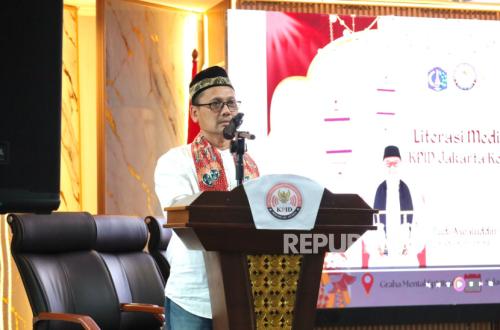
The Regional Indonesian Broadcasting Commission (KPID) of DKI Jakarta has expressed concern over a number of recent incidents in the capital. These include the uncovering of a same-sex party in the Rasuna Said area of Kuningan, a similar case in Kelapa Gading involving hundreds of participants, and an alleged same-sex indecency case within the prestigious University of Indonesia (UI) environment in mid-2026. These events serve as a reminder that challenges to the nation’s social, moral, and cultural resilience are increasingly complex, requiring shared attention and responsibility from all elements of society, including broadcasting institutions as pillars of the public sphere.
As a state body granted authority under Law Number 32 of 2002 on Broadcasting, KPID DKI Jakarta stressed that broadcasting functions not only as a medium for information and entertainment but also as an instrument for education, character building, cultural preservation, and strengthening national identity. Consequently, every broadcasting institution bears a constitutional responsibility to present content that respects religious norms, decency, national culture, and the provisions set out in the Broadcasting Code of Conduct and Programme Standards (P3SPS). The airwaves must not be exploited to normalise, promote, or glorify behaviour that contradicts the law, religious values, morals, or the culture of Indonesian society.
This commitment aligns with the national policy direction stipulated in Presidential Regulation Number 111 of 2025 concerning the General Policy for State Defence 2025–2029, which positions the strengthening of cultural and social resilience as a vital component in safeguarding national integrity. In this context, broadcasting holds a strategic position as an instrument capable of building public awareness through the presentation of healthy, educational, and responsible information.
Chairman of KPID DKI Jakarta, Ahmad Sulhy, asserted that broadcast frequencies are a public asset that must be utilised to the greatest extent for the public interest. He stated that the rise in cases of social deviance in Jakarta should serve as a moment of collective reflection. According to him, broadcasting institutions have a moral and constitutional responsibility not to air programmes that could normalise or promote behaviour contrary to religious norms, decency, national culture, or the P3SPS regulations. “Frequencies are a public asset that must be used for education, character building, and strengthening the nation’s cultural resilience,” Ahmad emphasised.
As a follow-up to this commitment, KPID DKI Jakarta will continue to strengthen its oversight function through several strategic measures. These include tightening monitoring of television and radio programmes with the potential to violate the P3SPS, increasing guidance for broadcasting institutions to produce educational and high-quality content that respects religious and national values, and enforcing legal provisions by imposing administrative sanctions for any violations in accordance with Law Number 32 of 2002 on Broadcasting and the P3SPS. The commission will also expand media literacy programmes to enhance the public’s ability to select, filter, and critically respond to various broadcast content.
KPID DKI Jakarta invites all broadcasting institutions to jointly maintain the public broadcasting sphere, ensuring it remains a healthy, high-quality medium that advances the intellectual life of the nation and strengthens the character of Indonesian society. Amidst the rapid flow of information and digital disruption, broadcasting must serve as a bastion of cultural and social resilience, presenting positive values for community life. KPID DKI Jakarta will continue to carry out its oversight function professionally, independently, and based on the law to realise a healthy and high-quality broadcasting ecosystem that serves the public interest.