
Jakarta Begins Phasing Out Open Dumping, Encourages Waste Segregation at Home
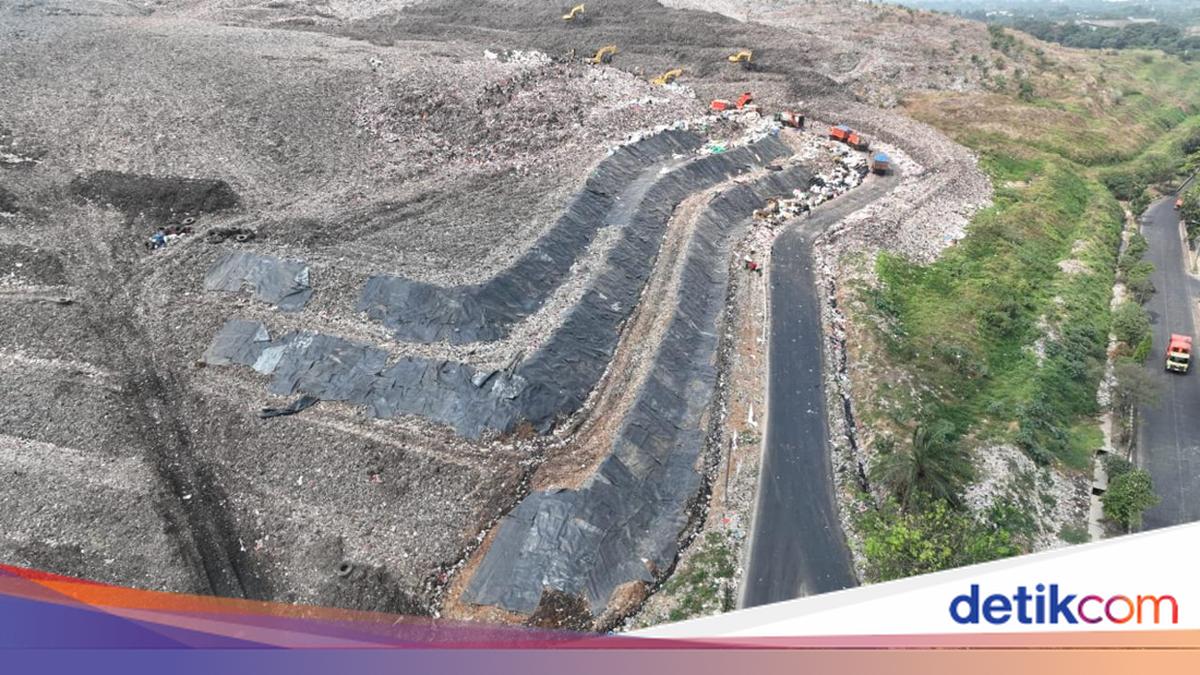
The DKI Jakarta Provincial Government is changing its waste management approach at the Bantargebang Integrated Waste Processing Site (TPST). The open dumping system, which relies on piling waste in the open, will be phased out gradually and replaced with a controlled landfill system starting 1 August 2026.
The change is part of the 100 Percent Managed Waste Roadmap for Jakarta, developed in collaboration with the Ministry of Environment. The provincial government aims to completely stop open dumping practices by 2028.
Head of the DKI Jakarta Environmental Agency, Dudi Gardesi, stated that the transition is being carried out in stages to avoid disrupting waste transportation from Jakarta to Bantargebang.
“Starting 1 August, we are beginning a gradual transition from open dumping practices to controlled landfill management. The government is responsible for ensuring this change proceeds smoothly, without reducing waste management services to the public,” Dudi said in Jakarta on Friday (17/7/2026).
In an open dumping system, waste is piled in open areas without adequate treatment. In contrast, a controlled landfill involves placing and compacting waste in a more organised manner, then covering it periodically with specific materials. The covering aims to reduce odour, fire risk, pollution, and the potential for landslides in the disposal area.
Based on the provincial government’s roadmap, 72.59 percent of waste entering Bantargebang in the second quarter of 2026 was still handled through open dumping. Only 7.59 percent of waste was processed through various facilities.
In the third and fourth quarters of 2026, the proportion of open dumping is targeted to decrease to 50.34 percent. The implementation of controlled landfill is targeted to reach 8.39 percent, while waste processed through various facilities is expected to increase to 20.28 percent.
“We will continue to gradually increase the capacity of processing facilities. By 2027, the portion of waste processed is targeted to reach 45.65 percent,” Dudi said.
By 2028, open dumping practices are targeted to cease completely. Waste that cannot be processed will be handled using a safer and more controlled landfill system.
The provincial government is also improving facilities at TPST Bantargebang. Improvements include covering parts of the disposal area with geomembrane, upgrading sanitation, developing a leachate treatment plant, and improving slope stability. Mitigation has also been strengthened in areas prone to landslides, and the cessation of open dumping is being implemented gradually at several disposal points.
However, improvements at Bantargebang will not be sufficient if all waste from households, markets, offices, and commercial areas continues to be sent in mixed condition. Therefore, the provincial government is encouraging waste segregation and processing at the source through DKI Jakarta Governor’s Instruction Number 5 of 2026.
Organic waste can be processed into compost or other products. Inorganic waste that still holds value can be recycled or channelled through waste banks. Residual waste is then sent to processing facilities or final disposal.
“The government continues to improve facilities and systems downstream. However, success also requires public participation from upstream,” Dudi said.
He urged residents to start reducing the use of single-use items, finish their food, and separate waste by type.
“Simple steps like reducing single-use items, finishing your food, sorting waste, and processing organic waste will greatly help reduce the burden on Bantargebang,” he said.
Waste segregation from the source is already being implemented in several areas. One example is in RT 09/RW 07, Grogol Utara Urban Village, Kebayoran Lama District, South Jakarta. Residents separate waste into three categories: organic, inorganic, and residue. Organic waste such as leaves is shredded before being placed in biopore holes and composters.
Grogol Utara Urban Village Head Syopwani said the waste management practice is an implementation of Governor’s Instruction Number 5 of 2026.
“Waste management here is very good. Even though it is a residential area, public awareness of environmental cleanliness is very high,” Syopwani said.
Processed organic waste produces liquid fertiliser for residents’ plants. Food scraps are crushed and used as feed for catfish in biofloc ponds.
Arifin, manager of the Senayan Residence Farmers’ Group, said residents use EM4 activator to help accelerate the decomposition of organic waste.
“The liquid fertiliser produced is used for watering plants throughout the complex, including fruit plants,” he explained.
The use of the resulting fertiliser has helped the farmers’ group harvest nearly one tonne of watermelons. The plants were cultivated without using chemical pesticides. Profits from the sale of the harvest are put into the neighbourhood fund to support future cultivation activities.
Inorganic waste management also provides income for residents. Sorted waste is collected and sold through a waste bank.
“In one month, the sale of inorganic waste can generate income of around Rp3 million to Rp4 million, which is used to support various activities in the neighbourhood,” Arifin said.
Since the segregation movement began, Grogol Utara Urban Village has built two modern composter pits, 44 jumbo biopore holes, and 59 composters. These facilities continue to be added in collaboration with residents and the South Jakarta Environmental Sub-Agency.
The practice in Grogol Utara demonstrates that waste separated from the beginning does not all have to end up in Bantargebang. Organic waste can be reused for cultivation, while inorganic waste still holds economic value. The more waste is resolved at the source, the less burden is piled and handled at the final processing site.