
Jakarta Becomes World's Most Populous City: The Impact on Bekasi and Depok
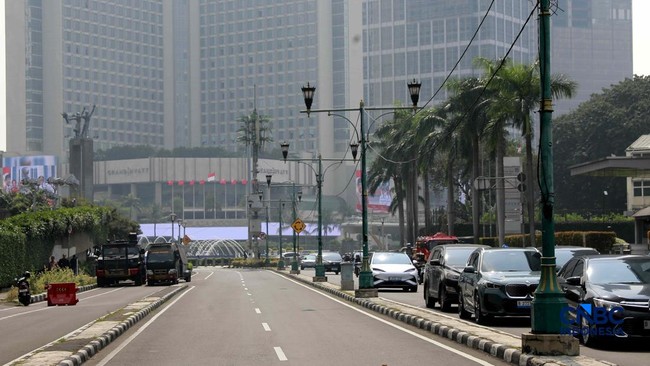
Jakarta has become the urban area with the largest population in the world. A United Nations report, the World Urbanization Prospects 2025, recorded the population of the Jakarta urban area at around 42 million people, surpassing Dhaka, Tokyo and Shanghai.
The sheer size of the population means Jakarta’s challenges are no longer confined to development within the capital’s administrative boundaries. Economic activity, housing and population mobility have spread into the Bodetabek region, meaning the future of Greater Jakarta must be viewed as a single metropolitan area.
"Jakarta has for decades grown as a primate city. A primate city is one that dominates on its own compared to the others, so the disparity and inequality with Jakarta is very wide. You don’t need to look far: just compare Jakarta and Depok. Jakarta’s regional budget is Rp80 trillion, while Depok’s is at most Rp2-3 trillion. It doesn’t even reach 10 per cent, not even 5 per cent," said Adriadi Dimastanto, Chairman of the Indonesian Association of Urban and Regional Planners, to CNBC Indonesia on Tuesday (25/8/2026).
Jakarta’s population growth also shows no sign of stopping. The UN estimates the population of the Jakarta metropolitan area could still grow by around 10 million people over the next 25 years, meaning pressure on the central area and buffer zones is likely to increase.
This burden is already visible in the development of cities around Jakarta. Residential areas are growing rapidly to accommodate workers who are active in the capital, while employment centres and high-value services remain concentrated in Jakarta.
"That’s why Bekasi, Depok, Bogor and Tangerang are now in such a chaotic state, because they are actually absorbing Jakarta’s burden. People who work here live there. Eventually these places grow into cities where, for example in Depok, you enter Margonda, then Juanda, and you keep going deeper and deeper before you finally reach home. The urban structure ends up growing in a somewhat sprawling, sporadic way," Dimas said.
This pattern means Greater Jakarta faces problems that are more complex than mere traffic congestion. When residential areas develop faster than economic centres and urban facilities, people still have to make long journeys into Jakarta every day.
For this reason, the buffer cities need to have stronger functions. Bekasi, Depok, Bogor and Tangerang cannot remain merely residential locations for Jakarta’s workers; they need to develop as centres of economic activity and services capable of reducing the flow of travel into the capital.
"So if we call Jakarta the CBD (Central Business District) centre, we need to have second CBDs. Bekasi, Depok, Bogor and Tangerang should become second CBDs. That way people don’t have to go to Jakarta every day. Hospitals, schools, all recreational services should be available in these cities," Dimas said.
These new centres must also offer competitive employment opportunities. Without jobs, the presence of hospitals, schools, recreational centres and urban facilities alone is not enough to change people’s dependence on Jakarta.
"If we can create new jobs in this outer ring, it will make residents no longer dependent on Jakarta," Dimas said.
Source: jawawa.id (https://jawawa.id/newsitem/jakarta-becomes-worlds-most-populous-city-the-impact-on-bekasi-and-depok-1787640668)
Originally published by CNBC Indonesia (https://www.cnbcindonesia.com/news/20260824184110-4-762048/jakarta-jadi-kota-terpadat-dunia-begini-dampaknya-ke-bekasi-depok), translated from Indonesian