
Jakarta balances economy and environment over 30 years
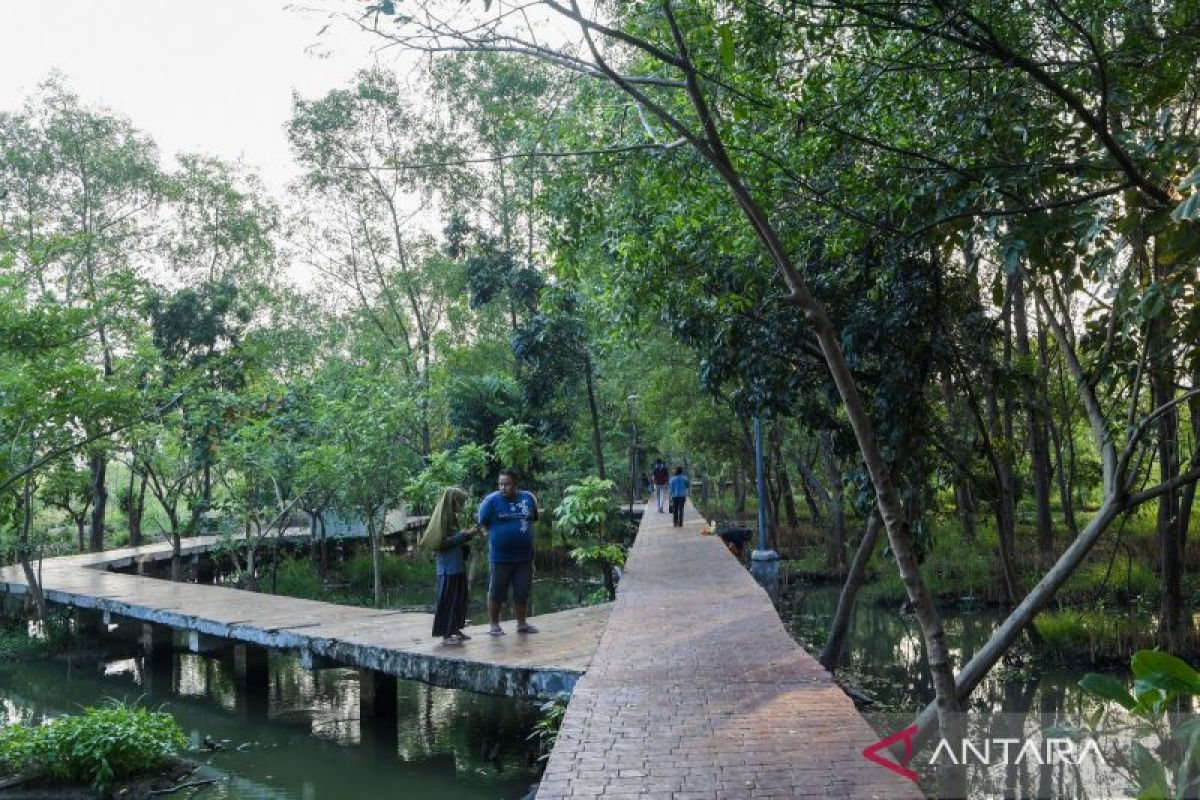
Jakarta has decided that growth can no longer proceed on its own. A plenary session of the DPRD DKI Jakarta recently agreed that the provincial government together with the DPRD would enact a Regional Regulation on the Environmental Protection and Management Plan (RPPLH), a document that will serve as the reference for the city’s development direction over the next 30 years.
The enactment is not merely a legislative ceremony. The RPPLH stems from the mandate of Law Number 32 of 2009 on Environmental Protection and Management, which requires every regional development policy and programme to take into account environmental carrying capacity and assimilative capacity from the planning stage.
With that status, the Jakarta RPPLH will automatically be integrated into regional development planning documents, from long-term plans to sectoral policies in every regional apparatus organisation.
The existence of this legal umbrella answers the challenges that major cities in Indonesia have faced so far: that development often proceeds faster than the environment’s ability to accommodate it. Jakarta, as the only city in Indonesia with global city status, faces layered pressures ranging from climate change, air and water pollution, limited natural resources, to ever-increasing demand for urban space as population and economic activity grow.
These pressures are why the RPPLH is designed as a framework that is integrated with the city’s economic strategy.
The RPPLH working pattern is designed to be linear and measurable. Every development policy that the DKI Provincial Government will implement in the future must refer to this document as the basis for environmental consideration, so that infrastructure projects, spatial planning, and investment are no longer prepared separately from studies of the region’s carrying capacity.
Consequently, development decisions that have often been evaluated only after impacts emerge are now designed to anticipate risks from the outset. This mechanism is in line with practices in various other regions that have prepared RPPLH documents, where the document functions as a preventive instrument to prevent ecological disasters such as flooding and water crises before development projects proceed.
Jakarta has chosen to place five indicators as benchmarks for the success of the RPPLH: environmental quality, waste management, emissions control, biodiversity protection, and the availability of green open space.
These five indicators will be monitored and evaluated periodically, giving Jakarta a clear measuring tool to assess the extent to which city development aligns with sustainability commitments.
Green open space is one of the indicators most easily monitored by the public because the data is open. As of April 2026, Jakarta’s green open space area was recorded at 3,703.56 hectares, or 5.59 percent of the total area, up from 3,446 hectares in 2024, while the ideal target mandated by national spatial planning regulations is 30 percent. The increase, although still far from the target, shows a positive trend that now has a stronger legal framework to be accelerated through the RPPLH.
This measurability is what distinguishes the RPPLH from previous environmental policy documents. Periodic monitoring means that achievements and shortcomings will be recorded and can be accounted for to the public, rather than merely being normative targets that are never evaluated. Jakarta thus has a basis for concretely measuring whether its economic growth truly proceeds in tandem with environmental preservation, or whether one side is left behind.
The preparation of the RPPLH also continues a long process that began with a discussion forum of the DPRD DKI Jakarta Regional Regulation Formation Agency earlier this year, and in the future will produce a number of derivative regulations, including special regulations related to climate change. This means that the enactment of the RPPLH Regional Regulation becomes the foundation for the next series of Jakarta environmental policies, not the end point of the legislative process.
The success of RPPLH implementation also depends on cross-party collaboration, from the government, DPRD, business sector, academics, to the public. This collaborative scheme is important because Jakarta’s environmental carrying capacity and assimilative capacity are influenced not only by government policy, but also by the behaviour and investment of the private sector and citizens’ participation in maintaining daily environmental quality.
The DPRD DKI Jakarta also emphasised that this regulation simultaneously strengthens the protection of the public’s right to a good and healthy environment, so that the RPPLH has a legal dimension that goes beyond the technical aspects of planning.
Jakarta’s position also places it ahead of many other regions in Indonesia. Since the Environmental Protection and Management Law was enacted in 2009, the preparation of RPPLH at the provincial and district/city levels has proceeded slowly, and only a small number of regions have succeeded in completing all stages, from academic papers, RPPLH drafts, to enactment as regional regulations. The absence of this document in many areas means that long-term and medium-term development plans are prepared without a formal basis of environmental carrying capacity, so that ecological considerations often only enter after projects are underway, rather than from the initial planning stage.
With a 30-year framework, the RPPLH places Jakarta on a development trajectory different from previous patterns, in which economic growth and environmental preservation are prepared as a single planning unit, not two separate agendas that are only brought together when problems arise.
Every sectoral policy that the DKI Provincial Government will issue in the future now has the same reference, making the RPPLH a framework of reference that will continue to be tested through real achievements on the ground over the next three decades.
Source: jawawa.id (https://jawawa.id/newsitem/jakarta-balances-economy-and-environment-over-30-years-1786765937)
Originally published by Antara (Indonesian) (https://www.antaranews.com/berita/5695669/kompas-jakarta-menyeimbangkan-ekonomi-dan-lingkungan-dalam-30-tahun), translated from Indonesian