
Jakarta air unhealthy for sensitive groups on Wednesday
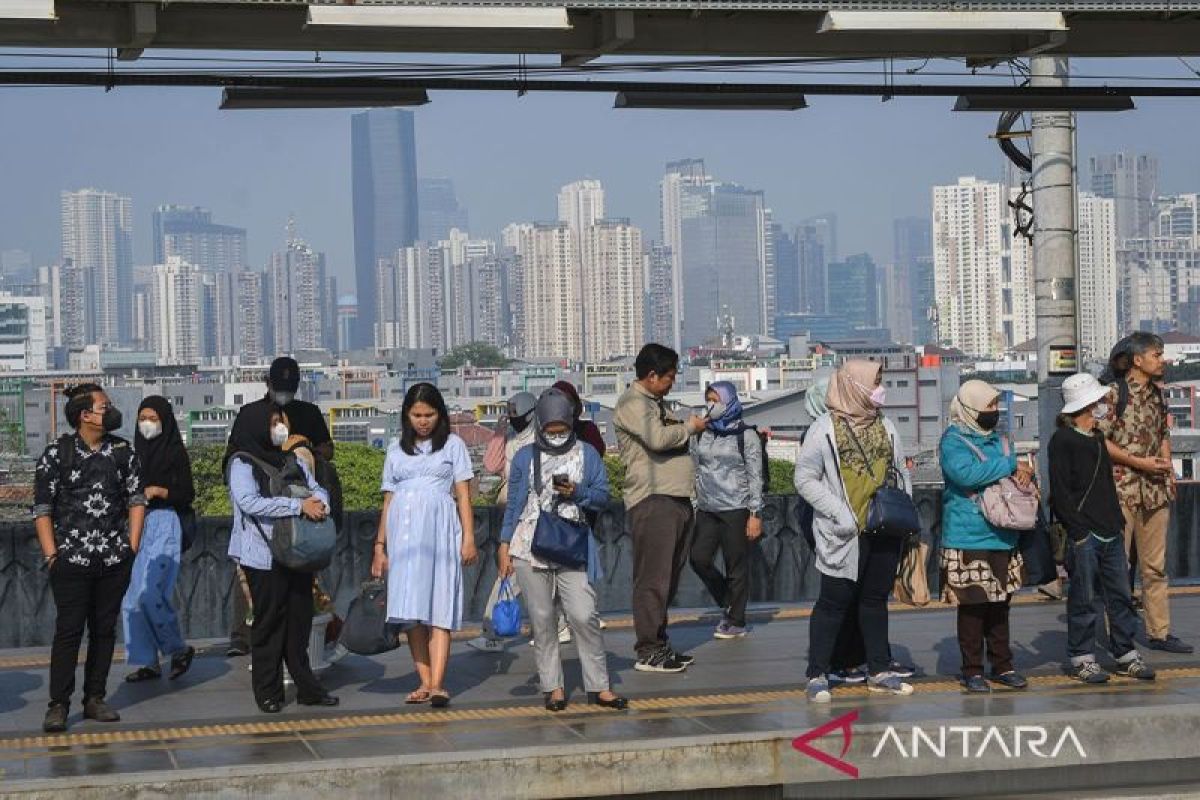
Jakarta’s air quality on Wednesday morning was unhealthy for sensitive groups, according to data from the IQAir monitoring site at 06.00 WIB. The metropolitan city’s air quality index (AQI) stood at 109, placing it in the unhealthy category for sensitive groups. Residents are advised to wear masks when engaging in outdoor activities.
The city with the worst air quality in the world was Lahore, Pakistan, with an AQI of 167, followed by Kampala, Uganda, at 161, and Kinshasa, Democratic Republic of the Congo, also at 161.
The DKI Jakarta Provincial Government has prepared three main strategies currently being implemented to improve air quality. The first is expanding the reach of Transjabodetabek bus services to reduce private vehicle use, including routes such as Blok M-Alam Sutera and Blok M-PIK 2, as well as a planned new route from Blok M to Soekarno-Hatta Airport.
DKI Jakarta Governor Pramono Anung encouraged the public to utilise the public transport services provided by the provincial government. The DKI Provincial Government has even issued regulations regarding the provision of free public transport services for 15 community groups. Currently, Jakarta’s transport connectivity has reached 92 percent, placing the city 17th globally and second in ASEAN after Singapore.
Furthermore, the transport sector currently accounts for 50 percent of exhaust emissions in Jakarta. Governor Pramono has therefore set a target of operating 10,000 electric Transjakarta buses by 2030. “If that can be done, it will significantly reduce the contribution to emissions,” Pramono said during a town hall meeting discussing pollution issues and solutions at M Bloc, Kebayoran Baru.
In addition to transport, the waste management sector is also a focus for the DKI Provincial Government, which is accelerating the construction of Intermediate Treatment Facilities (ITF) in Sunter, Rorotan, Bantargebang, and West Jakarta. The projects are targeted to commence by mid-year. “If that can be done, it will make a significant contribution to reducing or lowering the emission contribution in Jakarta,” he concluded.