
Jakarta Air Quality Among World's Worst, Pramono Highlights Coal-Fired Power Plants
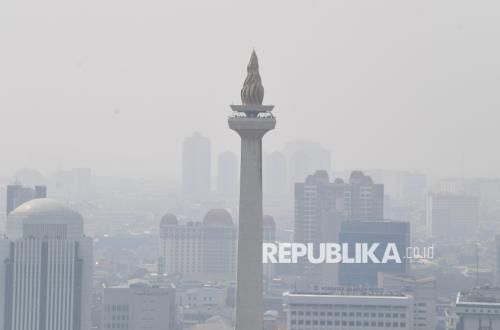
Jakarta Governor Pramono Anung has revealed that his region is one of the cities with the worst air quality in the world. He acknowledged this as one of the problems that has not yet been fully resolved.
Pramono said that the Jakarta Provincial Government has continued to prioritise the development of public transport services. The aim is to encourage more people to use public transport, so that congestion and pollution can be reduced.
“Our connectivity now stands at 93 percent, and the number of people who use public transport on a regular basis has now exceeded 31 percent, up from around 23 percent previously,” he said on Thursday (20/8/2026).
Nevertheless, the increase in public transport users in Jakarta has not been able to resolve the existing pollution problem. Jakarta remains one of the cities with the worst air quality in the world. “As you know, Jakarta was recently ranked number five, but it is indeed among the worst in the world, and I have to admit that,” Pramono said.
According to Pramono, Jakarta’s poor air quality is not solely due to inadequate public transport. He believes there are other issues preventing the pollution problem from being resolved, one of which is the presence of the coal industry.
“There are other issues, for example the burning by industries in the ring around Jakarta, one of the most well-known being Suralaya, which still uses fuel that is not environmentally friendly,” said the PDIP politician.
For this reason, the Jakarta Provincial Government will coordinate with the central government to address the problem. It is hoped that Jakarta’s air quality can thereby improve. “As Governor of Jakarta, I hope there will be coordination with the central government so that those contributing to high emissions can be regulated together,” he said.