
Jakarta Aims to Become a Hub for International Events to Boost the Economy
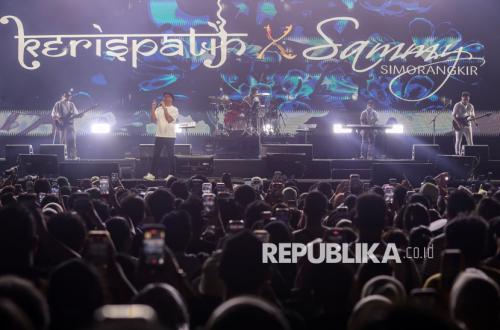
JAKARTA — The Jakarta Provincial Government wants to make the capital a hub for international events. Concerts, festivals and sporting events held in Jakarta are seen as a way to attract tourists and stimulate the city’s economy.
Jakarta Governor Pramono Anung said the impact was evident during the Pestapora music festival and The Weeknd’s concert last September. The two events reportedly generated nearly Rp250 billion in economic turnover in a single weekend.
“Last September, we held the Pestapora festival, while The Weeknd also performed for two days at Jakarta International Stadium (JIS). Together, they generated nearly Rp250 billion in economic turnover in just one weekend,” Pramono said at Hotel Indonesia Kempinski in Jakarta on Friday (23 October 2026).
Jakarta is hosting several major events again this weekend. One is the myBCA Jakarta Running Festival (JRF), which has around 37,000 participants from 48 countries. More than 1,000 of them are international runners.
The event, often dubbed the “runners’ Eid”, is taking place in the Gelora Bung Karno area. On Saturday (24 October 2026), the same area will also host an international performance by Ye, also known as Kanye West, at Gelora Bung Karno Main Stadium (SUGBK).
Jakarta is the only city in South-east Asia and Oceania included on Ye’s tour itinerary this year.
The international events calendar will continue. Guns N’ Roses are scheduled to perform in Jakarta in November, followed by BTS on 26, 27 and 29 December 2026, and Westlife in January 2027.
“Not only that, we will welcome Guns N’ Roses in November, BTS on 26, 27 and 29 December, and Westlife in January. This shows that Jakarta has become a hub for events and creativity in Indonesia,” Pramono said.
According to Pramono, the economic impact of major events comes not only from organisers and ticket sales. Visitors also generate business for hotels, restaurants, transport providers and micro, small and medium-sized enterprises (MSMEs).
The scale of economic activity is also evident in several of Jakarta’s annual events. The 2026 Jakarta Fair at JIExpo Kemayoran recorded transactions of around Rp8.2 trillion and drew 6.1 million visitors. The Jakarta Great Sale Festival, meanwhile, generated transactions of around Rp26.8 trillion.
“That is why we are determined to make Jakarta the host of more international-standard events. I call it an ‘epicentre of events’. When the creative sector can attract people to Jakarta, we want the economic benefits to be felt as widely as possible by the public,” he said.
Pramono also invited people from across Indonesia and international visitors to come and enjoy Jakarta’s events.
“The point is, rather than going abroad and everywhere else, just come to Jakarta and shop here,” he said.
Creative economy worth Rp410 trillion
The busy events calendar forms part of Jakarta’s creative-economy ecosystem. Pramono said the creative economy contributes around Rp410 trillion, or nearly 11% of Jakarta’s gross regional domestic product (GRDP).
He said the figure showed that creativity had become an important driver of Jakarta’s economy.
“Jakarta’s creative economy contributes more than Rp410 trillion, or around 11% of our regional GDP. This proves that creativity is a key driving force for our economy,” he said.
The Jakarta Provincial Government is seeking to strengthen the ecosystem not only by supporting major events, but also by providing spaces for people to create, meet and collaborate.
One area cited as an example is Blok M. It has once again become a popular destination, particularly for young people, with its growing food, music, retail and creative-product scenes.
“It is so popular that people often call it ‘Blok M State’ or the ‘Republic of Blok M’,” Pramono said.
He said one of Blok M’s strengths was its public-transport links. The area can be reached by services including Transjakarta and the Jakarta MRT, making it easier for people to visit without using private vehicles.
“This is clear evidence of how public transport and creative activity can reinforce one another,” he said.
The Jakarta Provincial Government is preparing to gradually apply a similar approach in other areas, including Pasar Baru, Glodok Chinatown and Kota Tua. Development plans for these areas are also being prepared alongside the extension of the Jakarta MRT network northwards.
Pasar Baru is planned to become a livelier area, with food and economic activity continuing into the evening.
“We will organise Pasar Baru so that it is active around the clock, with a range of Indonesian cuisine. I hope it can become something like Jakarta’s Myeongdong,” Pramono said.
Source: jawawa.id (https://jawawa.id/newsitem/jakarta-aims-to-become-a-hub-for-international-events-to-boost-the-economy-1792770654)
Originally published by Republika (https://news.republika.co.id/berita/tnd8tv487/dongkrak-ekonomi-jakarta-ingin-jadi-episentrum-berbagai-kegiatan-internasional), translated from Indonesian