
Jajar Village Strengthens Maize Downstreaming and Tourism Development
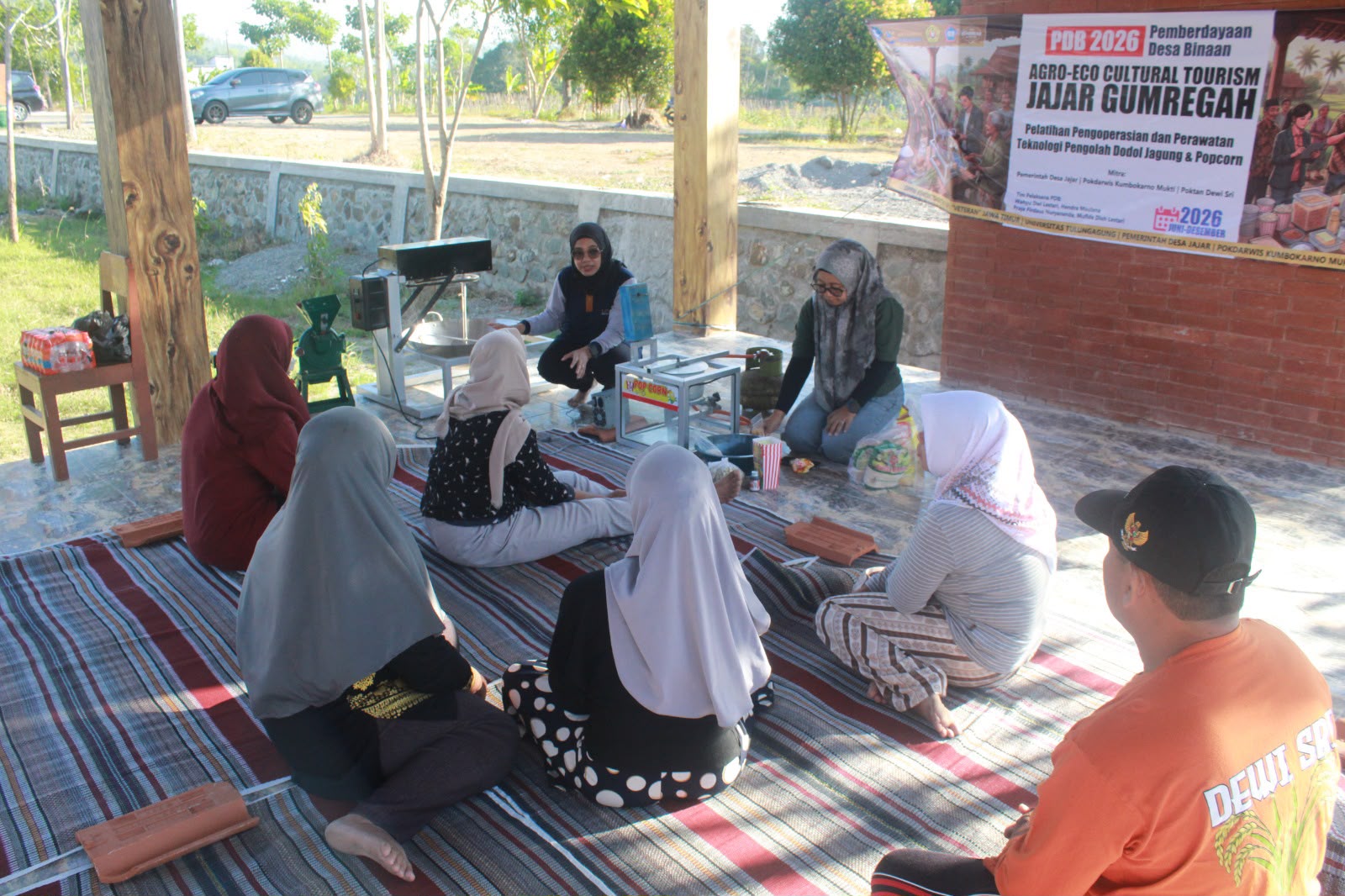
Jajar Village, Gandusari District, Trenggalek Regency, East Java, is strengthening the downstreaming of maize commodities and village tourism development through collaboration with UPN ‘Veteran’ Jawa Timur (UPNVJT) and Universitas Tulungagung (UNITA). The collaboration is part of the Ministry of Higher Education, Science, and Technology’s Village Development Empowerment programme, which has been running for three years. The academic team from UPNVJT and UNITA revisited Jajar Village on 25-26 July 2026 to continue the programme with the village government, the Kumbokarno Mukti Tourism Awareness Group, and the Dewi Sri Farmers Group.
In the third year, the team introduced diversification of maize-based food products through the development of popcorn and jenang maize-making machine technology. The innovation is aimed at increasing the added value of maize commodities, which have largely been sold in raw form. Programme implementation team leader Wahyu Dwi Lestari said the development of processed products was carried out after discussions with the village government and farmer groups. ‘The technology we will apply this time is a popcorn and jenang making machine. We see that maize commodities here are still sold raw. After discussing with the village government and farmer groups, we agreed to make popcorn and jenang machines with the hope of providing diversification of food products from Jajar,’ Wahyu said.
The technology development continues the results of the previous two years’ programme. UPNVJT and UNITA previously made seasoning mixing machines, harvest chopping machines, and snack wrapping machines to help micro, small, and medium enterprises. Adi, owner of the Jajar Village Coin Banana Chips SME, said the use of the seasoning mixing machine has been able to cut production time. ‘Usually we spend 30 minutes mixing banana coin seasoning, but now it only takes 15 minutes to be evenly mixed,’ he said. UPNVJT academic Hendra Maulana said the machines had undergone a series of trials before being applied in the community. ‘The machines we made have actually been tested many times on campus. So when we deployed them in the community, these machines showed optimal results,’ he said.
In addition to maize downstreaming, the programme strengthens Jajar Village tourism development. The UPNVJT and UNITA teams compiled tourism packages based on the village’s cultural, traditional, and natural potential. The tourism packages that were previously simulated succeeded in increasing visits, including foreign tourists. Kumbokarno Mukti Tourism Awareness Group chairman Imam Basori said the development of tourism packages helps revive local cultural potential. ‘Jajar Village is actually very rich in culture and tradition. Alhamdulillah, it turns out that gamelan and other arts can attract foreign tourists too,’ he said.
This year, tourism development is directed at compiling packages targeting students. UPNVJT academic Praja Firdaus said tourist visits to Jajar Village in the previous year doubled. ‘Jajar Village is actually quite complete. They have cultural assets, traditions, and stunning natural landscapes. This year we will move towards making packages for school children,’ Praja said. Jajar Village Head Imam Mukaryanto Edy appreciated the sustainability of the programme. ‘We are very pleased with this programme and cooperation because it has successfully run for three years until now. We hope the success of previous ideas can continue in this third year,’ he said.
Wahyu said regular visits by the academic team are necessary to ensure the programme does not stop at the planning stage. ‘By frequently visiting Jajar Village, we are actually also participating in their tourism development, not only doing conception,’ she said. The village development empowerment programme is expected to strengthen the village economy while supporting the achievement of the SDGs, especially sustainable development goals related to economic growth and decent work as well as industry, infrastructure, and innovation.