
Jabodetabek Toll Integration: Logistics Tariffs Pose a Challenge
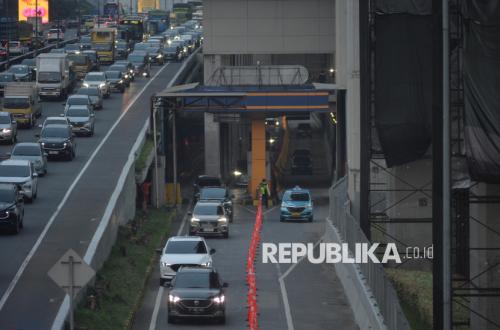
JAKARTA — A total of 74.1 per cent of respondents to an online survey by the Forum Konsumen Berdaya Indonesia (FKBI) support integrating toll tariffs in Jabodetabek. This support is one factor that could help advance a policy expected to smooth journeys and improve the efficiency of goods distribution.
However, tariff integration needs to take road users’ ability to pay into account, particularly logistics companies and freight drivers. If toll charges are not proportionate to the time saved, drivers may continue to choose arterial roads despite congestion.
The survey findings were discussed at a focus group discussion (FGD) entitled “Plans to Integrate Toll Roads in Jabodetabek”, held by FKBI in Jakarta on Thursday (22 October 2026). The discussion brought together regulators, infrastructure observers, logistics businesses and road users to consider the benefits of integrating toll-road sections for mobility and goods distribution.
Sony Sulaksono Wibowo, a member of the Toll Road Regulatory Agency (BPJT) at the Ministry of Public Works, said the government was finalising the regulatory framework to accelerate toll-road integration. Harmonisation of the draft ministerial regulation is expected to be completed soon, before it is signed by the Minister of Public Works as the basis for implementation.
“The hope is that harmonisation will be completed soon and the ministerial regulation signed promptly, so toll-road integration can be implemented without delay. The aim is to ease traffic by distributing vehicles more evenly and making optimal use of connected road sections,” Sony said.
One corridor under consideration comprises the Cibitung–Cilincing Toll Road, the Jakarta–Cikampek Toll Road and the Tanjung Priok Access Toll Road (ATP). Aligning the tariff arrangements along this corridor is expected to improve freight access from industrial areas to Tanjung Priok Port.
M. M. Gibran Sesunan, executive director of the Centre for Strategic Infrastructure Studies (PUKIS), said tariff policy should take account of the function and purpose for which each road section was built. In his view, a uniform approach based on vehicle class alone does not adequately reflect the difference between logistics routes and roads that primarily serve passenger journeys.
“For sections built as logistics routes, freight transport should receive more affordable tariffs to encourage their use. Tariff policy needs to take account of the service function and purpose of each road section,” Gibran said.
Ahmad Sugiono, a representative of the Jakarta regional board of the Indonesian Logistics and Forwarders Association (ALFI), said toll charges were one of the costs affecting logistics businesses’ margins amid price competition. Under certain lump-sum or travel-allowance arrangements, saving one to two hours may not be enough to persuade drivers to use a toll road if it increases the cost of the journey.
“Toll use needs to be considered within the wider logistics ecosystem, including congestion before entering the toll road, route flexibility, journey frequency and the chance of securing a return load. So the calculation is not just about travel time,” Ahmad said.
Sugi Purnoto, a senior consultant at Supply Chain Indonesia, added that route choices were also affected by whether drivers had enough travel money to cover operating needs, including their earnings, food, fuel, tolls and loading and unloading costs.