
Iwakum Condemns Hotman Paris: His Statement Degrades the Journalism Profession
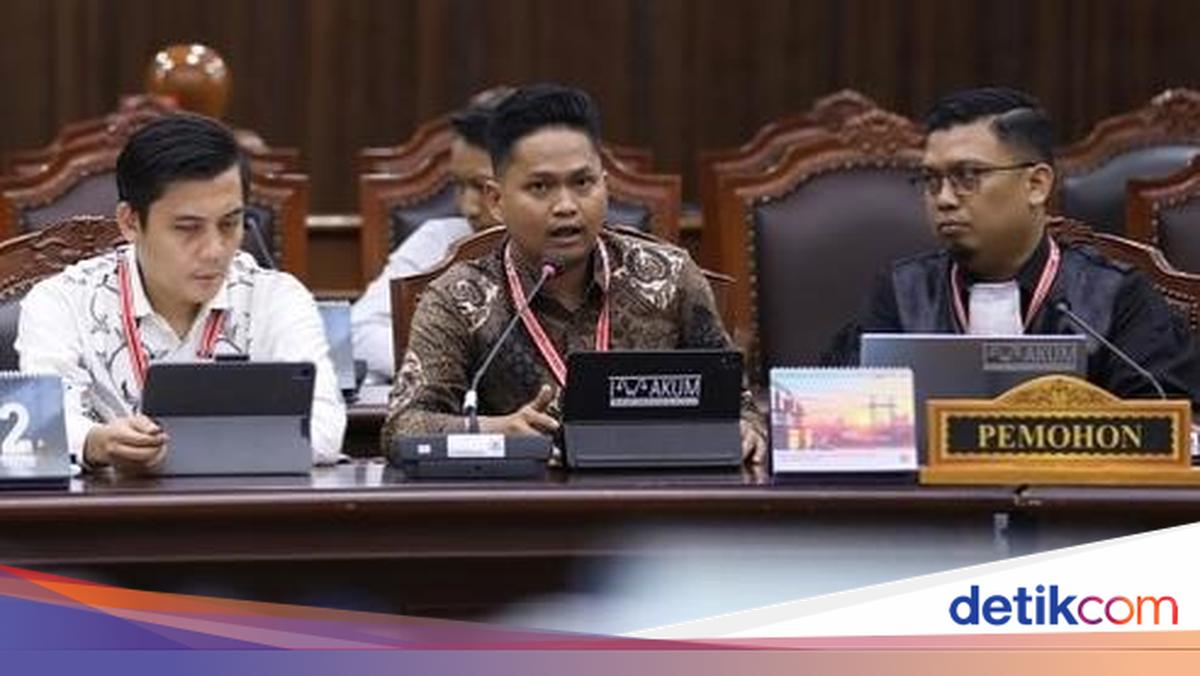
The Indonesian Legal Journalists Association (Iwakum) has condemned remarks by lawyer Hotman Paris deemed to demean the dignity and profession of journalists. Iwakum has demanded that Hotman Paris issue a public apology.
This was stated by Iwakum Chairman Irfan Kamil in response to Hotman Paris’s press conference after accompanying his client, former Deputy Attorney General for Special Crimes at the Attorney General’s Office Febrie Adriansyah, who has been named a corruption suspect, on Friday (17/7/2026). During the press conference, Hotman Paris was said to have uttered the phrase, “Do you have a brain?” to a journalist who asked a question at the scene.
“We strongly condemn and demand that Hotman Paris apologise for his statements demeaning journalists and pointing towards the silencing of press freedom,” Kamil said in his statement on Sunday (19/7).
Kamil highlighted Hotman’s remarks attacking the journalist’s intellectual capacity, describing the statement as arrogant.
“The remark ‘do you have a brain?’ is not criticism, but an insult to the journalist,” Kamil said.
Kamil stressed that an interviewee has the right to decline to answer, provide clarification, or correct the substance of a question. However, he reminded that it is not right for an interviewee to attack someone’s intellectual capacity instead.
“An interviewee may refuse to answer. An interviewee may also dispute a journalist’s question. But no one has the right to respond to a journalistic question with insults and personal attacks,” Kamil said.
“Iwakum knows many lawyers who are critical, firm, and possess excellent quality of argument, yet still uphold ethics and respect journalistic work. Firmness has never required anyone to insult another profession,” he said.
Meanwhile, Iwakum Secretary General Ponco Sulaksono stated that being a lawyer is an honourable profession that ought to prioritise sound argument and respect for other professions. He noted that senior lawyers should set an example.
“Senior lawyers should set an example in communicating in the public sphere, not display arrogance before journalists,” Ponco said.
Iwakum also rejected the notion circulating on social media that Hotman’s action represented a success in silencing journalists. Ponco considered such narratives dangerous as they could normalise insults against journalists carrying out their duties.
“There is nothing admirable about demeaning journalists at work. That is not a victory of argument, but a failure to uphold the ethics of public communication,” Ponco said.
Ponco also touched on Hotman Paris’s remarks invoking the name of President Prabowo Subianto during the press conference. Ponco noted that as someone close to the President, Hotman should have safeguarded the President’s honour.
“As someone close to and claiming to be the President’s legal counsel, Hotman Paris should have protected the President’s dignity, not instead demeaned the people,” he asserted.
Ponco emphasised that journalists’ work is protected by Law No. 40/1999 on the Press. This is set out in Article 4 paragraph (3) of the Press Law, which states: “To guarantee press freedom, the national press has the right to seek, obtain, and disseminate ideas and information.”
Meanwhile, Article 6 states the role of the press is to fulfil the public’s right to know, uphold the basic values of democracy, promote the realisation of the rule of law and human rights, respect diversity, develop public opinion based on proper, accurate and correct information, carry out supervision, criticism, correction and advice on matters of public interest, and fight for justice and truth. Ponco reminded that there is legal protection for journalists regulated under Article 8 of the Press Law.
Iwakum therefore urged Hotman to deliver a public apology to the journalist concerned as well as to the Indonesian press community. Iwakum also called on the lawyers’ organisation where Hotman is a member to examine the alleged violation of its code of ethics relating to this behaviour.
“If left unchecked, actions like this could set a bad precedent and encourage officials, authorities, lawyers, and other interested parties to act arbitrarily when facing critical questions from journalists,” he added.