
IUCN values Forestry Minister's ability to maintain human-elephant coexistence
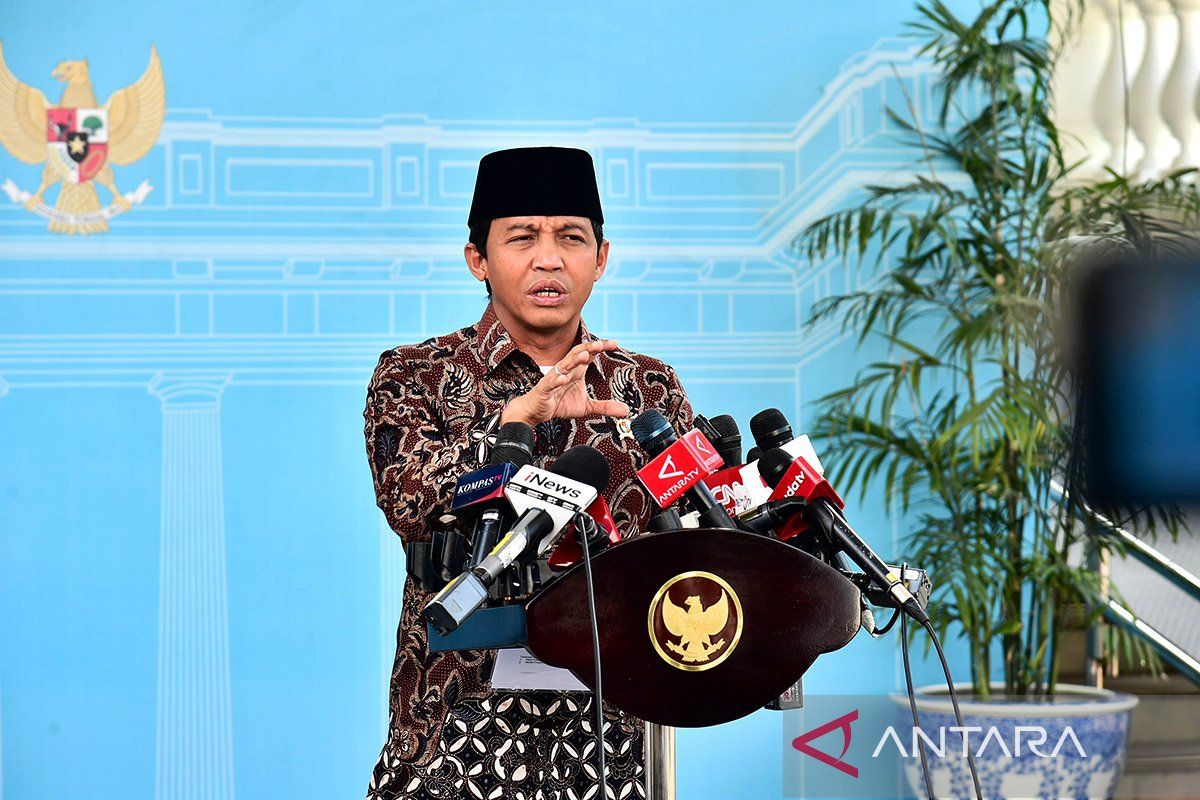
Jakarta (ANTARA) - The International Union for Conservation of Nature (IUCN) has assessed that Minister of Forestry Raja Juli Antoni is capable of maintaining human-elephant coexistence through conservation policies to protect the population of the trunked animals.
Chair of the IUCN SSC Asian Elephant Specialist Group, Heidi Riddle, speaking in Jakarta on Thursday, said Forestry Minister Raja Juli Antoni has a strong understanding of the fundamental challenges facing elephant conservation in Indonesia.
The assessment was delivered after the two discussed the direction of elephant population protection policy.
“I was impressed by his understanding of the root problems facing elephant conservation, from the importance of maintaining habitat connectivity, building coexistence between humans and elephants, to the need to involve various sectors outside forestry in safeguarding the future of elephant populations. The discussion also clearly showed the minister’s very strong commitment to strengthening elephant conservation efforts in Indonesia,” she said.
According to her, the challenges faced by Indonesia are also experienced by nearly all elephant range countries in Asia, so the approach taken by Indonesia is considered an important example in building cross-sector coordination.
She added that the Presidential Instruction of 2026 is a continuation of Indonesia’s long journey to strengthen elephant conservation through a landscape-based approach and inter-sectoral collaboration.
Previously, President Prabowo Subianto issued Presidential Instruction (Inpres) No. 8 of 2026 on the Rescue of Populations and Habitats of Sumatran Elephants and Kalimantan Elephants. The policy is a strategic step by the government to ensure wildlife protection amid ongoing national development.
Raja Juli explained that the instruction regulates the involvement of various sectors so that the rescue of elephant populations and habitats is protected while development continues. If infrastructure development such as roads crosses elephant roaming areas (home range), wildlife corridors must be prepared so that elephant movement is not cut off.
“For example, if the Ministry of Public Works builds a road and it disrupts the elephants’ home range, then a separate corridor must be created. Likewise, if a plantation enters an elephant roaming route, space must be set aside, or even enriched as a preservation area, so that elephants can still move around their habitat with sufficient food,” said Raja Juli.
Under the instruction, nine ministers are involved in the rescue of elephant populations and habitats, namely the Minister of Forestry, the Minister of Agriculture, the Minister of Home Affairs, the Minister of Agrarian Affairs and Spatial Planning/Head of the National Land Agency, the Minister of Energy and Mineral Resources, and the Minister of Public Works.
Furthermore, the Minister of Environment, the Minister of Finance, and the Minister of Investment and Downstreaming/Head of the Investment Coordinating Board (BKPM). In addition, the Indonesian National Police together with the Governors, Regents and Mayors in Sumatra and North Kalimantan are also participating in this instruction.