
ITSB Accelerates Transformation into Research University to Boost Competitiveness
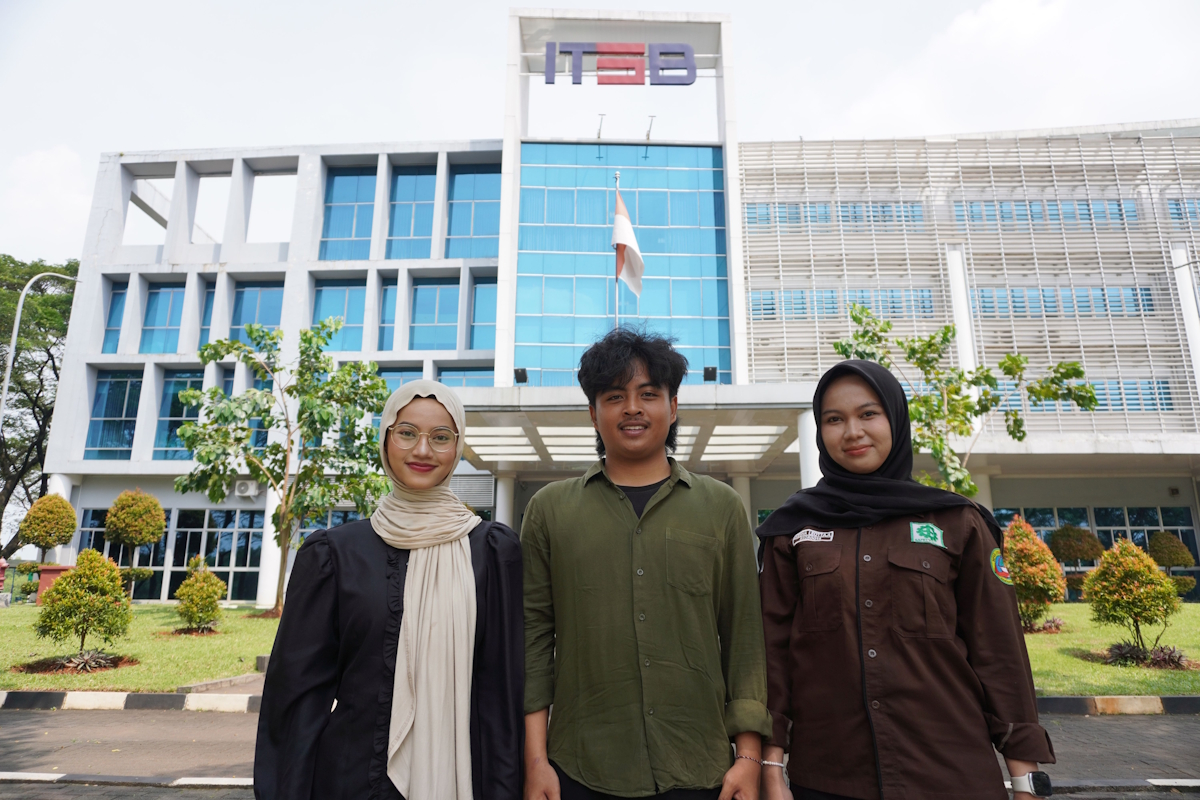
Competition among universities in Indonesia increasingly demands innovation, academic quality, and the ability to produce research that impacts both industry and society.
To address these challenges, the Bandung Institute of Science and Technology (ITSB), located in the Deltamas area of Bekasi Regency, is accelerating its transformation into a research university and aims to increase its student capacity to 2,500 people by the end of 2026. This transformation focuses not only on improving the quality of learning but also on strengthening research culture, opening postgraduate programmes, and improving accreditation as part of a strategy to build competitiveness at a national level.
Leveraging the synergy between academia and industry through the collaboration between the Bandung Institute of Technology (ITB) and Sinar Mas, ITSB is now solidifying its steps to develop into a research-based university capable of producing graduates that meet the needs of the workforce and contribute to the advancement of science.
ITSB Rector Carmadi Machbub stated that the reputation of the two major institutions behind the campus’s creation is an important asset, but it is not enough to make ITSB the primary choice for the public. He noted that improving academic quality must be proven through measurable achievements, such as accreditation status.
“What the public sees is certainly a vital factor in building optimism. However, that is not enough because the community also wants to see the quality of the learning offered, one of which is through accreditation status. Although it is not the only benchmark, accreditation is the reference most understood by the public. Therefore, we continue to pursue accreditation improvements,” said Carmante on Friday (3/7/2026).
As part of the transformation, ITSB is adjusting its statutes to expand its development focus. While previously oriented towards science and technology, the campus now carries a vision to become a leading university in the fields of science, technology, and business. He stated that this long-term vision will be realised gradually over the next 15 to 20 years through the opening of master’s and doctoral programmes, while simultaneously strengthening a research ecosystem integrated with industrial needs.
“In addition to strengthening academic quality, ITSB is also developing a promotion strategy that is more adaptive to digital developments. One way is by involving students as campus ambassadors through social media to introduce academic life to prospective students from various regions,” he explained.
He explained that this approach has proven effective in reaching prospective students outside of Bekasi Regency. Several students claimed to have learned about the campus through digital content created by other students, while others were attracted by the career development opportunities supported by the campus’s proximity to the industrial world.
Another advantage offered is a variety of scholarship programmes that help students access higher education at a more affordable cost. However, these scholarships are accompanied by academic requirements to encourage students to maintain excellence throughout their studies.
On the other hand, he noted that the relatively ideal number of students creates a conducive learning environment. Interaction between students and lecturers becomes more intensive, opening opportunities for academic and research collaboration from an early stage.
According to Carmadi, strengthening the academic atmosphere is one of the key elements in realising the transformation towards a research university. Therefore, the campus continues to improve organisational governance, enhance the quality of human resources, and strengthen the implementation of the ‘tridarma’ (three pillars) of higher education.
“We must run faster and build a strong team. Formulating new organisation and governance, as well as fostering a conducive academic atmosphere so that education, research, and community service activities run well and with high quality,” he said.
He emphasised that the strength of a university is ultimately determined not only by the big names of its supporting institutions but also by its ability to produce competent graduates capable of meeting industrial needs.
“Therefore, we continue to strengthen the collaboration between the worlds of education, research, and industry so that our graduates possess relevant, professional competencies and are able to meet the standards required by the ever-evolving world of work,” he concluded.