
ITS Professor Develops Integrated Ship Navigation Safety System
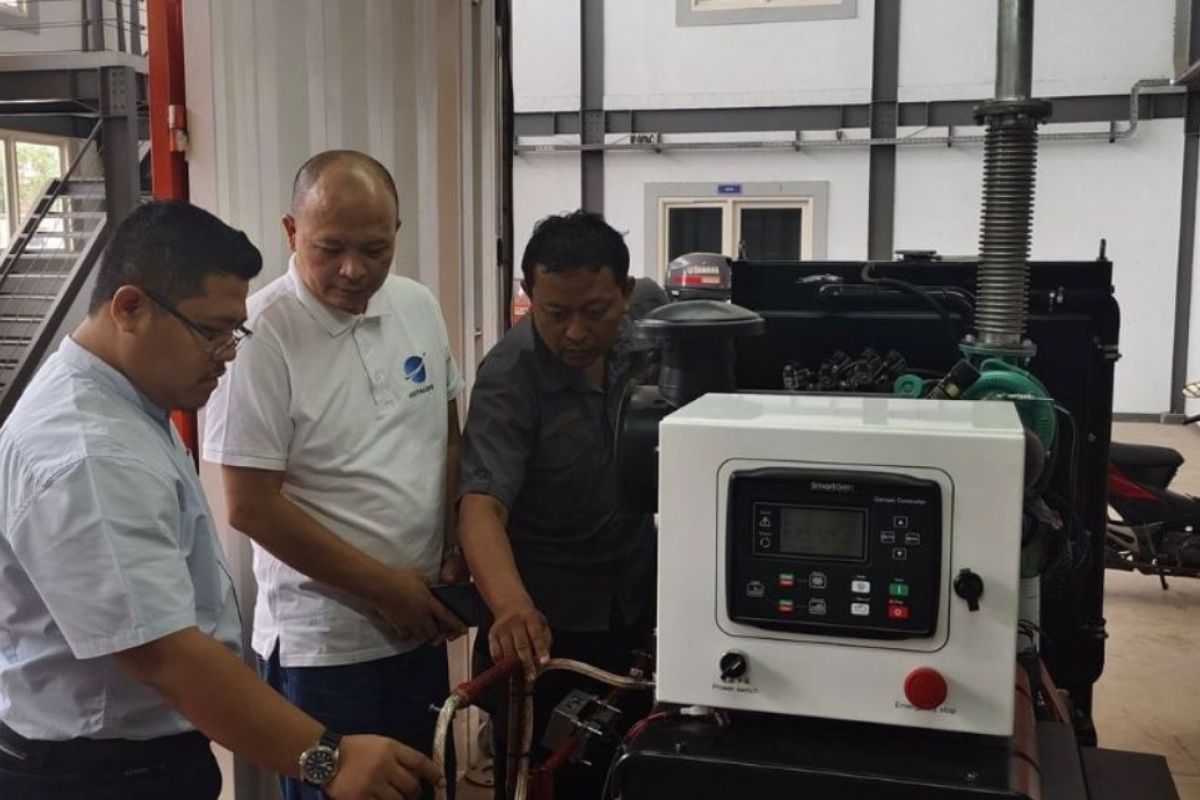
Ship accidents are influenced by various factors, ranging from vessel condition, environment, machinery, and electrical systems, to human factors and management.
Surabaya (ANTARA) - The 244th Professor of the Institut Teknologi Sepuluh Nopermember (ITS), Prof. Dr. Eng. Muhammad Badrus Zaman, ST, MT, has proposed the integration of ship navigation safety systems that combine navigation technology with human factors to enhance national maritime safety in Indonesia.
“Ship accidents are influenced by various factors, including vessel condition, environment, machinery, electricity, human factors, and management,” said Badrus in Surabaya on Wednesday.
According to him, human error is the dominant cause, meaning that strengthening maritime safety cannot rely solely on technology.
“Strengthening navigation safety is not only achieved through technological devices but also by considering the capabilities and decision-making of the ship’s crew,” he stated.
Based on this condition, the Professor of Ship Navigation Safety Systems has proposed the integration of navigation systems with human factors. Through this approach, navigation equipment does not only function to monitor the ship’s position but also assists the crew in reading maritime risks more accurately, ensuring that decision-making on board is more measured and aligned with operational conditions.
In his scientific oration titled “Ship Navigation Safety Systems as a Pillar to Strengthen the National and Global Maritime Axis,” Badrus utilised the Automatic Identification System (AIS) to analyse ship traffic density in real time. The AIS data is then integrated with the M-SHEL model, an analytical framework that examines human interaction with five system components: management, software, hardware, environment, and crew.
The integration of AIS and the M-SHEL model produces collision risk assessments across three levels: low, medium, and high. The system also provides recommended safety actions that captains can implement immediately when facing various sailing conditions.
“This system engineering provides data-driven guidance to the crew in responding to maritime situations,” said the professor, who hails from Banyuwangi.
The researcher, who is part of the ITS Maritime Science Techno Park (STP), stated that the research was developed through collaborations with Kobe University (Japan), Universiti Teknologi Malaysia, and Wismar University of Applied Sciences (Germany). Domestically, the research was conducted alongside the Ministry of Transportation of the Republic of Indonesia and the National Transportation Safety Committee (KNKT).
According to Badrus, this research supports the Sustainable Development Goals (SDGs), specifically Goal 9 regarding Industry, Innovation, and Infrastructure, and Goal 14 regarding Life Below Water. Moving forward, he hopes that interdisciplinary collaboration between industry and government will continue to be strengthened so that research results can be widely implemented.
“Sustainable collaboration is required so that this navigation safety research can be realised effectively for the advancement of Indonesian maritime interests,” he added.