
ITS Produces Efficient Palm Petrol to Support National Energy Independence
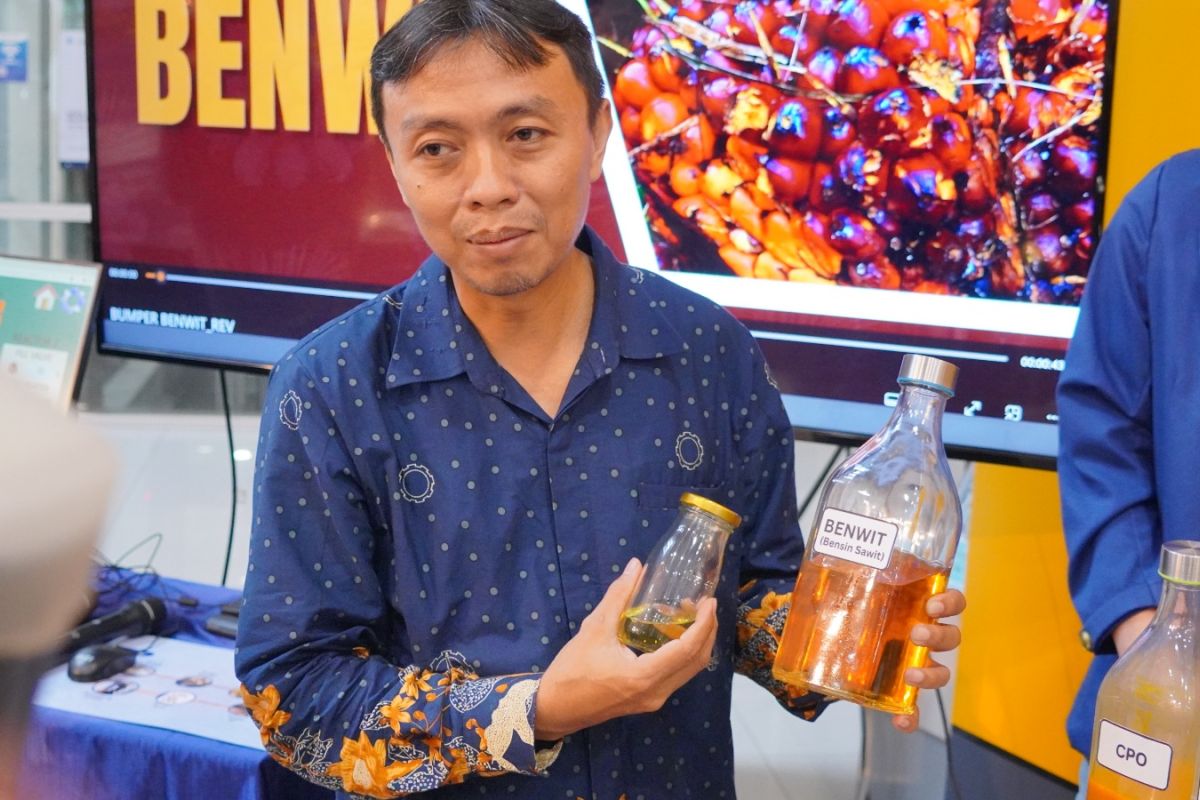
Surabaya (ANTARA) - The Institut Teknologi Sepuluh Nopember (ITS) in Surabaya has produced efficient palm-based petrol to support national energy independence and reduce dependence on fossil fuels amid the global energy crisis issue.
“This is an opportunity for the government to develop alternative energy sources amid the fuel crisis issue due to the current conflict in the Middle East region,” said ITS Rector Bambang Pramujati in Surabaya, East Java, on Tuesday.
Dr Eng Hosta Ardhyananta from the ITS Department of Materials and Metallurgical Engineering, along with his team, has developed vegetable petrol or biogasoline based on Crude Palm Oil (CPO) through the catalytic cracking method or molecular breakdown using catalysts.
“The focus of our innovation is how to convert dense crude palm oil into ready-to-use biogasoline products,” said Hosta.
In the initial stage, the process uses an alumina-based catalyst (γ-Al₂O₃) capable of converting biogasoline to around 60 percent, but it requires a high operating temperature of up to 420 degrees Celsius.
Further development utilises a bimetallic catalyst of nickel oxide (NiO) and copper oxide (CuO), which improves reaction efficiency, lowers the operating temperature to 380 degrees Celsius, and increases the yield to 83 percent.
In addition, the liquid residue resembling oil can be used as another alternative fuel, thus supporting the minimal waste production concept.
“Because of its characteristics resembling oil or used cooking oil, that liquid residue can be reused as stove fuel,” he said.
He added that this research also considers life cycle assessment (LCA) or life cycle analysis, which shows a low carbon footprint, aligning with the principles of clean and sustainable energy.
The innovation supports the sustainable development goals (SDGs), particularly the points on clean energy and responsible consumption, and contributes to efforts in addressing climate change.
Director of Research and Community Service (DRPM) at ITS, Fadlilatul Taufany, stated that they will coordinate with the Republic of Indonesia’s Ministry of Energy and Mineral Resources (ESDM) for trials as a national project.
“At the very least, with this innovation, it will reduce Indonesia’s burden on export-import dependency,” she said.