
It’s Not Preservatives: Why McDonald’s Burger Buns Don’t Go Mouldy
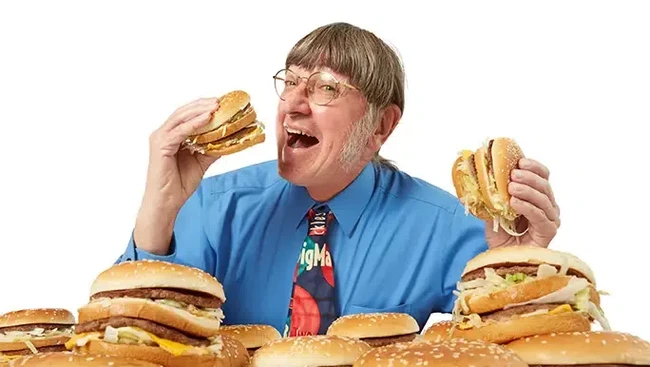
For years, many people have been surprised to see McDonald’s burgers kept for months or even years appear unchanged, without mould or signs of decay. Some have suspected that a secret preservative makes them “immortal”. The answer, however, is much simpler, according to a report cited on Wednesday (14 October 2026).
According to IFL Science, the scientific explanation, tested directly by a food researcher, is not a special chemical but the moisture content of the food.
McDonald’s burgers have several characteristics:
The patties are thin and flat, giving them a large surface area and allowing them to dry quickly.
Their small size means water in the bun evaporates quickly.
The buns are also dry and dense, so they lose moisture quickly.
When left exposed to the air, the burgers dry out faster than mould and bacteria can grow. Without water, microbes cannot reproduce—just as dried meat or crackers do not spoil easily because they are dry.
Food writer J. Kenji López-Alt conducted an experiment involving nine different burger combinations:
Some used homemade buns and patties.
Others used buns or patties from McDonald’s.
Some had salt added and others did not.
All were left exposed to the air.
The results showed that both McDonald’s and homemade burgers avoided spoilage as long as they dried out. Salt and preservatives were not the main reason.
The clearest evidence is that if a McDonald’s burger is sealed tightly in a plastic bag, preventing moisture from evaporating, it becomes mouldy and spoils in about a week, just like other food.
Although drying prevents it from spoiling, that does not mean the burger is healthy. The real concern is the nutritional content of food served at McDonald’s:
A large chocolate shake contains 120 grams of sugar—four times the World Health Organization’s recommended daily limit.
One meal can contain more than half the daily salt requirement.
One serving of chips contains a quarter of the daily fat requirement.