
ITS expert urges public to stay alert to Semeru and Merapi
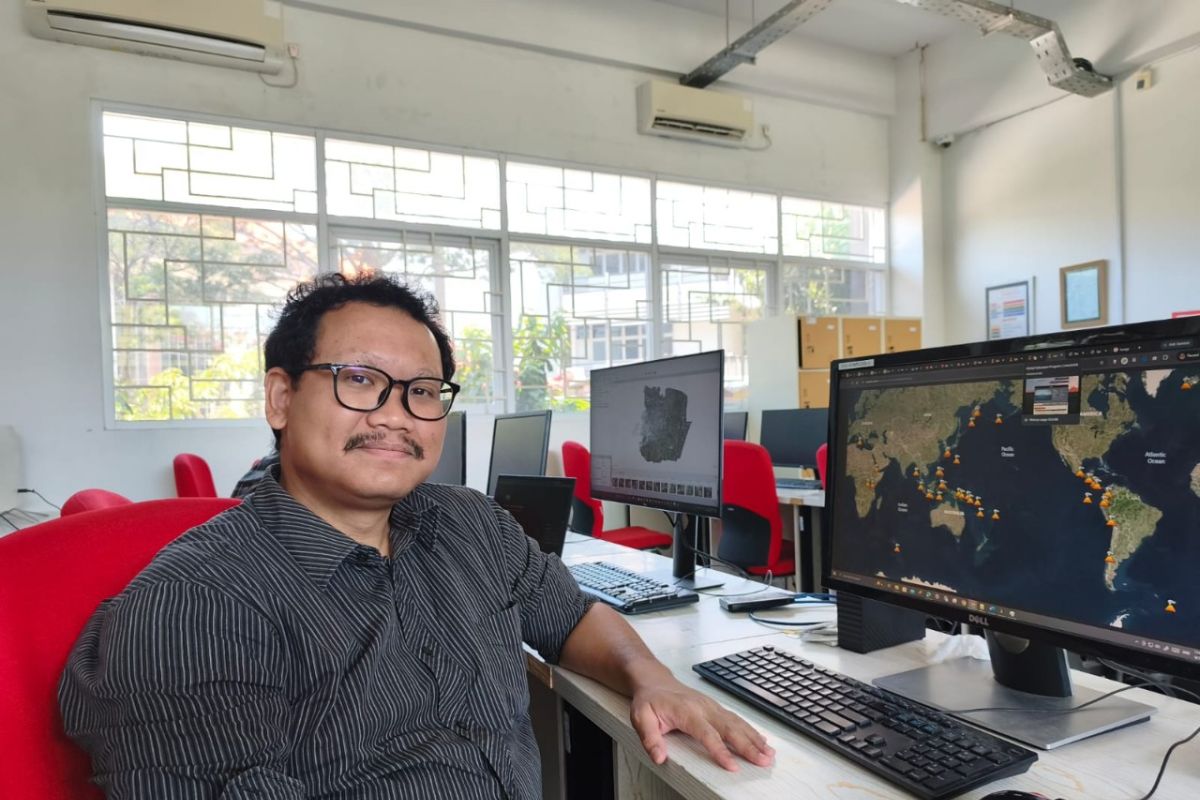
Surabaya (ANTARA) — An expert from the Sepuluh Nopember Institute of Technology (ITS) has called on the public to stay alert to Mount Semeru and Mount Merapi amid the activity of several volcanoes in Indonesia occurring within a short space of time.
“If we are talking about volcanoes that need to be watched at the moment, I would say Semeru and Merapi. Both deserve attention because they are located close to densely populated zones,” said Alutsyah Luthfian, an expert from the ITS Geophysical Engineering Department, in Surabaya, East Java, on Monday.
Fian, as he is known, said the simultaneous activity of several volcanoes does not necessarily indicate a direct connection, as each volcano has its own system and characteristics.
“Volcanoes each have their own cycles and characters. So when several volcanoes become active around the same time, their activity is not necessarily related,” he said.
According to him, the close timing of eruptions is not sufficient grounds to conclude that the activity of one volcano triggers that of another.
“We cannot simply look at the timing and conclude that one volcano triggered another. We have to look at the data and the condition of each volcano,” he said.
Fian said Mount Semeru requires particular attention because its eruptive behaviour is not always easy to predict. The volcano is also located near areas with high population concentrations.
“Semeru needs to be watched more closely because its eruption behaviour cannot be predicted well. Sometimes Semeru can erupt on a large scale without any warning,” said Fian.
This situation means the potential for the volcanic body to collapse into the sea needs to be a focus of mitigation efforts, as a similar event triggered the Sunda Strait tsunami in 2018.
However, he reminded the public not to immediately link the activity of Anak Krakatau with that of Semeru or other volcanoes.
“Every volcano has its own magmatic system. So we cannot say that because Anak Krakatau is active, Semeru becomes active too, or vice versa,” he said.
Fian said geophysical monitoring can help understand changes occurring beneath a volcano’s surface.
One approach used in his research is the geophysical method, to determine subsurface conditions and detect changes that may be linked to volcanic activity.
According to him, if such signal patterns can be identified through research and supported by adequate data, that information has the potential to improve understanding of volcanic activity. However, the method cannot yet be interpreted as a tool capable of determining exactly when a volcano will erupt.
“What remains most important is monitoring. We cannot say a volcano will erupt based on a single parameter,” he said.
Fian urged the public not to panic in response to the activity of several volcanoes occurring within a short period.
The public, he said, should remain alert by following official information from the Centre for Volcanology and Geological Hazard Mitigation (PVMBG), the Ministry of Energy and Mineral Resources (ESDM), the National Disaster Management Agency (BNPB), and the Meteorology, Climatology and Geophysics Agency (BMKG).