
ITS Expert Reveals Sea Conditions at Site of Virgo Transport 8 Sinking: Wave Height Reached 2 Metres
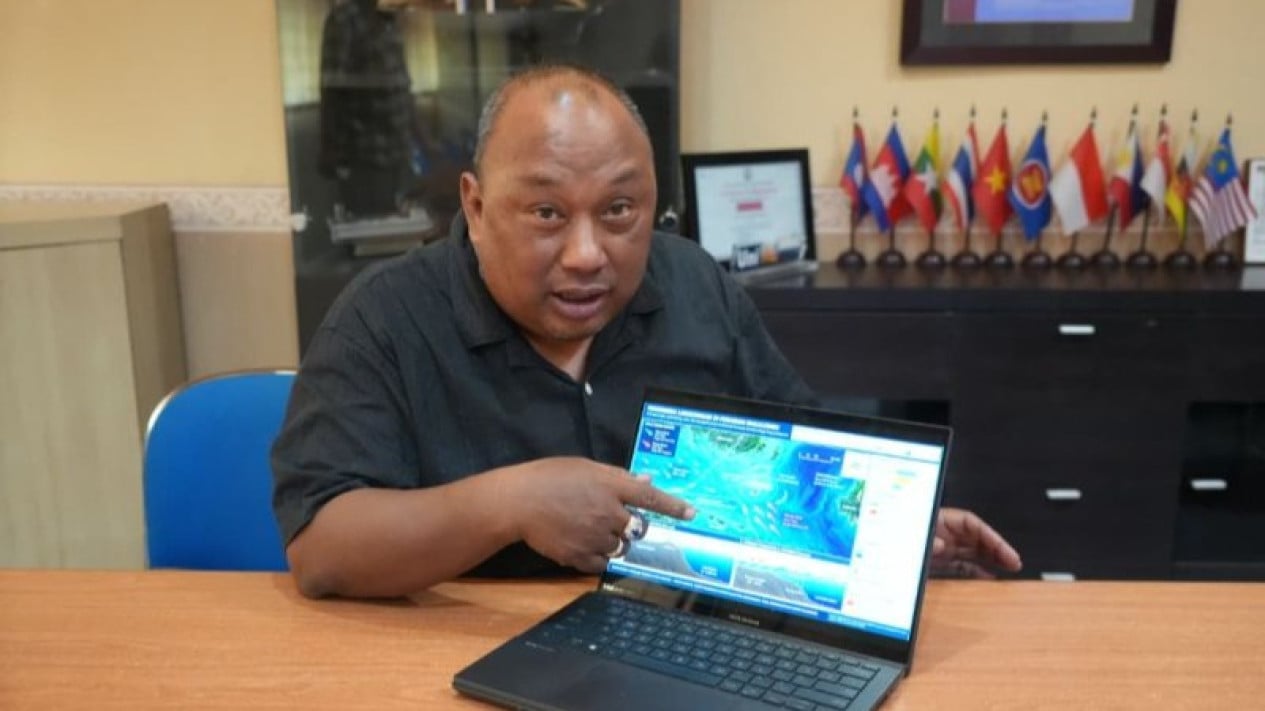
Surabaya, VIVA – A marine environment expert from the Sepuluh Nopember Institute of Technology (ITS) Surabaya, Dr Eng Kriyo Sambodho ST, has revealed the condition of the waters around the site where KM Virgo Transport 8 sank some time ago.
The lecturer from ITS’s Department of Marine Engineering said the waters around the Masalembu Islands are considered dynamic, as they are influenced by westerly and easterly monsoon winds as well as wave transformation processes.
“The wave height, which reached 2 metres at the time, could very well have made the vessel unstable,” said Kriyo in Surabaya, East Java, on Tuesday.
Based on available data, the conditions fall under adverse marine conditions — unfavourable sea conditions — although they do not fall into the extreme weather category according to the Meteorology, Climatology and Geophysics Agency (BMKG).
Hydrometeorological data around the site show that southeasterly wind speeds ranged between 18 and 20 knots throughout the observation period, with gusts recorded at 27-30 knots.
These conditions coincided with significant wave heights rising from around 1.7 metres to two metres.
According to him, this combination of environmental conditions must be taken into account when assessing the vessel’s stability.
“Beyond wave height, the direction of the wind and waves relative to the ship’s position can be a factor influencing the vessel’s response when sailing in open waters,” he said.
He added that the wave period around the incident site ranged from 7 to 8 seconds, with waves coming from the southeast.
Meanwhile, surface ocean currents were recorded at around 1.0-1.2 knots, moving westward.
These conditions indicate that the waters around the site have dynamics that must be factored into shipping safety considerations.
Should there be suspicion of water ingress into the vessel, the Kyoto University doctoral graduate said one part that needs to be inspected is the ramp door.
The large door serves as the access point for vehicles and cargo entering and leaving the vessel, so its condition should form part of the technical inspection.
Beyond sea conditions, he added, the possibility of engine failure also cannot be ruled out. However, the lecturer from ITS’s Offshore Hydrodynamics Laboratory noted that none of these possibilities can be drawn as conclusions until a further investigation is carried out.