
ITS Expert on the Capsizing of the Virgo Vessel: Not Suited to Indonesian Waters
The capsizing of the motor vessel (KM) Virgo Transport 8 in the waters of the Java Sea in the early hours of Sunday (13/9) has raised major questions, above all regarding the operational seaworthiness of the vessel on Indonesian waters.
Based on available records, KM Virgo Transport 8 is not a new vessel but a 39-year-old second-hand ship from Japan. The vessel, bearing the identification number IMO 8625179, was first built in 1987 by the Shin Kurushima Onishi Shipyard under its original name Ferry Kurushima.
Between 1987 and mid-2025, the 119-metre vessel with a gross tonnage of 4,277 GT spent its sailing life in Japan, serving a passenger and vehicle route from Kokura to Matsuyama across the Seto Inland Sea.
The Seto Inland Sea is characterised by very shallow waters with an average depth of 38 metres and has the status of an enclosed sea, surrounded by three large islands: Honshu, Shikoku and Kyushu. These conditions meant the vessel’s original route was very calm and protected from bad weather and high waves.
The ship’s fate changed after it was taken over by the domestic company PT Virgo Karya Shipping in late 2025. Since July 2026, it has been assigned to the route from Tanjung Perak Port in Surabaya to Trisakti Port in Banjarmasin.
Although the waters are similarly shallow, the new route crosses the Java Sea, which has the character of open sea. The Java Sea is highly exposed to monsoon winds, which generate strong currents and fluctuating wave potential of between 1.5 and 2.5 metres.
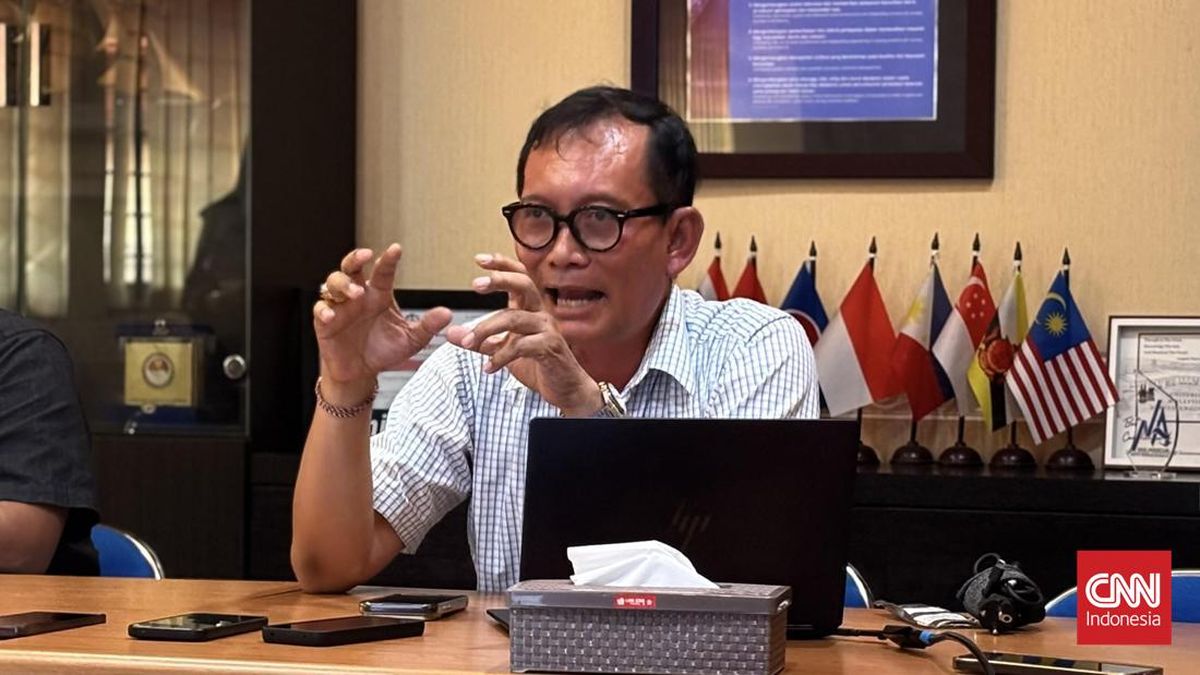
Professor Ir I Ketut Aria Pria Utama, a hydrodynamics expert from the Faculty of Marine Technology at the Sepuluh Nopember Institute of Technology (ITS) in Surabaya, believes that from a scientific standpoint, the vessel’s age is not the main problem as long as it is well maintained.
In his view, what is more crucial is the design of the vessel’s seakeeping performance — an aspect he says is frequently neglected in Indonesia.
“What needs to be scrutinised is whether the design of this Japanese-built ship is suitable and recommended for sailing in Indonesian seas with high waves,” said Prof Ketut when met at ITS Surabaya on Tuesday (15/9).
The professor from ITS’s Department of Naval Architecture noted that differences in water topography demand different seaworthiness specifications. Former Japanese vessels designed for calm inland seas often require significant stability adjustments when deployed on open-sea routes.
“The extreme characteristics of this shipping route demand different hull design standards,” he explained.
Prof Ketut further explained that roll-on/roll-off (Ro-Ro) ferries in four-season countries such as Japan generally have fully enclosed hulls to cope with cold temperatures.
In Indonesia, however, vessel hulls are often modified with the addition of side openings, frequently justified merely by the desire to save on air conditioning and reduce tax.
“Such a design also serves to reduce the tax burden on enclosed spaces, which poses a risk to the vessel’s stability when sailing,” he said.
Prof Ketut said such hull modifications can trigger a drastic loss of the vessel’s equilibrium, for instance through the addition of side ramp doors suspected of not being properly sealed. This could well become a point of entry for seawater.
He noted that if a large volume of water enters the vehicle deck without an adequate pumping system, the water becomes trapped and triggers a free surface effect, or sloshing effect. It is this effect that causes the vessel to lose its balance instantly and roll abnormally.
“Another possibility is that the ship had a ramp door. Now, was that ramp door not closed, or not closed tightly, or were there gaps of some kind,” he said.
A listing vessel’s condition becomes far worse if the heavy vehicles inside are not lashed in accordance with maritime safety standards. The movement of dozens of trucks can shift the ship’s centre of mass dramatically.
“This risk is compounded if the loaded vehicles are not properly secured, so that they shift and alter the ship’s centre of mass drastically,” Prof Ketut surmised.
Another potentially fatal factor behind the heavy loss of life is the suspected low discipline of the crew regarding safety education standards. Prof Ketut noted, for example, that Indonesian shipping operators rarely conduct safety inductions in the manner practised on aeroplanes.
Passengers often simply board and disperse without any briefing on evacuation positions or guidance on using life jackets.
“This is crucial to ensure passengers understand self-evacuation steps in anticipation of unexpected emergencies in the middle of the sea,” he said.
Although the suspected operational weaknesses and vessel modifications appear clear, Prof Ketut stressed that the entire chain of suspected causes behind the capsizing of KM Virgo Transport 8 must be proven through a thorough investigation by the National Transportation Safety Committee (KNKT).
“So everything put forward is conjecture; feel free to offer analysis, but the conclusion lies with the KNKT,” Prof Ketut concluded.
KM Virgo Transport 8 reportedly lost contact in the waters of the Java Sea on Sunday (13/9) at 02.00 Central Indonesia Time whilst sailing from Surabaya to Banjarmasin, having departed on Saturday (12/9). The vessel was carrying 243 people, including passengers, ship’s officers and crew, as well as 89 vehicles.
Of the 243 people aboard, 108 have been evacuated alive and six have been confirmed dead, whilst 129 others remain missing.
Source: jawawa.id (https://jawawa.id/newsitem/its-expert-on-the-capsizing-of-the-virgo-vessel-not-suited-to-indonesian-waters-1789516290)
Originally published by CNN Indonesia (https://www.cnnindonesia.com/nasional/20260915200213-20-1404340/pakar-its-soal-insiden-kapal-virgo-terbalik-tak-cocok-di-laut-ri), translated from Indonesian