
ITS creates electric boat tractor for peatland agriculture
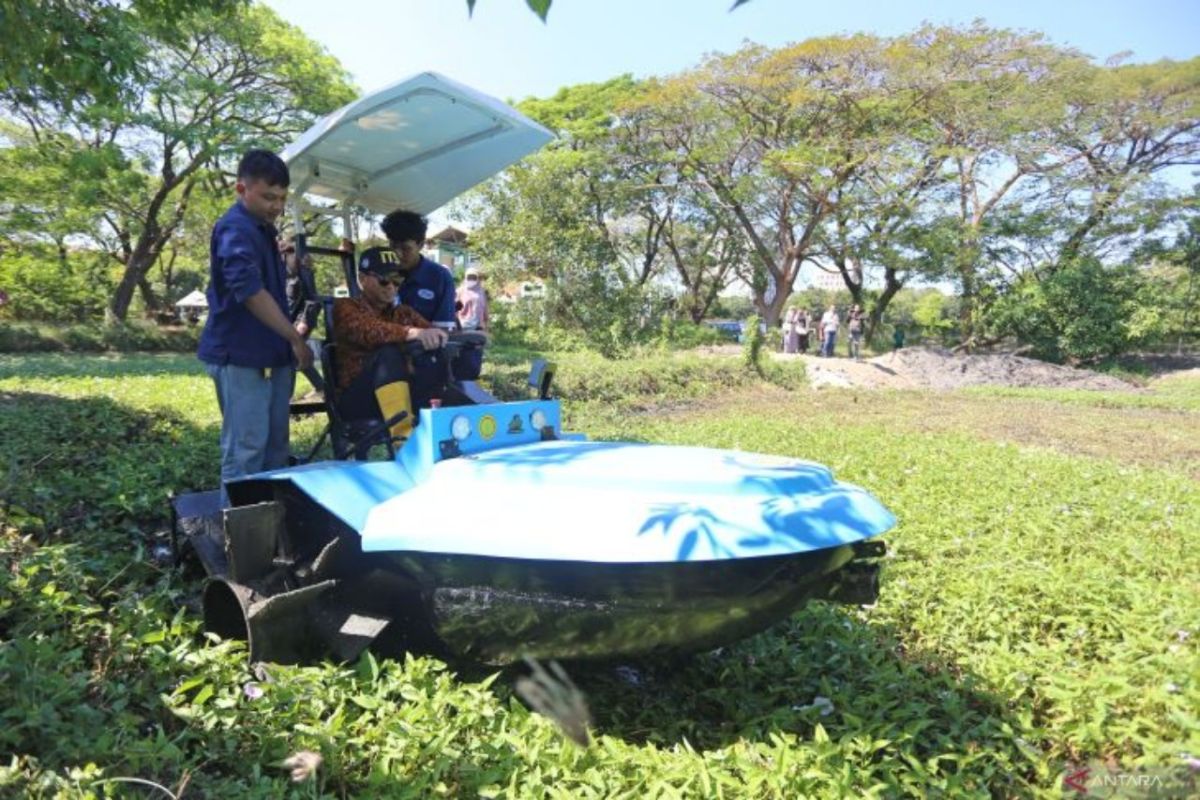
Surabaya (ANTARA) - Institut Teknologi Sepuluh Nopember (ITS) Surabaya has created an electric boat tractor to support agricultural mechanisation on peatlands, which have long been difficult to reach with conventional tools, while simultaneously boosting productivity with low-emission technology. “Unlike ordinary tractors, this tactical agricultural vehicle is designed to resemble a boat so it can move optimally over wetlands without the risk of sinking,” said ITS Rector Prof Bambang Pramujati during a trial of the electric boat tractor on the ITS campus peatland area, Surabaya, Tuesday. Bambang said the innovation, developed through the ITS Automotive Science Techno Park (STP), has attracted the attention of the Ministry of Agriculture because it offers a mechanisation solution for peatlands that have low bearing capacity, making them unsuitable for conventional tractors. Lead researcher Prof Bambang Sudarmanta explained that the use of an electric motor in the tractor can cut operational costs compared to fossil-fuel tractors while supporting sustainable agriculture through lower carbon emissions. He said the tractor’s development combines the principles of flotation, agricultural mechanisation, and electrification, enabling it to operate on wetlands without easily sinking. The tractor is designed with a focus on high torque for ploughing fields, rather than pursuing speed. Technically, the tractor uses a 10-kilowatt (kW) electric motor, equipped with an electronic display system to monitor battery condition, temperature controller, and battery voltage in real-time. The tractor operates at around 72 volts with a current of 32 amperes and a battery capacity of 140 ampere-hours (Ah), allowing it to operate for three to four hours on a full battery. “So, based on trial results, mathematically this tractor is estimated to be able to plough one hectare of land,” he explained. Bambang explained that the simulation was carried out on a one-hectare plot with dimensions of 100 x 100 metres using a 1.8-metre-wide plough. The tractor requires 56 passes with a total travel distance of about 5.6 kilometres to complete the ploughing. He added that the team is still refining the tractor’s development after encountering overheating issues during field trials. To address this, a cooling system has been added as a new component. According to ITS, the innovation supports the achievement of the Sustainable Development Goals (SDGs), particularly the second goal on zero hunger, the seventh goal on affordable and clean energy, and the ninth goal on industry, innovation, and infrastructure.