
ITPLN strengthens modern agriculture in Karawang with solar-powered pumps
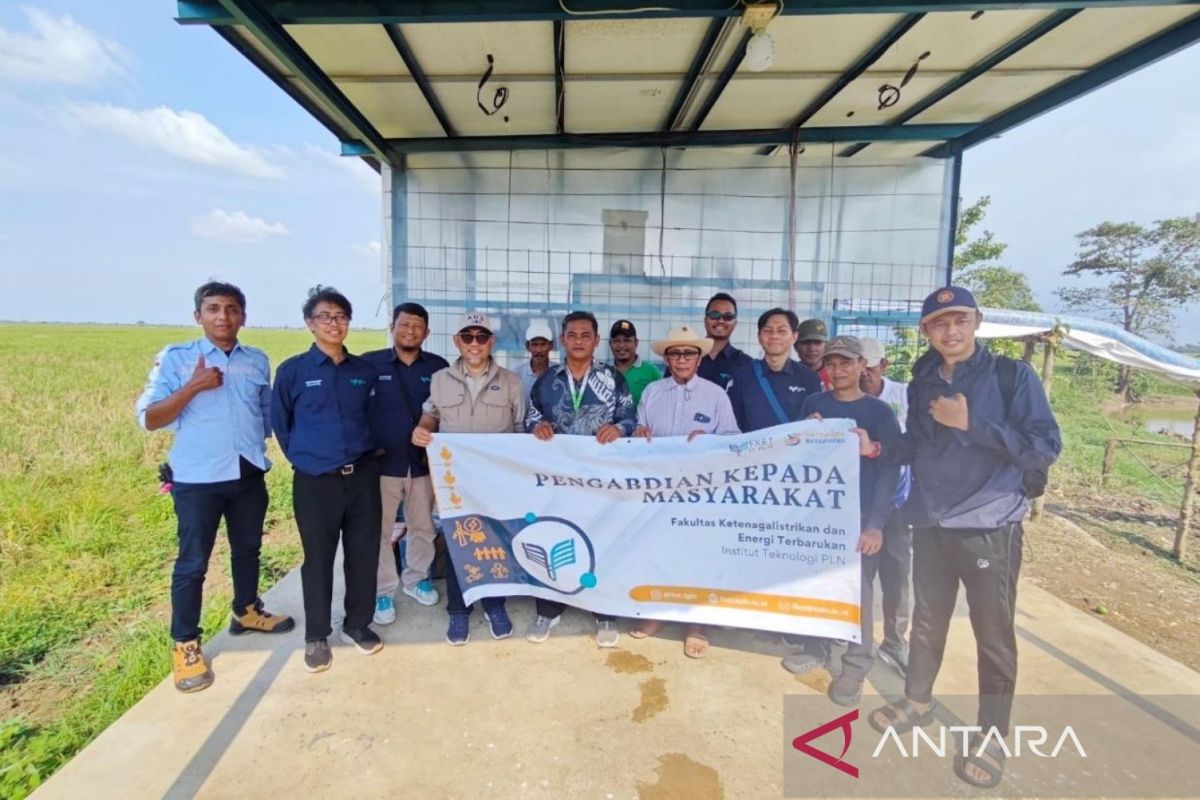
The Community Service Team (PKM) of the Faculty of Electricity and Renewable Energy, Institut Teknologi PLN (ITPLN) is advancing the modernisation of electrifying agriculture in Karawang, West Java through a solar-powered irrigation innovation. Meyhart Bangkit Sitorus, Head of the ITPLN PKM Team, stated in Jakarta on Thursday that the system built in Ciwulan Village and Pulosari Village, Telagasari District, Karawang Regency, not only relies on solar panels as an energy source but is also equipped with energy storage and a motor control system to keep pump operations stable. “Farmers obtain a cleaner energy source as well as a more stable supply to operate irrigation pumps,” he said.
Meyhart explained that the energy produced by the solar panels during the day is not entirely used directly. Some energy is stored in batteries so that the pump still has power reserves when sunlight intensity decreases. In addition to providing technology, he mentioned that ITPLN also provides training to the community on system operation, occupational safety, battery maintenance, and routine device inspection. This step is taken so that the community is capable of managing and maintaining the sustainability of the system independently. “Higher education is not an ivory tower. Campuses must go down to the field to answer society’s problems,” he said.
Syamsir explained that the system utilises solar panels with a capacity of 5 kilowatt peak (kWp) that convert solar radiation into direct current (DC) electricity. The energy is then regulated through a solar charge controller based on maximum power point tracking (MPPT), stored in batteries, and then converted into alternating current (AC) electricity through an inverter before being used to drive the pump motor. One of the main components used is a variable frequency drive (VFD) that allows the motor to perform a soft start or operate gradually. This technology can reduce current surges when the pump is turned on, thereby minimising the risk of system disturbances. To improve performance, the team developed the solar panel capacity, protection system, VFD, and pump motor. The VFD was upgraded from 5.5 kilowatts to 10 kilowatts, while the pump motor was enlarged from 5.5 kilowatts to 7.5 kilowatts to increase the volume of water pumped.
Meanwhile, Ciwulan Village Head Warkat Subrata said the presence of the solar-powered pump has begun to help channel water to agricultural land even though the construction of supporting infrastructure is not yet fully complete. He revealed that the Ciwulan Village Government together with Pulosari Village have allocated a budget of around IDR 320 million to support the programme. However, the construction of a pipeline network to the final point of the tertiary channel is still needed so that the benefits can be felt more widely by farmers. “Hopefully this is not the end of the cooperation. We ask that in the future there be development, especially for agricultural irrigation,” said Warkat Subrata.