
ITMI Targets 1,000 Braille Quran Instructors by 2030
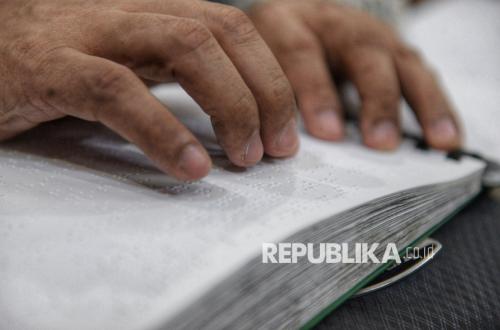
The Indonesian Muslim Blind Association (ITMI) is targeting one thousand trainers or instructors for the Braille Quran by 2030. This target has been set to accelerate the equitable distribution of Quranic learning for Muslim visually impaired individuals across Indonesia.
The General Chairperson of the ITMI Central Board, Ustadz Yogi Madsuni, stated that the programme was born out of concern regarding the still-limited access for the visually impaired to study the Braille Quran.
“The reason for the ‘1,000 Mujahid’ target is that out of more than three million Muslim blind people in Indonesia, only 10 per cent are currently able to learn the Braille Quran,” said Yogi during a meeting at the Braille Quran Headquarters, Rumah Aspirasi Tunanetra Indonesia, Cilandak, South Jakarta, on Wednesday (9/9/2026).
According to him, the issue is not solely the availability of the Braille Quran itself. The guidance and the presence of instructors capable of accompanying the visually impaired in their studies also remain a significant challenge.
“This does not mean that the Braille Quran is unavailable, but rather that the necessary guidance is lacking. Therefore, we need to accelerate the process so that there can be more Braille Quran instructors,” he added.
Yogi explained that the “1,000 Mujahid Alquran Braille” programme has been promoted by ITMI since 2023. To date, various training of trainers (TOT) activities have been conducted to increase the number of teaching staff.
Nevertheless, he admitted that the number of certified instructors is still far from the target. Currently, only about 50 people have been certified as Braille Quran instructors. “We have conducted TOT sessions frequently. However, at present, only about 50 people are certified. This means more effort is required to reach the target of 1,000 Mujahid,” said Yogi.
Consequently, he noted that achieving this target requires support from various parties. ITMI intends for Braille Quran learning not to be confined to specific locations, but to reach visually impaired individuals in various regions across the country.