
ITF Sunter Revived, DPRD DKI: Do Not Let Waste Management from Source Be Sidelined
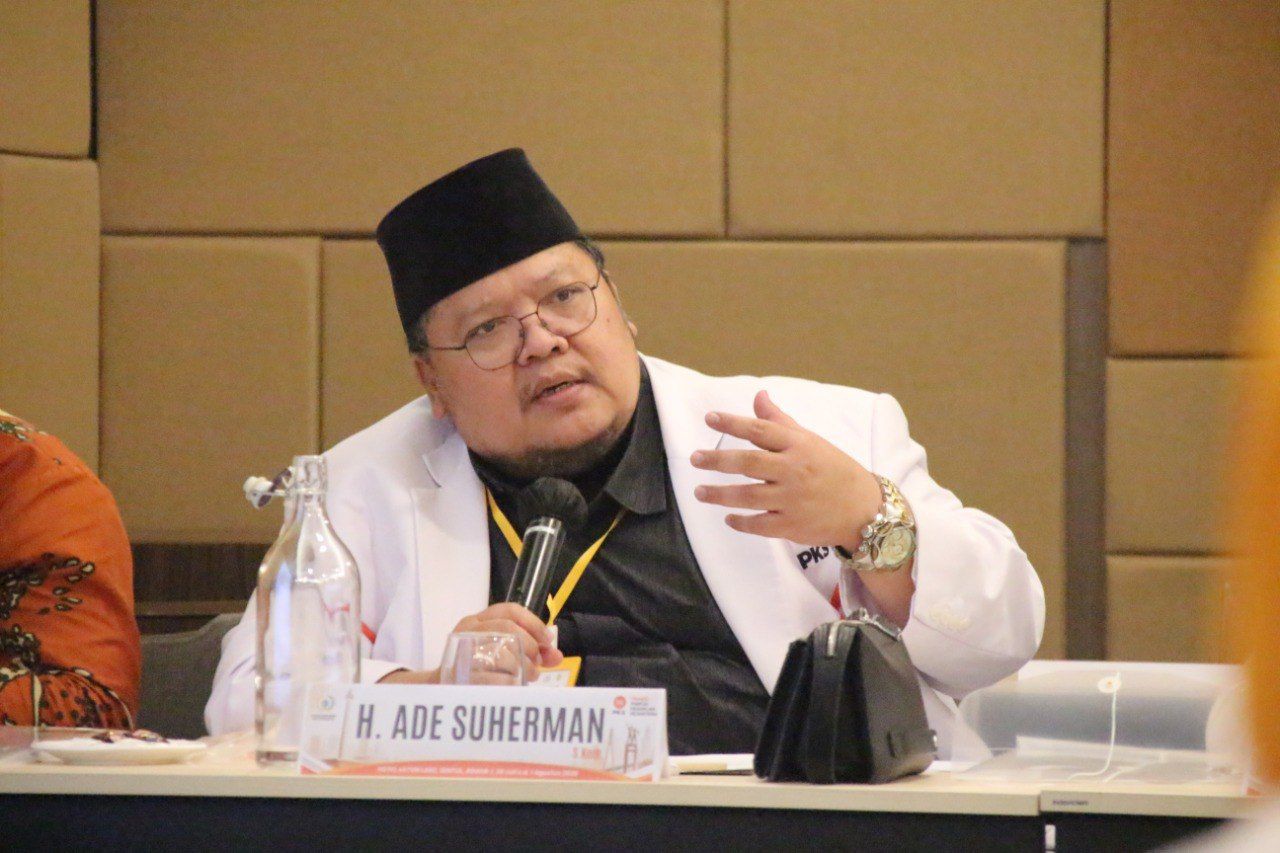
The plan by the DKI Jakarta Provincial Government to revive the Intermediate Treatment Facility (ITF) Sunter project, with an investment value of around Rp5.3 trillion, has drawn the attention of DKI Jakarta DPRD member from the PKS faction, Ade Suherman.
Ade supports the DKI Jakarta Provincial Government’s efforts to find a long-term solution to Jakarta’s waste problem. However, he cautioned that the large investment in waste-to-energy processing should not make Jakarta’s waste policy solely oriented towards processing waste after it has been collected.
“ITF Sunter is certainly important. But we must not think that Jakarta’s waste problem is solved just because we have a large-capacity waste processing facility. Waste reduction and processing from the source must remain a major part of the system,” said Ade, quoted on Saturday (29/8).
The statement was made following the move by DKI Jakarta Governor Pramono Anung to re-offer the ITF Sunter project to investors at the Jakarta Investment Festival 2026. The project, valued at around Rp5.3 trillion, is designed to have a processing capacity of up to 2,200 tonnes of waste per day, reducing waste volume by more than 80%, and generating up to 35 megawatts of electricity.
The DKI Provincial Government also stated it would provide a number of supports to ensure investment sustainability, including land provision, certainty of waste supply, tipping fees, and supporting regulations.
According to Ade, the commitment to certainty of waste supply needs to be carefully examined so as not to conflict with the policy of reducing waste from the source.
“On one hand, we want waste to be reduced. On the other hand, processing projects require certainty of supply. Therefore, the design of the cooperation and contracts must be ensured not to create incentives that actually make waste reduction from the source suboptimal,” he said.
Ade assessed that the construction of large-scale waste processing facilities should be positioned as one part of Jakarta’s waste ecosystem, not the only solution.
According to him, waste that still has use value must be separated from the start at homes, neighbourhoods and areas. Organic waste, for example, can be processed into compost and reused for urban farming activities.
“If organic waste can be resolved at the neighbourhood level, don’t bring it all to the processing facility. We must have the principle that waste that can be resolved from the source, is resolved from the source,” said Ade.
Therefore, Ade again encouraged the DKI Jakarta Provincial Government to strengthen independent waste management infrastructure at the community level. He also encouraged cross-sector collaboration, especially between the Environmental Agency and the Food Security, Marine and Agriculture Agency (KPKP), so that the results of organic waste processing in the form of compost can be absorbed to expand the urban farming programme.
“This must become one ecosystem. The community processes organic waste into compost, then the urban farming programme absorbs the results. The government provides support for facilities, seeds, training and infrastructure. So waste becomes a resource, not just a burden,” explained Ade.
Ade also asked the DKI Provincial Government to ensure the ITF Sunter project has strong governance before re-entering the investment stage. This is important considering the ITF Sunter project previously experienced a long journey and was said to have been stalled since 2023. Now the project is being re-offered to investors with an investment value of around Rp5.3 trillion.
“We certainly do not want to repeat the same problems. If the value is trillions of rupiah, then from the start it must be clear who does what, how it is financed, what the technology standards are, how environmental supervision is carried out, what the tipping fee is, and what the success indicators are,” stressed Ade.
The DKI Provincial Government’s investment documents previously listed a Build Operate Transfer scheme for 25 years, a capacity of 2,200 tonnes per day, and revenue sources from tipping fees and electricity sales. The document also listed Euro 5 emission standards for the planned technology. According to Ade, these aspects must be examined transparently so that the investment is not only financially feasible, but also provides real benefits for the people of Jakarta.
ITF and Waste Reduction Must Go Together
Ade emphasised that he supports Jakarta’s target towards zero dumping by 2028. However, this target must be achieved through a combination of various strategies.
“We support the ITF. Waste reduction from the source must also be supported. Waste banks, composting, organic processing, urban farming, waste sorting and public education must also receive adequate budgets,” he added.
According to Ade, the success of Jakarta’s waste system is not solely measured by how large the capacity of waste processing facilities is, but by how much waste is successfully prevented, reduced, reused and processed before becoming residue.
“Don’t let our measure of success be how much waste is successfully burned or processed. The more important measure is how much waste we successfully reduce from the source,” he explained.
Ade hopes the ITF Sunter project can become part of the transformation of Jakarta’s waste management system to be more modern and sustainable, without sidelining the role of the community.
“Rp5.3 trillion must produce major changes in Jakarta’s waste system. We want technology to work, investment to work, but the community movement to reduce and process waste from the source must also grow stronger. Both must go together,” he concluded.