
ITDC Optimises Open Spaces in The Mandalika and The Nusa Dua
Headline
High volatility is likely to continue until the end of May.
High volatility is likely to continue until the end of May.
INJOURNEY Tourism Development Corporation (ITDC) is developing green spaces in The Nusa Dua, Bali, and The Mandalika, West Nusa Tenggara (NTB).
ITDC is integrating efforts in climate resilience, energy efficiency, waste and water management, and biodiversity protection into a single, sustainable ecosystem for the area.
ITDC’s Director of Commercial & Marketing, Febrina Mediana, affirmed that green spaces play a strategic role in improving the quality of tourist destinations while strengthening the competitiveness of tourist areas.
According to her, green spaces are not just landscape elements but are part of the ecological infrastructure that contributes significantly to improving air quality, controlling the area’s temperature, and strengthening resilience to climate change.
She said that the strengthening of green spaces in The Nusa Dua and The Mandalika aims to create a healthy, comfortable, and sustainable destination ecosystem, not just one that is visually appealing.
Through the development of nature-based tourism experiences, such as outdoor activities, wellness, and recreation in coastal areas, green spaces become an important part of promoting a healthy lifestyle, strengthening the connection between humans and nature, and improving the overall quality of the tourist experience.
“This approach also reaffirms ITDC’s commitment to maintaining the sustainability of destinations and strengthening the long-term competitiveness of Indonesian tourism,” said Febrina, Friday (15/05).
In The Nusa Dua area, ITDC manages green spaces covering approximately 97 hectares, or about 27% of the total area of 359.7 hectares. Of these, 43 hectares have been planted with more than 5,700 trees from 138 species of vegetation, including 32 species of local and endemic trees.
The presence of green spaces plays an important role in strengthening biodiversity, maintaining the character of the area’s landscape, and functioning as the area’s “lungs,” supporting the control of micro-temperature, improving air and environmental quality, and providing comfortable and inclusive public spaces.
In addition, The Nusa Dua demonstrates a real contribution to decarbonisation efforts through integrated, biodiversity-based landscape management and sustainable utility systems.
LAGOON SYSTEM
Since 1979, the The Nusa Dua area has implemented a lagoon system that can process up to 10,000 m³ of wastewater per day for reuse as irrigation for green areas, thus supporting efficient water use and the implementation of a circular water system.
Based on the latest research, the total carbon absorption in the The Nusa Dua area reaches 16,279.57 tons of carbon, with an average total biomass of about 102.6 tons per hectare and a carbon content of approximately 48.2 tons C per hectare or equivalent to approximately 176.8 tons CO?e per hectare.
These figures reflect the area’s vegetation’s ability to absorb and store carbon significantly, while maintaining the ecosystem’s balance amidst high tourism activity.
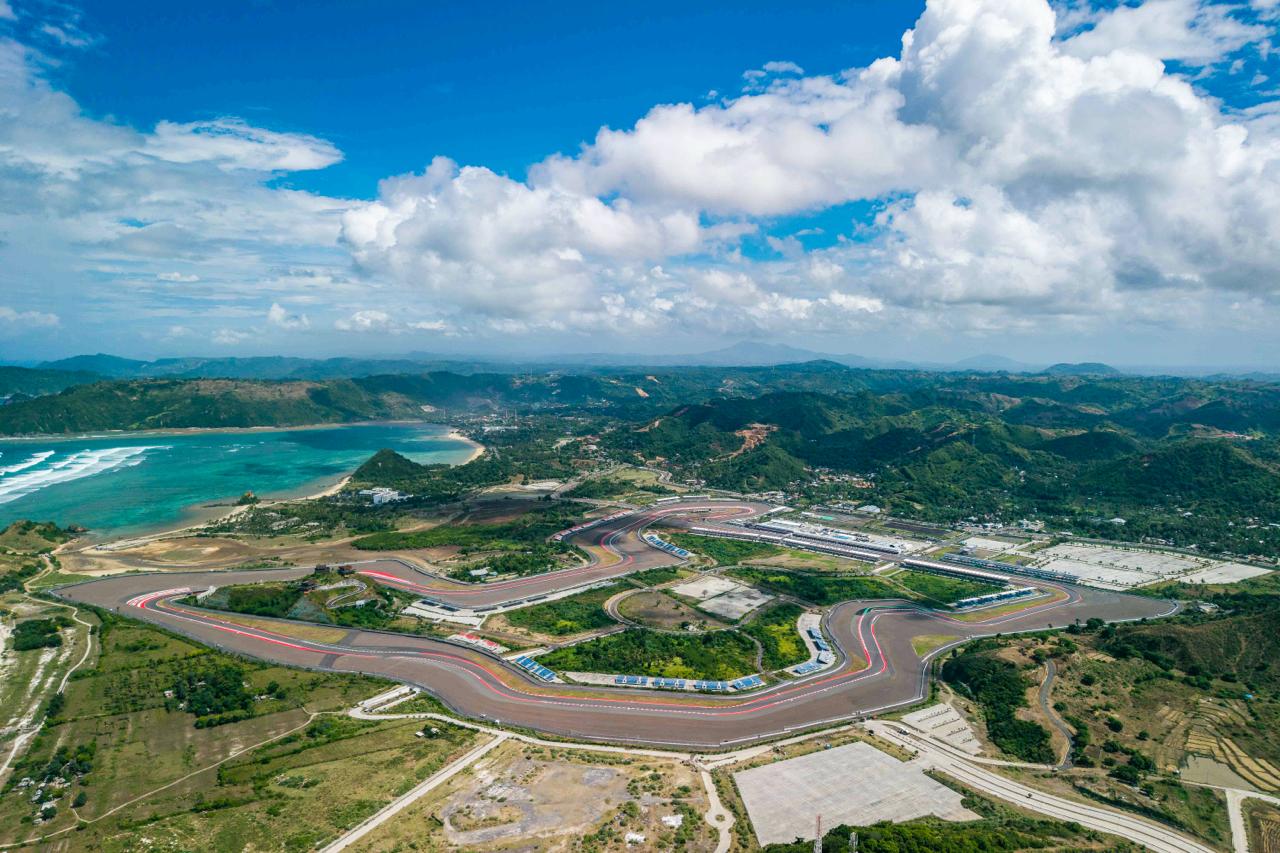
Meanwhile, in The Mandalika, sustainable tourism development is realised through the management of an area of approximately 1,175 hectares, with green space allocations reaching 363 hectares, or about 30% of the total area.
Of this amount, about 19% has been actively managed as part of efforts to conserve and improve the quality of the area’s environment. As part of strengthening the coastal ecosystem, more than 10,400 trees have been planted throughout 2025 through environmental rehabilitation programs.
These efforts continue in 2026 with the planting of 15,000 mangrove trees in coastal areas as a strategic step to strengthen natural protection against abrasion and improve the quality of coastal habitats.
GREEN SPACE CONCEPT
The development of the The Mandalika area also integrates the concept of green space and blue space, which is a combination of vegetation and water elements such as beaches, lagoons, and conservation areas.
This approach not only presents an aesthetically and functionally pleasing landscape but also plays a strategic role in increasing the area’s resilience to climate change, including mitigating abrasion, increasing water absorption, and protecting coastal ecosystems.
Through this approach, the development of the The Mandalika area is not only oriented towards the economic growth of tourism but also provides real added value for environmental sustainability and the preservation of coastal ecosystems.
“By integrating the principles of Environmental, Social, and Governance, ITDC places green spaces as a strategic green infrastructure that not only strengthens the competitiveness of destinations but also maintains the ecosystem’s balance, increases resilience to climate change, and supports the development of sustainable, resilient, and low-carbon Indonesian tourism,” concluded Febriana. (E-2)
Residents play in the Taman Bendera Pusaka or known as Taman Barito/Merah Putih in South Jakarta.
The Integrated Child-Friendly Public Space (RPTRA) Kalijodo, Angke Village, Tambora, West Jakarta, looks neglected, Wednesday (15/4/2026).
The DKI Jakarta Provincial Government plans to develop green space facilities and regional libraries.
Residents visit the Taman Bendera Pusaka, Jakarta.
The development of a small park is an initial step that is more concrete than forcing a large park project, which often faces land acquisition constraints.
Copyright @ 2026 Media Group - mediaindonesia. All Rights Reserved