
ITB: Target to Reduce Accident Rates by 2030 Faces Significant Challenges
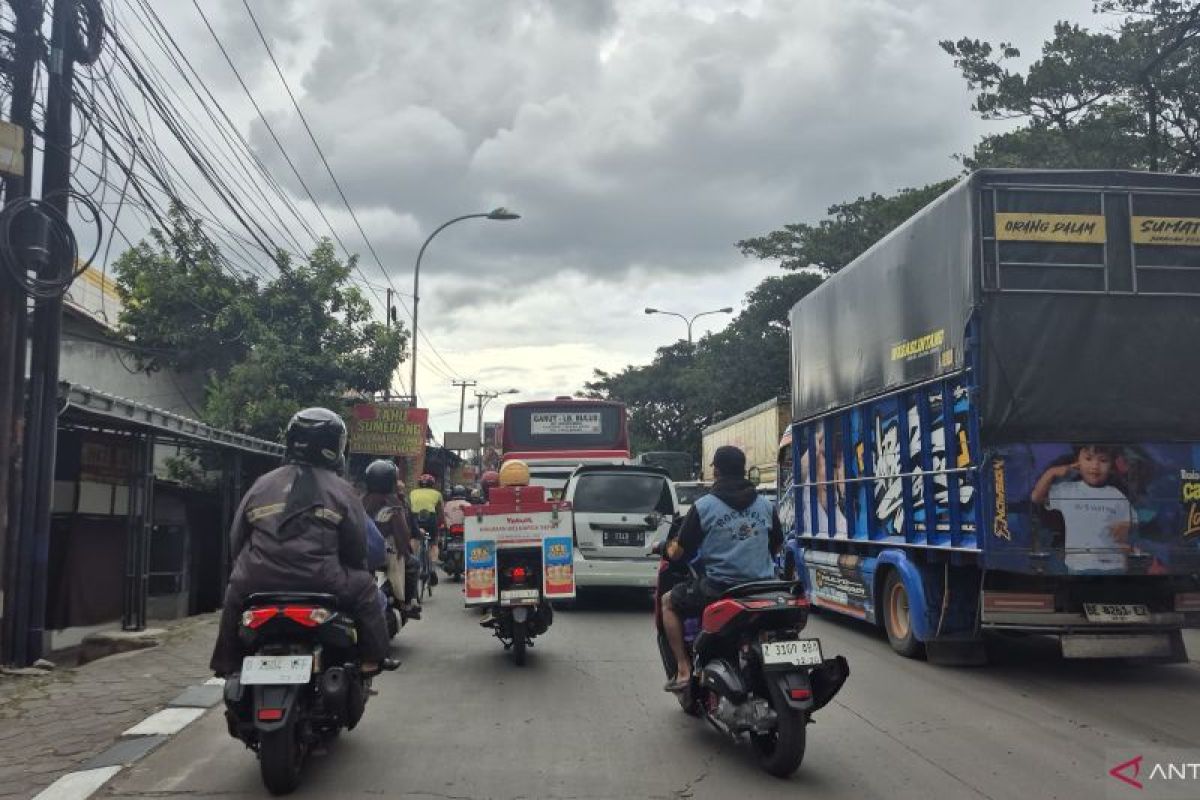
Jakarta (ANTARA) - Research conducted by the Bandung Institute of Technology (ITB) reveals that achieving the government’s target to minimise road accident fatalities to 15,160 people by 2030 faces significant challenges.
According to the research data, 26,839 people died due to traffic accidents throughout 2024, representing a 6.2 per cent increase compared to 2021.
“Safety must start from the root by addressing hazards. The potential hazard for two-wheelers lies in the vehicles themselves. Therefore, we at ITB are attempting to conduct a study on safety systems,” said ITB researcher Sony Sulaksono Wibowo in an official statement on Sunday.
He continued that the magnitude of the road safety challenge is inseparable from the role of motorcycles in public mobility.
Consequently, the ITB study highlights braking technology as one of the interventions that can support efforts to reduce these risks.
Sony Sulaksono Wibowo stated that safety studies need to begin with the potential hazards present in vehicles. He noted that safety technology is one of the aspects that can be intervened upon to reduce accident risks.
The study highlights the critical window of time when riders perform emergency braking. A motorcycle wheel can lock in less than 0.2 seconds, while humans require an average of approximately 0.75 seconds to react in panic conditions. This situation makes the capability of the braking system a crucial factor when riders face emergencies.
While Combined Braking Systems (CBS) distribute braking force to the front and rear wheels simultaneously, they do not yet prevent wheel lock-up. In contrast, Anti-lock Braking Systems (ABS) automatically regulate braking pressure to prevent wheels from locking during heavy braking, thereby maintaining better vehicle control.
The study proposes two implementation scenarios starting from 2027. The first scenario involves mandating ABS for motorcycles above 125cc, and either ABS or CBS for motorcycles 125cc and below. The second scenario involves mandating vehicles with ABS systems for all new motorcycles.
Member of Commission V of the Indonesian House of Representatives (DPR RI), Sofwan Dedy Ardyanto, believes that the use of ABS features on two-wheelers could serve as a short-term solution to prevent accidents. “To resolve the issue of motorcycle accidents, I agree that ABS is the solution for the present or the short term,” said Sofwan.
The results of the ITB research and the subsequent policy recommendations have been submitted by the Pijar Foundation and ITB to the Directorate General of Land Transportation of the Ministry of Transportation to serve as material for road safety policy considerations.