
ITB Study Reveals Jabodetabek Pollution Knows No Administrative Boundaries, Here Are the Causes
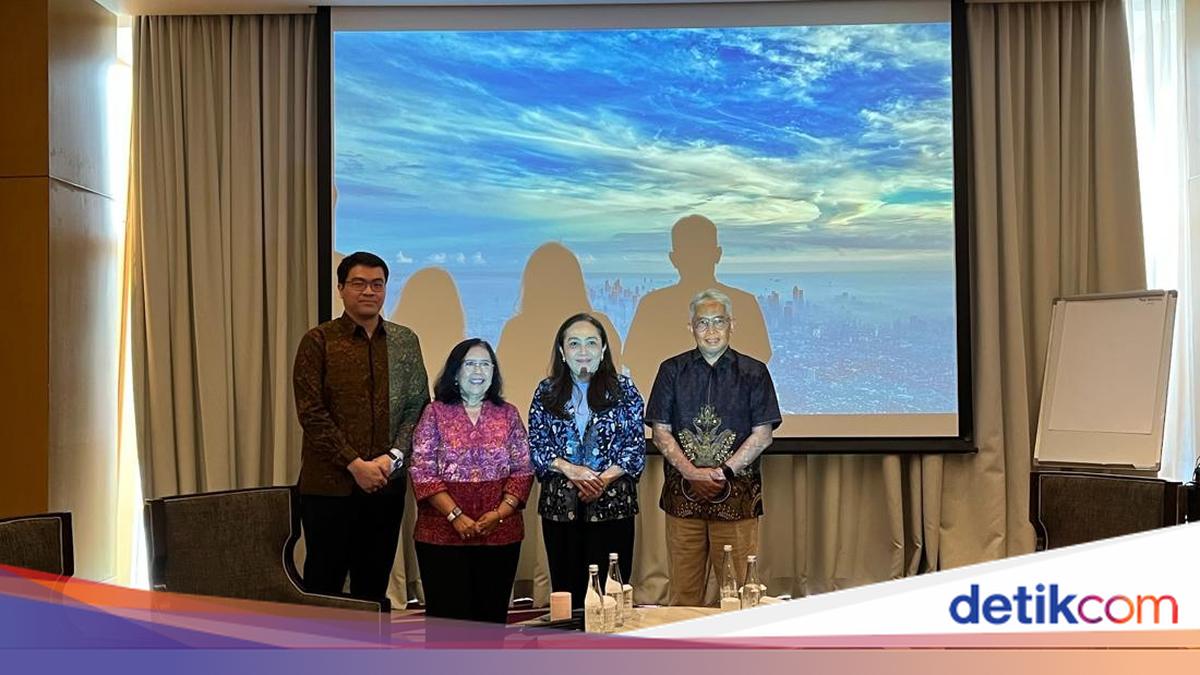
A study by Institut Teknologi Bandung (ITB) has revealed that the sources of air pollution in the Greater Jakarta area (Jabodetabek) do not originate from a single sector or a single region. Based on the findings, the industrial and transport sectors are the main contributors to air pollution.
ViriyaENB partnered with ITB to map the sources of air pollution and identify the sectors contributing to the high levels of pollution in Jabodetabek.
Professor of Environmental Engineering at ITB, Prof. Ir. Puji Lestari, said the study was conducted to identify sources of air pollution through two approaches: emissions inventory and source apportionment.
“We have been monitoring for one year, namely in 2025. This includes the most recent monitoring, which was carried out from February to December 2025. Based on the chemical composition, we can identify what the sources are and what percentage they contribute through source apportionment,” said Prof. Puji at The Westin Jakarta, South Jakarta, on Thursday (20/8/2026).
During the monitoring period, analysis of PM2.5 samples collected in West Jakarta showed an average PM2.5 concentration of 34.1 μg/m³. This value far exceeds the annual PM2.5 quality standard set out in Government Regulation Number 22/2021 on the Implementation of Environmental Protection and Management (15 μg/m³) and the US-EPA standard (9 μg/m³), and is approximately 6.8 times the annual guideline value of the World Health Organization (5 μg/m³).
The transport sector is the dominant source in Jakarta and several satellite cities. The industrial sector is the dominant source in Bogor Regency and Tangerang City. Meanwhile, power plants are the dominant source in Bekasi Regency and Tangerang Regency.
Within Jakarta’s transport sector, emission sources also differ by vehicle type, with diesel-fuelled vehicles contributing the highest PM2.5 emissions. Trucks account for 34.96% of PM2.5 emissions, followed by diesel passenger cars at 21.21%. These findings indicate that air pollution control policies in the transport sector need to be directed at the most relevant sources and pollutants, rather than simply at the number of vehicles.
Control of diesel vehicles and heavy fleets needs to be strengthened, alongside the acceleration of cleaner vehicles and better, low-emission public transport.
“So, in Jabodetabek, the industrial sector is the largest contributor, followed by transport, and then power generation. This differs from Jakarta. In Jakarta, the transport sector is the largest, followed by industry, and then power generation. So, there is a difference between the source profile in Jabodetabek as a whole and in Jakarta,” said Prof. Puji.
Southeast Asia Director of ITDP, Gonggomtua Sitanggang, added that controlling emissions from the transport sector needs to be carried out through a number of measures, from strengthening public transport to encouraging the public to reduce the use of private vehicles.
According to him, strengthening public transport in Jabodetabek is not enough through infrastructure development alone. Integration must also cover services, fares, operators, and institutions, because public mobility and air pollution do not recognise administrative boundaries.
“Pollution does not recognise administrative boundaries, and transport does not recognise administrative boundaries either. Therefore, institutional integration for transport is also needed,” said Gonggomtua.
Therefore, the government must improve service comfort so that people are willing to switch from private vehicles to public transport.