
ITB Study: Jabodetabek Air Pollution Requires Cross-Sector Handling
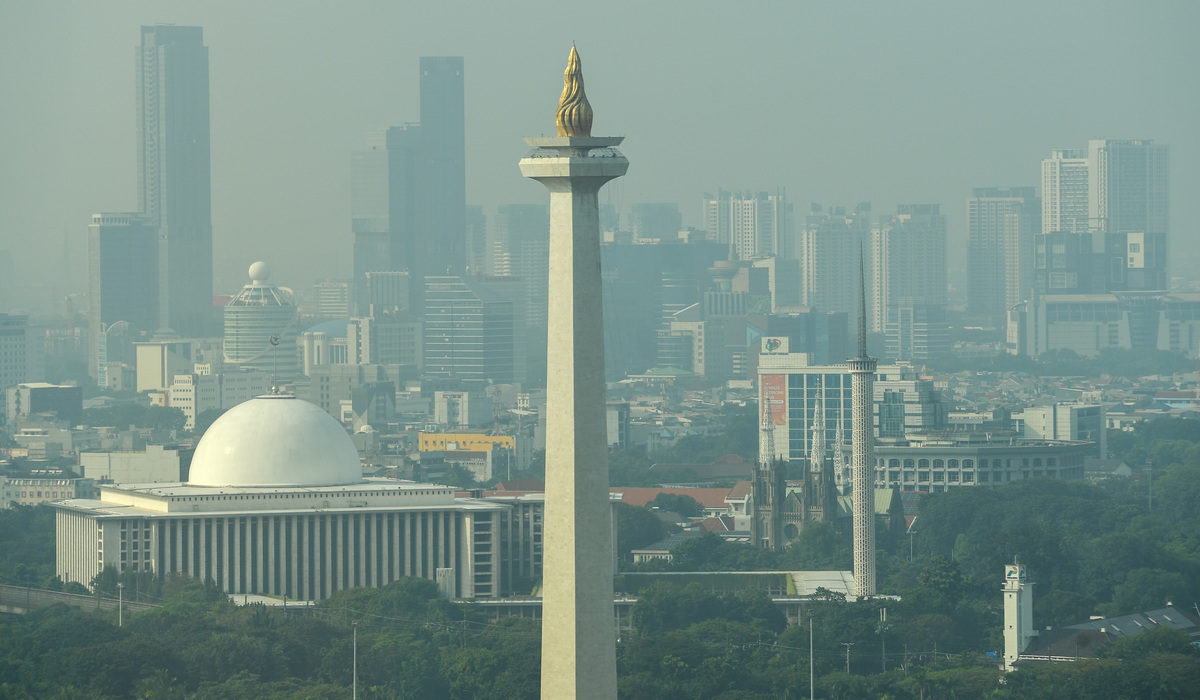
A recent study from the Bandung Institute of Technology (ITB) confirms that the air pollution problem in the Jakarta, Bogor, Depok, Tangerang, and Bekasi (Jabodetabek) area cannot be resolved partially. Addressing air quality in this megapolitan region requires integrated collaboration that transcends administrative boundaries and sectoral egos.
Professor Puji Lestari, Professor of Environmental Engineering and Head of the Air and Waste Management Expertise Group at ITB’s Faculty of Civil and Environmental Engineering, explained that air quality in Jabodetabek is heavily influenced by a combination of factors, ranging from heavy vehicles, logistics, commuter mobility, industrial activity, to power plant operations.
“These findings show that the air quality issue in Jabodetabek cannot be viewed from just one type of vehicle or one sector alone,” said Professor Puji in an official statement in Jakarta on Friday (21/8/2026).
Based on emissions inventory data, the study maps the differences in primary pollution sources in each area. Cumulatively, greenhouse gas emissions in Jabodetabek are estimated to reach 88.53 million tonnes per year. The largest contribution comes from the industrial sector at 35 per cent, followed by power plants at 31 per cent, and the transport sector contributing 26 per cent.
“Pollution does not follow administrative boundaries, so our response must also move beyond those boundaries. Jabodetabek needs to be managed as a single integrated air quality policy unit,” Professor Puji stressed.
Suzanty Sitorus, Executive Director of ViriyaENB, added that the ITB study results must be promptly translated into measurable emission reduction targets. She emphasised the importance of clear division of responsibilities between regions.
“Jabodetabek requires a single cross-regional air quality strategy framework that can be monitored and accounted for transparently,” said Suzanty.
In line with this, Gonggomtua E. Sitanggang, Southeast Asia Director of the Institute for Transportation and Development Policy (ITDP) Indonesia, assessed that this study serves as a crucial basis for reforming the transport sector, which remains fragmented across regions. ITDP plans to use this data to develop transport models that are more effective in reducing emissions based on evidence.
The ITB research team provided a number of strategic recommendations to improve air quality in Jabodetabek. These findings are expected to become the primary reference for local governments in formulating Air Quality Protection and Management Plans, as stipulated in Environment Ministry Regulation No. 5 of 2026.