
ITB Researchers Warn of Volcanic Awakening After Long Dormancy
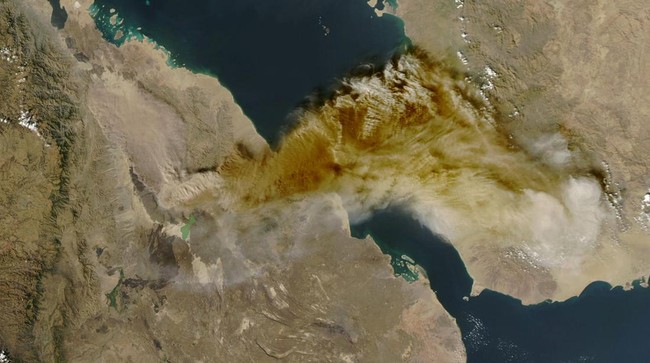
The eruption of Mount Hayli Gubbi in Ethiopia in November 2025 has shocked the world of volcanology, as the volcano became active after being dormant for over 12,000 years. This unusual phenomenon has drawn the attention of ITB researchers, including Dr Mirzam Abdurrachman, a lecturer in the Petrology, Volcanology, and Geochemistry group at ITB’s Faculty of Mathematics and Natural Sciences.
Dr Mirzam explained that volcanoes are generally classified into three categories: active, dormant, and extinct, though the boundaries between these categories can be difficult to define precisely. A volcano is considered active if it has erupted during the Holocene period, roughly within the last 11,650 years, indicating that its magmatic system remains relatively active. Dormant volcanoes are those that have not erupted for thousands of years but still possess the potential to awaken. He cited Mount Sinabung in Indonesia, which became active in 2010 after more than 400 years of dormancy, as a key example.
Within the dormant category, there is a sub-type known as ‘restless volcanoes’—those that appear quiet on the surface but show signs of magmatic activity underneath. In Indonesia, these are known as Type B volcanoes, and there are at least 30 such volcanoes spread across Sumatra, Java, Bali, Nusa Tenggara, and Maluku. Conversely, extinct volcanoes, such as Mount Baluran in East Java, have magmatic systems that have completely ceased.
Indonesia holds approximately 16% of the world’s volcanoes, totaling 127 active or potentially active peaks. The high population density living near these volcanoes increases vulnerability; globally, over 350 million people live within 30 km of active or potentially active volcanoes. Dr Mirzam also noted a significant gap in global monitoring, stating that fewer than 50% of the world’s volcanoes are adequately monitored. He concluded that increasing public understanding of volcanic dynamics is essential for those living within the Ring of Fire to coexist harmoniously with these natural forces.