
ITB Museum: A New Space to Read the Past and Weave the Future
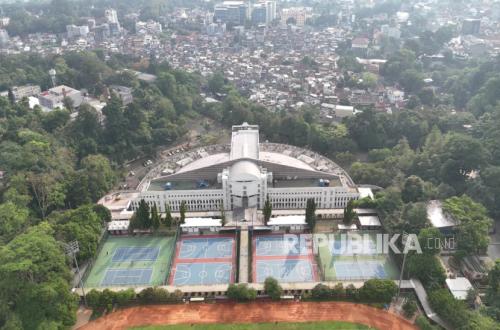
History is no longer confined to archives, photo albums, or the memories of its alumni. On Friday, 3 July 2026, on the 4th floor of the Sasana Budaya Ganesha Building at the Institut Teknologi Bandung, it was summoned back into the public sphere, given light, sound, narrative, and technology. The ITB Museum was inaugurated there, coinciding with the series of commemorations for the 106th Anniversary of Higher Technical Education in Indonesia.
The inauguration was not merely a ribbon-cutting ceremony. Minister of Culture Fadli Zon attended alongside ITB Rector Prof. Dr. Ir. Tatacipta Dirgantara, M.T. Among the invited guests, several figures lent historical and symbolic weight to the event: Sinta Nuriyah Wahid, Dato’ Low Tuck Kwong, Prof. Purnomo Yusgiantoro, Yani Panigoro, Subakat Hadi, and Nyoman Nuarta. These names were present not just as guests, but as part of the collaborative landscape that enabled the museum to be established.
The ITB Museum was opened as a space for historical preservation, an education centre, and a source of inspiration for future generations. The museum showcases ITB’s 106-year journey, from its institutional development and contributions to education, science, technology, and the arts, to the role of its figures and alumni in national development.
Yet, behind these official statements, the ITB Museum truly poses a larger question: how does a university store memories of itself, and then transform those memories into a driving force for the next generation?
After reviewing the exhibition space, Fadli Zon described the ITB Museum as an “extraordinary” exhibition. What he saw were not just objects, but the long journey of an institution. “I have just witnessed an extraordinary exhibition, the journey of ITB, right from its founding. We can even see the master register, Bung Karno’s report card, and then experiences about technology,” said Fadli.
He also highlighted the presence of the dome room, where visitors can watch an immersive film about technology, the universe, and the human curiosity that gives birth to science. For Fadli, this approach ensures the museum does not stop at being a display space, but moves towards becoming an experiential space.
“The spirit of the ITB Museum is the same as what is currently being developed towards STEM: Science, Technology, Engineering, and Math. We hope that more and more elementary, junior high, and senior high school students, as well as the general public, will come to the ITB Museum,” he said.
Fadli assessed that the museum provides “inspiration, reflection, and education” through a good narrative, strong exhibition design, and a participatory approach. According to him, the museum of the future can no longer treat visitors merely as passive spectators. “Future museums must involve participation from visitors. They are not just objects, but also participate in the museum experience,” he stated.
In his observation, the ITB Museum has adopted approaches commonly found in world-class museums: digital visualisation, interactive audio, and immersive experiences. “The digital intervention is already very extensive, immersive, and so on. Hopefully, this can serve as an example for other museums, both university museums and museums in general,” said Fadli. The ITB Museum sets a new standard for national museology through its use of digital technology and immersive experiences.