
ITB Expert Warns of Clean Water Crisis in Cimahi Due to Land Exploitation
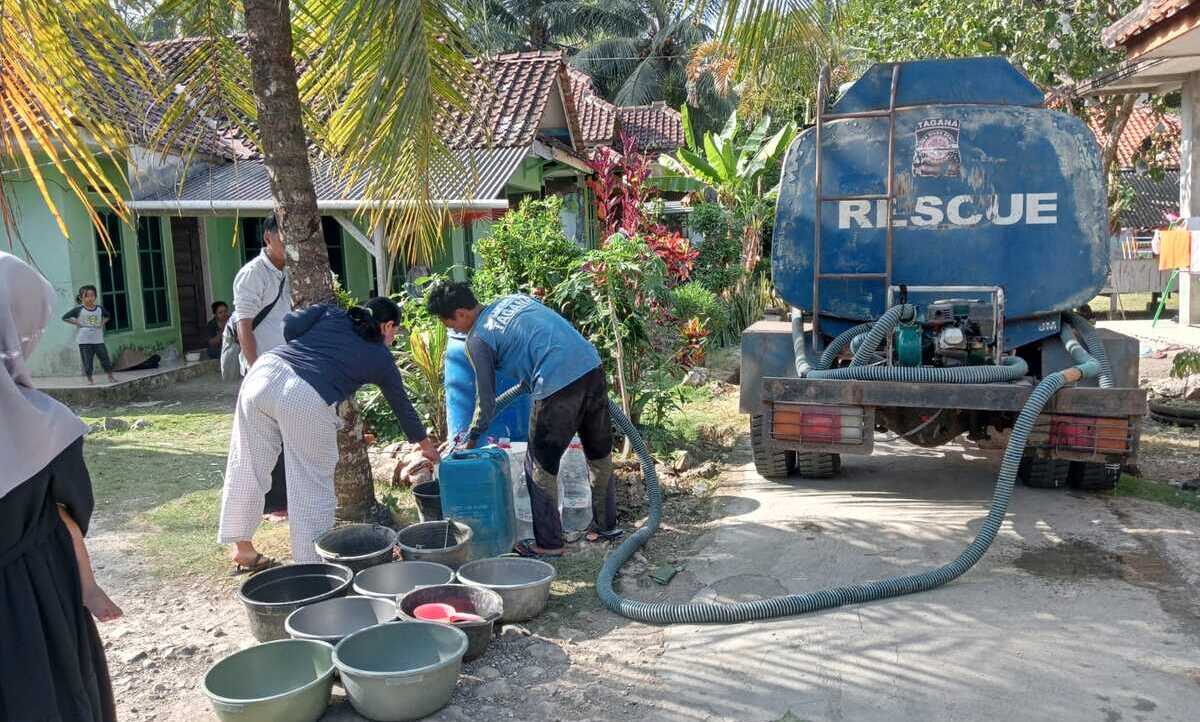
The threat of a clean water crisis in Cimahi City, West Java, is becoming increasingly alarming. Heri Andreas, Head of the Geodesy Laboratory at the Bandung Institute of Technology (ITB), warned that massive groundwater exploitation is the main trigger worsening drought conditions, especially ahead of this year’s predicted long dry season. “We are not aware that we have been exploiting groundwater, even though the evidence is right before our eyes. Groundwater suddenly dries up, and it gets worse during the dry season. We must be concerned; predictions indicate extreme drought will occur by 2050,” Heri said in Cimahi on Wednesday (17/6/2026).
According to expert analysis, South Cimahi District is the most vulnerable area. Several sub-districts in the region have already become accustomed to clean water difficulties every year. Conditions there force residents to spend extra money to buy clean water to meet their daily needs. “Even outside the dry season, some people in South Cimahi experience drought and have to buy water,” Heri added.
Data from the Centre for Groundwater and Environmental Geology (PATGL) of the Geological Agency reveals a worrying fact. The groundwater level in the Greater Bandung area, including Cimahi, has dropped to a depth of 60 to 100 metres. Heri explained that the aquifer layer at a depth of 50-100 metres has already suffered serious damage. Continued exploitation forces drilling to depths of 200 metres, which will further damage deeper groundwater layers. If groundwater exploitation patterns are not immediately controlled, a permanent clean water crisis is predicted to strike extremely by 2050.
In response to this threat, the Cimahi Regional Disaster Management Agency (BPBD) has mapped 312 community units (RW) potentially affected by drought. The peak of the dry season is predicted to begin in August. Head of BPBD Cimahi, Fithriandy Kurniawan, confirmed that the southern region is the worst affected point due to residents’ dependence on groundwater and limited PDAM services. “We have prepared a clean water distribution scheme through coordination with the Housing and Settlement Area Agency (DPKP) and Perumda Tirta Raharja. Water supply operations will be carried out as soon as reports of shortages are received from the community,” concluded Fithriandy.