
ITB Expert Explains Earthquake and Groundwater Risks in Geothermal Projects
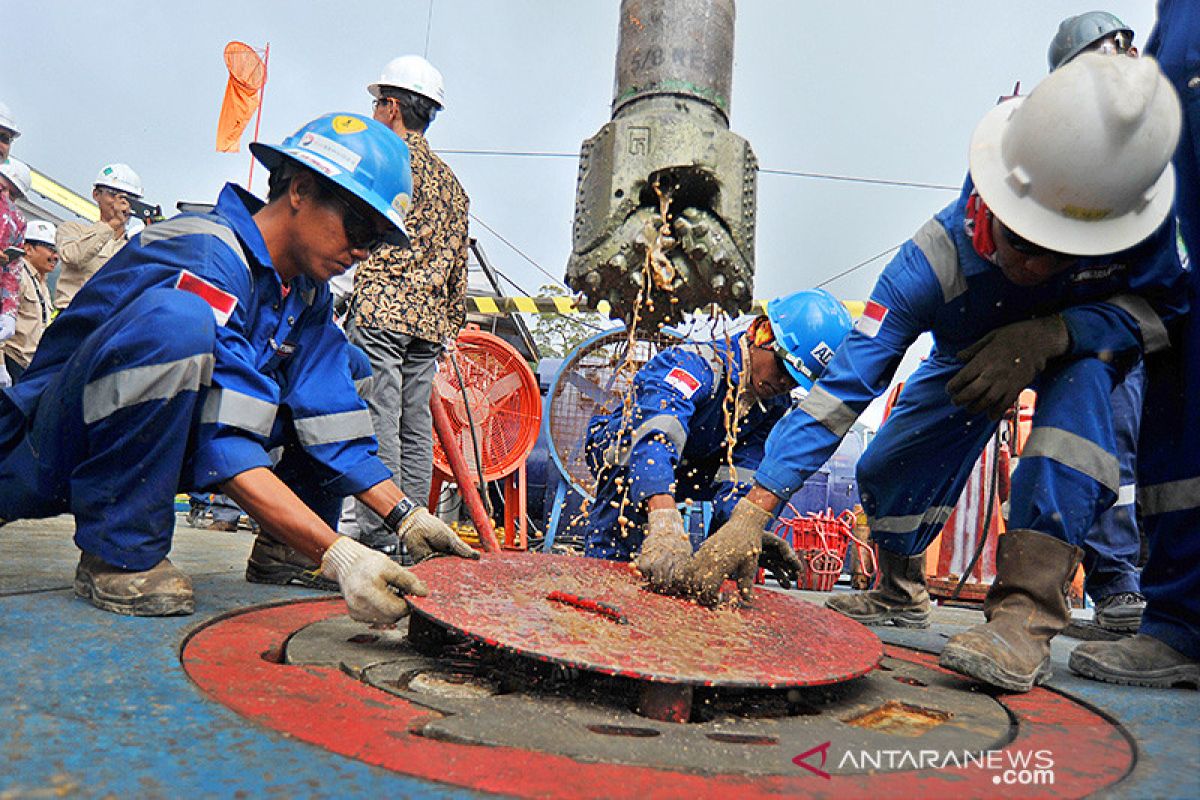
Bandung (ANTARA) – Institut Teknologi Bandung (ITB) Professor Lambok Hutasoit has explained the safety aspects of geothermal drilling in response to public concerns about the potential for earthquakes, groundwater disruption and uncontrolled flows during exploration.
“Ah, I say it is 100 per cent safe. There is no problem with drilling,” Lambok said while giving an explanation at the Kamojang Geothermal Power Plant (PLTP) in Bandung Regency, West Java, on Tuesday (20 October).
He said the public needed to understand the drilling process and the geological characteristics beneath the surface so as not to be misled by inaccurate information about geothermal development.
One concern he addressed was the belief that drilling activity could directly trigger earthquakes.
“Drilling just means making a hole, doesn’t it? You make a hole in the rock, that’s all. What does that have to do with an earthquake?” he said.
Lambok explained that drilling involves making a hole through rock layers to reach a geothermal energy source.
In geothermal development, the risk of induced earthquakes can be linked to changes in fluid pressure within a reservoir, including those caused by injection and production activities. Reservoir management and seismic monitoring are therefore important parts of risk control.
Lambok also responded to concerns that geothermal activity could disrupt groundwater sources used by local communities.
He said aquifers, or groundwater-bearing rock layers, are generally located at different depths from geothermal reservoirs.
According to him, cap-rock layers with low permeability can limit hydrological connections between a geothermal reservoir and the aquifers above it.
In drilling operations, groundwater protection also requires proper well construction, including the installation of casing and cementing to isolate the rock layers traversed by the well.
Lambok added that drilling to depths of around 2,000 metres was common practice for reaching geothermal reservoirs.
He said this depth was relatively shallow compared with the thickness of the Earth’s crust.
On the risk of uncontrolled flows caused by fluid pressure during drilling, Lambok cited the use of pressure-control equipment as a safety measure.
“Every drilling operation has a blowout preventer. It is monitored continuously,” Lambok explained.
A blowout preventer is a safety device used to help control pressure and prevent the uncontrolled release of fluids from a well.
Drilling safety also requires an understanding of local geological conditions, the application of operating procedures and monitoring throughout the activity.
Kamojang Geothermal Power Plant is one of the milestones in Indonesia’s geothermal energy development. Pertamina began exploring the area in 1974, while the first geothermal power plant there began commercial operations in 1983.
According to data from PT Pertamina Geothermal Energy Tbk (PGE), the Kamojang area currently has five power plant units with a total installed capacity of 235 megawatts (MW).
The plants use geothermal steam to generate electricity and form part of Indonesia’s renewable energy development.
More than four decades of operating the Kamojang plant provide a backdrop for discussions on drilling technology, reservoir management and environmental risk control in geothermal activities.
Lambok stressed the importance of science-based explanations so the public can understand geothermal development and the measures used to control its risks.