
ITB Expert: 'Acoustic shadow' phenomenon behind Bandung booms
A more in-depth study is certainly needed.
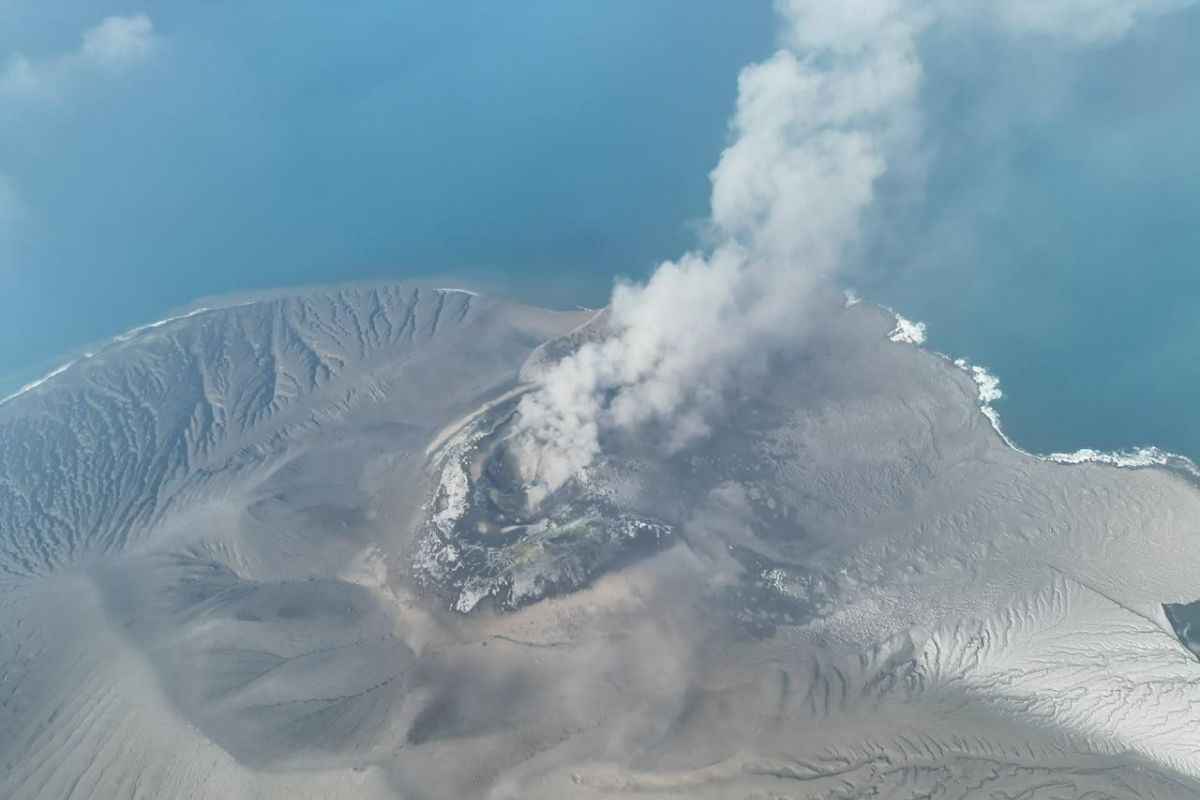
Bandung (ANTARA) - Volcanology expert from ITB Mirzam Abdurrachman considers the atmospheric phenomenon of the acoustic shadow zone to be the most plausible scientific hypothesis to answer the puzzle of the mysterious booms in Greater Bandung following the eruption of Mount Anak Krakatau.
The lecturer at ITB’s Faculty of Earth Sciences and Technology said in Bandung on Sunday that the acoustic shadow zone mechanism explains the technical reason why the eruption’s sound waves were not clearly heard in coastal areas close to the Sunda Strait crater, but instead bounced back and were heard very intensely in the mountainous region of West Java hundreds of kilometres away.
Mirzam explained that differences in temperature as well as wind direction and speed at certain altitudes can cause sound waves to undergo upward refraction until they pass through a shadow zone, before finally being bent back towards the ground surface at a distant location.
“Some of the sound energy moving above the shadow zone can undergo scattering due to atmospheric turbulence. Under certain conditions, the waves can also undergo diffraction so that some of their energy returns to the surface at a more distant location,” said Mirzam.
“Not necessarily. Further study is needed to confirm the source. So, last night’s boom remains an interesting question, not a conclusion. A more in-depth study is certainly needed,” he said.
This opinion also bridges the disagreement between the Geological Agency, which strongly suspects the boom is linked to Krakatau’s lava fountain eruption, and BMKG, which stated there was no record of local seismic activity in Greater Bandung, nor any eastward-blowing wind that would support the occurrence of such a phenomenon.
To prove the correlation, he said, the research team must still match the time lag of the sound wave arrivals, signal characteristics, regional topography, and the atmospheric dynamics of western Java.
Regarding the activity level of Mount Anak Krakatau, which remains at Level III (Alert), he also urged the public not to panic, to improve disaster literacy, and to comply with the safe exclusion zone of a 3-kilometre radius from the active crater.