
ITB Encourages Use of Technology to Strengthen Communication Crisis Management in Universities
Digital technology advancements have transformed how institutions manage public communication, particularly when facing various crisis situations. Amidst the rapid and massive flow of information, the ability to detect, analyse, and respond to issues accurately has become a vital necessity for universities.
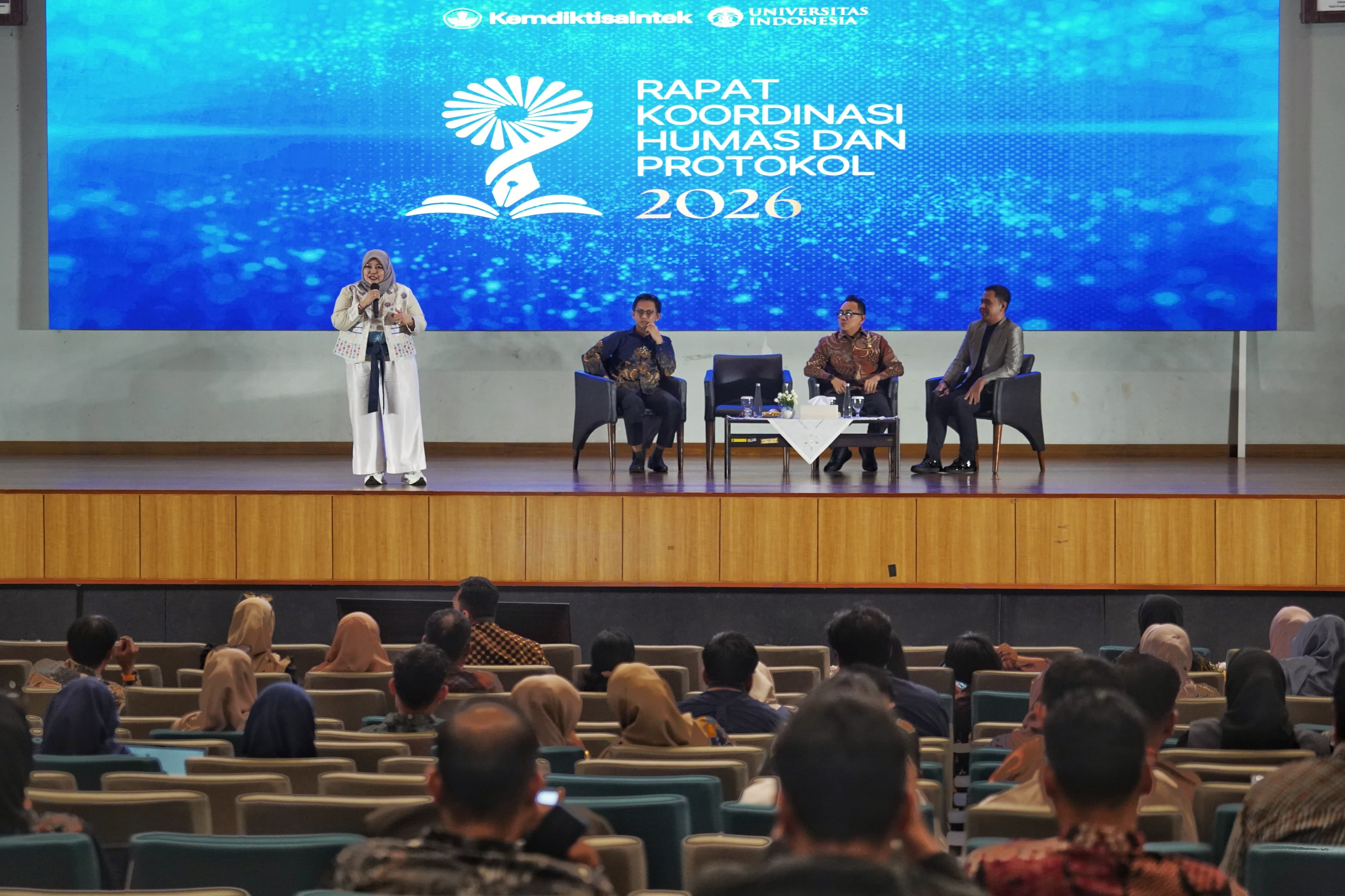
This issue was highlighted during the 2026 Public Relations and Protocol Coordination Meeting of the Directorate General of Higher Education, Science, and Technology (Diktisaintek), held at the University of Indonesia (UI) campus, Depok, on Wednesday (3/6). The event was attended by approximately 350 university public relations practitioners from various regions across Indonesia.
In the forum, the Director of Communication and Public Relations at the Bandung Institute of Technology (ITB), Dr N. Nurlaela Arief, shared experiences regarding the utilisation of technology in managing communication crises within the university environment. According to Nurlaela, managing crisis communication can no longer rely solely on intuition or reactive responses; every communication step must be built upon accurate and accountable data.
Regarding the role of technology, she explained that it plays a strategic role in helping institutions understand issue developments more comprehensively. Through the use of data and various digital tools, institutions can map public perception, monitor social media conversations, and identify potential crises at an early stage. “By using technology, we can play an important strategic role, such as contributing to critical decision-making,” said Nurlaela.
She added that the use of technology not only helps accelerate communication responses but also supports more precise decision-making processes by institutional leaders. With real-time data available, various potential risks can be anticipated before they escalate into larger crises.
Regarding communication at ITB, Nurlaela revealed that the communication strategy implemented is not centralised solely within the public relations unit but involves all campus elements, including faculties, schools, and various other work units. This approach ensures that every unit possesses adequate communication capacity when facing issues that could potentially affect the institution’s reputation.
She noted that strengthening communication capacity at the unit level is crucial because information sources often originate from various organisational lines. With a shared understanding, responses to issues can be carried out in a more coordinated and consistent manner.
Despite technology being a vital instrument, Nurlaela emphasised that the success of crisis management still depends on coordination and collaboration between parties. Intensive communication between leaders, work units, and other stakeholders is the primary factor in maintaining the accuracy of information delivered to the public. “With technology and intensive communication, we do not work alone, but involve various parties,” she stated.
The forum also featured the Director of Public Relations, Media, Government, and International Relations at the University of Indonesia, Erwin Agustian Panigoro, and the Director of Cooperation, Communication, and Marketing at the Bogor Agricultural University (IPB), Alfian Helmi, as speakers.
In addition to hundreds of university public relations practitioners, the event was attended by the Vice Minister of Higher Education, Science, and Technology, Fauzan, several directors-general within the Ministry of Higher Education, Science, and Technology, and the Director of Downstreaming and Partnerships of Kemendiktisaintek, Yos Sunitiyoso.
During the forum, participants discussed various public communication challenges faced by universities in the digital era, ranging from the rapid spread of information and increasing public expectations for institutional transparency to the importance of maintaining campus reputation amidst global competition.
Nurlaela asserted that strengthening human resources, utilising technology, and cross-unit coordination must be part of the future communication strategy for universities. She believes the combination of these three aspects will help institutions face the dynamics of public communication more responsively, accurately, and measurably. “Universities must be prepared to face a very dynamic communication landscape. Therefore, HR readiness and the use of technology are important factors in maintaining public trust in the institution,” she concluded.