
Italy to Ban Burqa and Niqab and Limit Foreign Students: What are the Reasons?
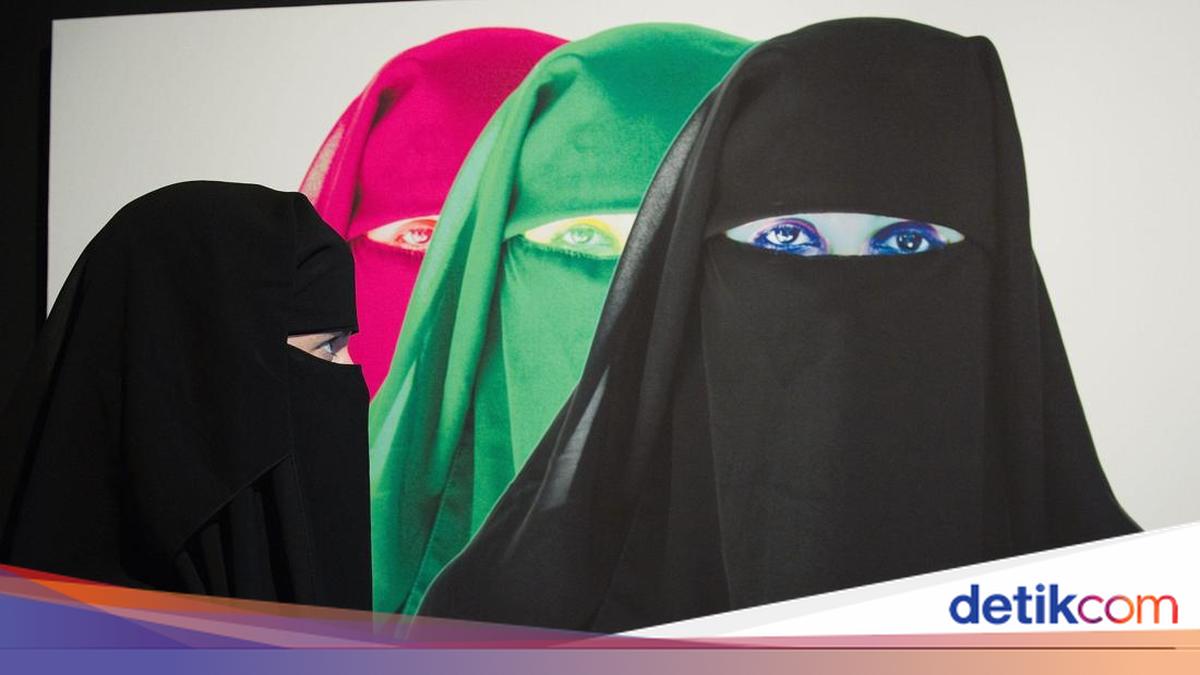
The Italian government will ban the use of the burqa and niqab in schools. Gender equality has been cited as the primary reason for the approval of this regulation by Prime Minister Giorgia Meloni.
“Going to school must be done with an open face,” Meloni stated when announcing the implementation plan on Sunday (20/09). She added that no one has the right to decide that a teenage girl must hide herself behind a face covering in the name of tradition.
Previously, several draft regulations were prepared ahead of the cabinet meeting. The main points are clear: prohibiting face coverings such as the burint and niqab in schools. The niqab is a face covering that leaves the area around the eyes visible and can be worn with a hijab. The burqa is a one-piece covering that covers both the face and body, often featuring a mesh screen around the eyes to allow the wearer to see. Meanwhile, the Italian government will continue to permit the hijab, which leaves the wearer’s face visible.
In addition to the ban on the burqa and niqab, the government is also regulating the proportion of foreign students in each class. A maximum limit of 30% has been set for students who are not Italian citizens or are not fluent in Italian.
Opposition parties have accused the government’s decision of accommodating the policies of the far-right party, Futuro Nazionale, in alignment with next year’s general elections. Regarding the implementation, Meloni claimed this is a “sensible way that is not divisive and is very helpful for the process of social and cultural integration.”
She believes this step could encourage immigrants arriving in Italy to adapt quickly to the rules and culture of the country. The Italian Minister of Education, Giuseppe Valditara, sought to emphasise that the ban on the niqab and burqa is indeed related to gender equality and cultural integration. Furthermore, the ban aims to facilitate the identification of students’ identities during teaching and learning activities.
Regarding the limitation on foreign students and Italian language proficiency rules, he stated, “this limit relates to linguistic barriers” and is “not a matter of citizenship.”
According to data from the research institute Fondazione ISMU, the number of foreign students accounts for approximately 11.6% of all pupils in Italy. The 30% maximum limit per class will be applied differently across educational levels. In primary schools, the policy will target children not born in Italy who have not attended kindergarten for two years. For lower and upper secondary schools, the rule applies to students who do not hold Italian citizenship and have not completed at least three years within the Italian education system.
Local education departments will be requested to distribute students with minimal Italian language proficiency to nearby schools according to the specified limits to ensure even coverage. However, if this is not possible, exceptions will be made by providing additional Italian language materials. Valditara claimed that this implementation aims to avoid “ghetto classrooms.”
According to the news agency Ansa, the draft policy also targets parents facing language barriers. Schools will be required to report to social services if they find children struggling to adapt linguistically due to parental influence. Free Italian language courses will be offered to these parents.
The regulation will take the form of a legal decree that could take effect immediately, pending ratification by Parliament within 60 days.
Political intrigue is also suspected to be underlying this new law. The political opposition accuses Meloni of attempting to gain favour by making promises to Roberto Vannacci, a retired military general currently leading the far-right political party Futuro Nazionale. This is because the party is seen as a threat to the current ruling right-wing coalition.
The leader of the centre-left Democratic Party (PD), Elly Schimin, described the plan as propaganda that is impossible to implement. Anna Ascani, Deputy of the PD and Deputy Speaker of the Italian Parliament, also accused the government of conducting propaganda at the expense of schoolchildren.
In a video conference from New York, Valditara denied these allegations, stating, “We are not approaching Vannacci. On the contrary, he is the one pursuing us.”
Separately, Vannacci supported these measures, stating that such rules should have been implemented years ago. Meanwhile, Matteo Salvini of the League Party launched a policy package termed “political Islam,” aimed at regulating Islamic religious activities in Italy, which also includes the ban on the burqa and niqab. Salvini hopes that Futuro Nazionale, led by Vannacci, will support the new proposals from his party.
Italy is not the first country to ban the burqa and niqab. Austria implemented similar regulations in 2017, and in September 2026, Austria expanded its rules to include a ban on the hijab for children.
Source: jawawa.id (https://jawawa.id/newsitem/italy-to-ban-burqa-and-niqab-and-limit-foreign-students-what-are-the-reasons-1790416508)
Originally published by detikcom (https://news.detik.com/bbc-world/d-8680287/italia-larang-penggunaan-cadar-dan-batasi-siswa-asing-apa-alasannya), translated from Indonesian