
Italian Foreign Minister’s Data Leaked as Hackers Offer Bounty for Information on His Family
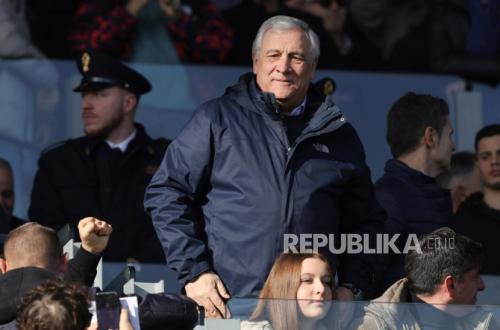
JAKARTA — Italian Foreign Minister Antonio Tajani has been targeted in a digital intimidation campaign after his personal information circulated on the dark web, a part of the internet where users can conceal their identities. The perpetrators have even offered rewards to anyone willing to provide further information about Tajani and his family.
The case has shaken the Italian government after Tajani publicly disclosed the threat on Saturday (7 November 2026). The minister, who is also deputy prime minister, said his personal data had been disseminated for several days and used to gather further information about people close to him.
Italian Prime Minister Giorgia Meloni immediately condemned the incident. She linked the dissemination of the data to pro-Russian hackers and described the trading of personal information about state officials as a serious threat requiring decisive action.
According to reports by Reuters and the Associated Press on 7 November, the perpetrators did not merely circulate information they had already obtained. They also sought additional data by offering payment to people able to provide information about Tajani and his family members.
The case has prompted the Italian government to pay closer attention to cyber threats against public officials. Tajani has asked for the issue to be included in discussions at a meeting of G7 foreign ministers in Paris, France, on 9–10 November 2026.
The Italian government has not yet explained in detail what personal information was exposed. Nor has there been confirmation that confidential diplomatic documents or internal systems at the Foreign Ministry were breached.
Hackers Offer Payment for Information on Family
Tajani said the attack against him had been under way for several days before it became public. The perpetrators, he said, distributed personal information through the dark web and actively sought further details.
In a statement on the platform X, Tajani said the actions had created new threats to the safety and privacy of both himself and his family. He viewed the collection of information as more than a personal data breach, describing it as part of an intimidation effort.
The perpetrators, according to Tajani, were prepared to pay for further information about him and people close to him. He did not say how much they had offered or whether anyone providing information had actually been paid.
The pattern suggests the threat went beyond circulating information already obtained. The perpetrators also sought to expand their collection of data through others who might have access to the target’s private life.
Tajani said he would not change his political stance or government activities because of the threats.
“I will not be intimidated in any way,” Tajani said, according to the Associated Press.
He said he would continue to carry out his duties to protect Italy’s interests and strengthen cooperation with allied countries. The Italian government would also step up preventive measures in response to increasingly sophisticated digital threats.
Italian Foreign Minister Named on List of 18 Figures
The investigation indicates that Tajani was not the only official targeted. Reuters reported that screenshots from the dark web showed a photograph of Tajani on a list of 18 people labelled as hostile to the Russian Federation.
The list also included several cybersecurity experts. However, the designation of these individuals as enemies of Russia was a label applied by those who circulated the list, not a legal status or an official state designation.
According to Rai News, other Italian officials were also targeted by data disclosures and requests for information. They include Rome Chief Prosecutor Francesco Lo Voi and Ivano Gabrielli, director of Italy’s Postal and Communications Police.
Paolo Tassan-Zanin, mayor of Aviano in northern Italy, was also named in a similar series of threats. Aviano is known as the site of an air base used by the United States military.
Italy’s Foreign Ministry confirmed that Tajani had expressed solidarity with the three officials. The ministry said they were facing similar threats related to the dissemination of personal information.
Italian media outlet Quotidiano Nazionale reported that the figures had been placed on a list resembling a virtual court. Those controlling the page were said to be seeking additional information about the targeted individuals.
Reuters verified the existence of the list of 18 through screenshots examined by its reporters. The identities of those managing the network, and the extent of each person’s involvement, still require further investigation.
Pro-Russian Hacker Group Under Scrutiny
Several Italian media outlets have linked the data disclosures to the pro-Russian hacking group NoName057(16). The group has previously been known for cyber-attacks against government institutions and digital infrastructure in countries that support Ukraine.
According to Rai News, information about Tajani and several other officials had allegedly been on the dark web for about two weeks. The group NoName057(16) was said to be behind the page listing names and soliciting further information.
However, the group’s alleged connection to the latest attack must be distinguished from forensic identification of those responsible. The Italian government has not published the full technical findings of its investigation identifying all parties involved.
Prime Minister Giorgia Meloni expressed solidarity with Tajani and condemned the hackers, whom she said were linked to pro-Russian groups. She said the exposure of government officials’ personal information was a security issue that must not be taken lightly.
Meloni also warned that attempts to trade officials’ personal information could put individuals’ safety and national interests at risk. Italy, she said, must respond firmly.
Russia, meanwhile, has made no specific statement acknowledging involvement in the incident. Reuters noted that Moscow consistently denies accusations of involvement in hacking operations abroad.
That distinction matters: a group’s declared political support for Russia does not by itself prove that its operations were directly ordered by the Russian government or intelligence services.
Source: jawawa.id (https://jawawa.id/newsitem/italian-foreign-ministers-data-leaked-as-hackers-offer-bounty-for-information-on-his-family-1794113469)
Originally published by Republika (https://news.republika.co.id/berita/to61uy451/data-menlu-italia-bocor-hacker-gelar-sayembara-cari-informasi-keluarganya), translated from Indonesian