
It is Time for Schools to Shape Water-Saving Habits
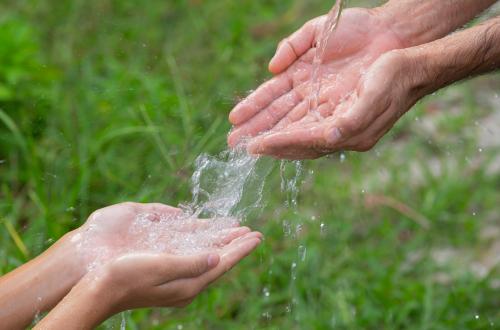
There is a simple lesson that is actually very important in daily life: using water sufficiently. Simple examples include closing the tap after washing hands, not leaving the water running while brushing teeth, reusing laundry water for certain purposes, immediately reporting leaking taps, or not taking excessively long showers.
The problem is that these habits often remain merely as knowledge. Children know that water must be saved, but they do not necessarily do it. Students may answer correctly when asked why water must be preserved, but they might still leave the tap open when leaving the bathroom.
Education is not enough to make children know what is good, but it must also shape the will and the habit to do what is good. Saving water is truly a concrete example of character education. It encompasses values of responsibility, discipline, care, cooperation, and the awareness that natural resources are not infinite.
The OECD warns that environmental knowledge does not automatically translate into action. In various OECD countries, environmental awareness among students is relatively high, but the proportion of those who actually take positive environmental action is much lower. Education should help students move from awareness to action.
From knowing to being habituated.
A classic problem in character education is that students are too often taught values through words but are given fewer opportunities to practise them. Students are told that littering is bad. However, does the school provide a system that makes them accustomed to sorting and disposing of waste?
Students are taught that water is very precious. However, have they ever calculated how much water the school uses in a single week? Have they ever searched for a leaking tap? Have they ever made a water-saving commitment together with their parents?
From a social learning perspective, a child’s behaviour develops through interaction with their social environment. This includes examples seen from teachers, peers, parents, and the institutions where they learn. Research on social learning among students in schools also shows the importance of the learning environment in shaping sustainable consumption behaviour.
What often arises is inconsistency. Teachers speak about saving water, but allow school taps to leak. Schools put up ‘Save Water’ posters, but the sanitation facilities are wasteful. In reality, students should learn from facts to form behaviour, not just from posters.
In truth, schools can start with simple things. For example, every class could have a ‘water ambassador’ tasked with reminding their classmates. Students could perform tap inspections every morning. Teachers could ask students to record school water usage for one month. The results could then be discussed in mathematics, science, social studies, and even Indonesian language classes.
In this way, water does not just become a topic in science class. Water becomes a context for cross-curricular learning as well as a medium for character education.
Best practices.
One interesting example of best practice is Singapore. As a country with limited water resources, Singapore does not treat water education as a momentary campaign. PUB, Singapore’s national water agency, works with schools and the Ministry of Education to introduce the water journey to students from an early age. The programme covers preschool, primary school, secondary school, and even universities.
In primary school, for instance, students can conduct a water audit. They learn to observe and calculate water usage within the school environment. At other levels, students conduct field investigations and learn how water is managed.
The message is very simple: students are ‘not just told that water is precious; they are made to experience why water is precious’. Such practices demonstrate that character education does not always have to take the form of lectures on values. Values can grow through real experience.
Similar practices are found in Queensland, an Australian state. The government provides a Waterwise Schools Toolkit that integrates water issues into various subjects. Students do not merely read about water, but perform school water audits, investigate dripping taps, learn about the water cycle, and examine sustainable water sources.
The important lesson from these experiences is that water education becomes more effective when schools serve as a laboratory for life. Schools should not only teach that ‘water must be saved’, but show how much water is used, where wastage occurs, and what can be done to reduce it.
Students as agents of change for the family.
Another equally important aspect is the relationship between school and home. Children spend part of their time at school, but habits are also formed at home. Therefore, water-saving programmes in schools should not stop at the school gates.
Students can be given simple tasks: conducting a home water audit with their parents. They can count how many taps are in the house, check for leaks, observe family bathing habits, or see if water is used excessively when washing vehicles. The task is not to blame parents; rather, children and parents are invited to become a single team to save water.
This approach has a strong foundation. Research on environmental education in Palembang in 2025, for example, specifically examined the relationship between environmental education and intergenerational knowledge transfer and household behaviour related to conservation.