
Istiqlal Mosque: From Symbol of Independence to Centre of Community Empowerment
JAKARTA – Istiqlal Mosque has long been a symbol of unity and a source of national pride for the Indonesian people. Standing majestically in the heart of the capital, the largest mosque in Southeast Asia serves not only as a place of worship for Muslims, but also as a meeting space for ideas that bring benefit to the wider community.
Built as an expression of gratitude for Indonesia’s independence, Istiqlal Mosque was from the outset designed as a symbol of national unity. As times have changed, its role has continued to grow. Today, Istiqlal is not only a centre of religious activity, but also a space for community empowerment that promotes collaboration, education, social services, and environmental conservation.
This transformation was further reinforced by the major revitalisation completed in 2021. Beyond providing more comfortable facilities for worshippers, the revitalisation expanded Istiqlal Mosque’s function as a centre for community empowerment, the development of moderate Islamic outreach, and a space that strengthens the values of tolerance and peace within society.
This commitment is also reflected in the mosque’s adoption of sustainability principles. Following the revitalisation, Istiqlal became the first house of worship in the world to receive the Green Building EDGE certification from the International Finance Corporation (IFC). The recognition was awarded for the application of environmentally friendly building concepts that improve energy efficiency through the use of energy-saving technology, as well as more modern building and environmental management systems. This spirit of sustainability became the foundation for various environmental care initiatives within the mosque’s vicinity.
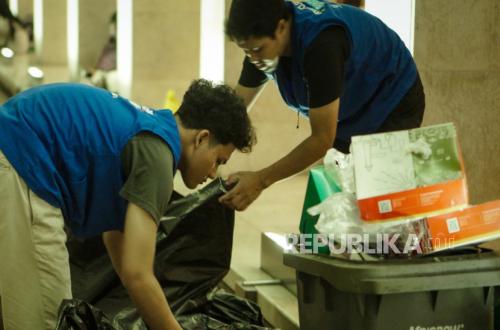
One programme embodying this spirit is the Clean Ramadan Programme. It invites the public, particularly worshippers and visitors to Istiqlal Mosque, to be wiser in sorting and managing waste during the holy month of Ramadan. Through education for worshippers, the provision of segregated waste bins, and collaboration with trusted waste-processing institutions, the programme aims to reduce the amount of waste ending up in final landfill sites.
The Clean Ramadan Programme has been running since 2024 through a collaboration between Istiqlal Mosque and Unilever Indonesia. Its results show tangible impact year on year. By Ramadan 2026, the programme had collected more than 35,000 kilogrammes of waste, comprising 9,134 kilogrammes in 2024, rising to 11,168 kilogrammes in 2025, and reaching 15,936 kilogrammes in 2026. These achievements reflect the growing public awareness of the importance of responsible waste management, even within the surroundings of a house of worship.
Istiqlal Mosque’s commitment to empowering the community does not stop at environmental issues. In the field of education and religious guidance, the national mosque also presents Serambi Istiqlal, a religious consultation service open to the public. Through this service, worshippers can consult on various Islamic matters, ranging from worship, muamalah (transactions), family issues, to inheritance.
The presence of Serambi Istiqlal demonstrates that the mosque’s function extends beyond a place of worship to become a space for learning, discussion, and finding solutions to life’s problems based on Islamic values. It also serves as an educational and dialogue forum that strengthens the relationship between the mosque and the community.
Istiqlal Mosque’s social role is also realised through various services that directly address community needs. One of these is the Integrated Circumcision Service, routinely held for children from low-income families. This year, the programme provided safe sterile circumcision services to 110 orphans and children from underprivileged backgrounds.
The programme was attended by the Minister of Religious Affairs of the Republic of Indonesia, who also serves as Grand Imam of Istiqlal Mosque, Prof. Dr. KH. Nasaruddin Umar, M.A. His presence underscored the importance of collaboration among various parties in providing accessible healthcare services to the public, particularly those in need.
These various initiatives show that Istiqlal Mosque’s role now goes beyond its conventional function as a place of worship. Care for the environment, strengthening religious literacy, social services, and access to healthcare are all part of efforts to build a more self-reliant, healthy, and empowered society.
By continuing to deliver programmes that address community needs and opening spaces for collaboration with various parties, Istiqlal Mosque is increasingly asserting its position as a centre of community empowerment. It is here that Islamic values are translated into concrete actions that benefit others whilst contributing to sustainable community development.
Source: jawawa.id (https://jawawa.id/newsitem/istiqlal-mosque-from-symbol-of-independence-to-centre-of-community-empowerment-1784735577)
Originally published by Republika (https://republika.co.id/berita//thsnts456/masjid-istiqlal-dari-simbol-kemerdekaan-hingga-menjadi-pusat-pemberdayaan-umat), translated from Indonesian