
Israel’s President Gives Gadi Eisenkot Mandate to Form Government
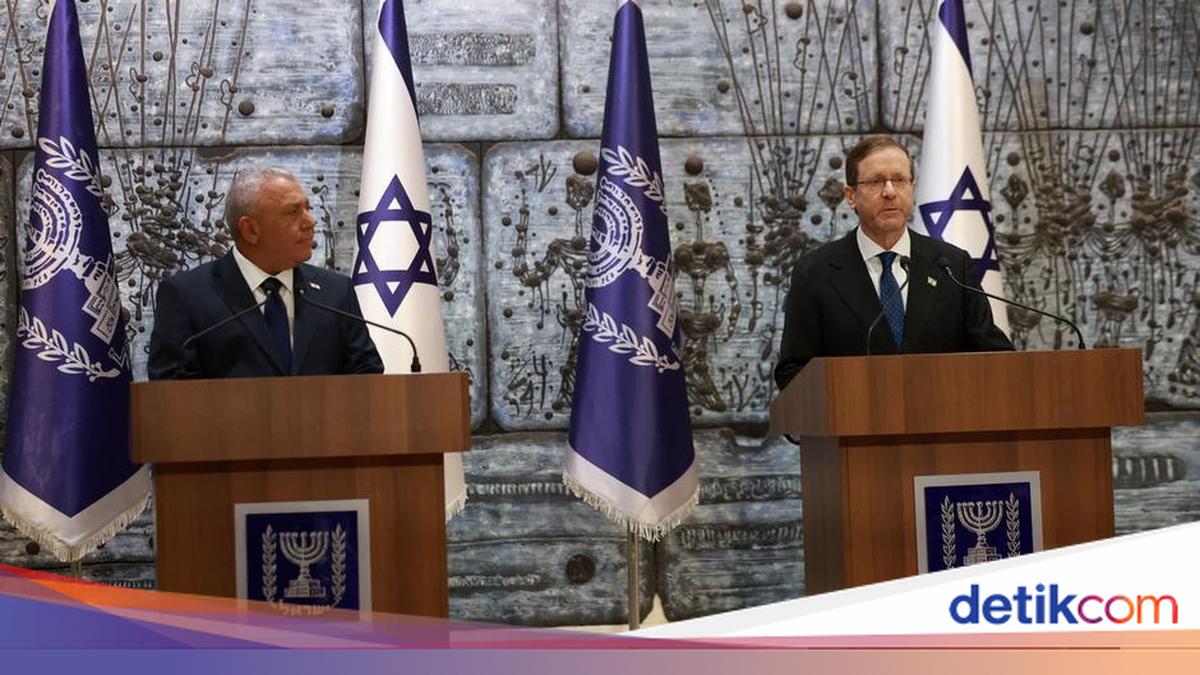
Israeli President Isaac Herzog has formally appointed Gadi Eisenkot to form a new government.
Eisenkot, leader of the centrist Yashar party, has 28 days to build a coalition that will replace Prime Minister Benjamin Netanyahu’s religious-nationalist government. Herzog may extend the mandate by 14 days.
“Talks with the various parties have been open and transparent, while once again bringing a range of voices in Israeli society to the fore. These discussions remind us that all Israeli citizens have an equal right to have their voices heard, across all sections of society,” Herzog said.
He stressed that Eisenkot had received the clearest backing from a majority of Knesset members, Israel’s parliament, to form the next government.
“The challenges we face are immense. Iran does not stop issuing threats for a moment. We must begin building the future of this region and continue with Trump’s 20-point plan for Gaza, while negotiating the future of relations with Lebanon and other neighbouring countries,” the Israeli president said.
“Israel needs a stable government to address these challenges,” he added.
Herzog said he hoped Eisenkot would make every effort to form a government capable of serving all sections of Israeli society.
Eisenkot, meanwhile, reaffirmed his commitment to forming a national emergency government.
“We cannot go on holding endless elections. I will send formal invitations to all Knesset members, whether as party representatives or as individuals, to hold talks,” he said.
Eisenkot also addressed fellow lawmakers. “The public has placed its hopes in us … We are in the most complicated political situation since the founding of the state of Israel,” he said.
What are the prospects for forming a coalition?
In Israel’s October election, Yashar became the second-largest party, with 21 seats, behind Netanyahu’s Likud, which won 27. Nevertheless, more Knesset members recommended Eisenkot as the person who should get the first opportunity to form a government.
Eisenkot received recommendations from 67 lawmakers, while Netanyahu was backed by 46. The ultra-Orthodox Ashkenazi Jewish party United Torah Judaism (UTJ) did not recommend any candidate, despite having joined Netanyahu’s governments for the past 17 years.
If Eisenkot fails to form a coalition, Herzog can give the mandate to another Knesset member. Netanyahu is expected to be the next candidate.
If the Likud leader also fails to form a government, and no other lawmaker can gather sufficient support, Israel is likely to hold another election.
Eisenkot faces a difficult challenge
If Israel’s Zionist parties are grouped by political bloc, Netanyahu’s religious-nationalist allies hold 53 seats, while the anti-Netanyahu bloc led by Eisenkot has 48.
Israel’s two Arab parties won a combined 19 seats, buoyed by high turnout among Arab and Palestinian voters, marking historic support in this election. Both have said they are willing to back the Zionist opposition in its effort to oust Netanyahu and his government. The religious Muslim party Ra’am, led by Mansour Abbas, has specifically said it is willing to rejoin a coalition to improve the welfare of Israel’s Arab and Palestinian communities.
In 2021, Ra’am made history as the first Arab party to join an Israeli governing coalition, after reaching an agreement with right-wing politician Naftali Bennett and liberal politician Yair Lapid.
The other Arab party, the Joint List, is an alliance of several smaller parties. Although it has never joined an Israeli governing coalition, its politicians have previously provided political support from the opposition to Yitzhak Rabin’s government during his second term as prime minister. At the time, Rabin’s government was advancing the Oslo Accords with the Palestinians. His term ended after he was assassinated in November 1995.
Campaign pledges at risk
Both Zionist political blocs in Israel had previously pledged not to rely on Arab party votes to form a coalition. This means Eisenkot’s bloc would have to break one of its campaign promises if it wants to form a government with those parties.
However, a poll by the Accord Center at the Hebrew University of Jerusalem, conducted two days after the election, found that 59 per cent of Israeli Zionist opposition voters preferred a government involving Ra’am, with the Joint List abstaining, to the alternatives.
Another option widely discussed in the Israeli media over the past week is the possibility of the two ultra-Orthodox parties joining an Eisenkot-led coalition. UTJ and the Sephardi ultra-Orthodox Jewish party Shas each hold seven seats. But forming a coalition with either would require Eisenkot to withdraw another campaign pledge: passing legislation requiring young ultra-Orthodox men to serve in the military. Both parties strongly oppose the policy, citing concerns about the future of religious education in Israel.
Shas supporters are also known for their right-wing political views and tendency to back Netanyahu. Its leader, Aryeh Deri, is considered one of the politicians closest to Netanyahu, Israel’s longest-serving prime minister.
What would this mean for Palestinians?
The new government, if formed, would have far-reaching implications for Palestinians living in the Israeli-occupied West Bank and the Gaza Strip.
Netanyahu’s current coalition includes two far-right parties, Otzma Yehudit and Religious Zionism, which won 13 seats between them in the October election. Both support annexing the West Bank, which is illegally occupied by Israel, and rebuilding Israeli settlements in the Gaza Strip. They also support a policy described as “voluntary migration”: a plan to move Gaza’s 2.1 million Palestinians to other countries. Most members of Netanyahu’s Likud party also support the plan.
The two far-right parties frequently offer political support to Israeli settlers who carry out violent attacks on Palestinians in the occupied West Bank.
Eisenkot has pledged to ensure that the Gaza Strip is no longer under Hamas rule within 18 months of becoming prime minister. That pledge contrasts with the policy of Netanyahu’s current government, which has allowed Hamas to control parts of Gaza, despite a US-mediated ceasefire agreement stating that a technocratic body should take over the territory’s administration from Hamas.
Although Eisenkot’s bloc includes several right-wing parties, their views differ from those of Netanyahu’s coalition. Naftali Bennett, leader of Beyachad, the second-largest party in the opposition bloc, describes himself as a right-wing politician and supports Israeli settlements.
However, Bennett has repeatedly strongly condemned settler attacks on Palestinians. Eisenkot has also condemned settler violence against Palestinians, saying it is a consequence of Netanyahu’s government policies.
Source: jawawa.id (https://jawawa.id/newsitem/israels-president-gives-gadi-eisenkot-mandate-to-form-government-1794221620)
Originally published by detikcom (https://news.detik.com/dw/d-8745305/presiden-israel-beri-mandat-ke-gadi-eisenkot-untuk-bentuk-pemerintahan), translated from Indonesian