
Israeli Stocks and Shekel Rank Among World's Worst Performers in June
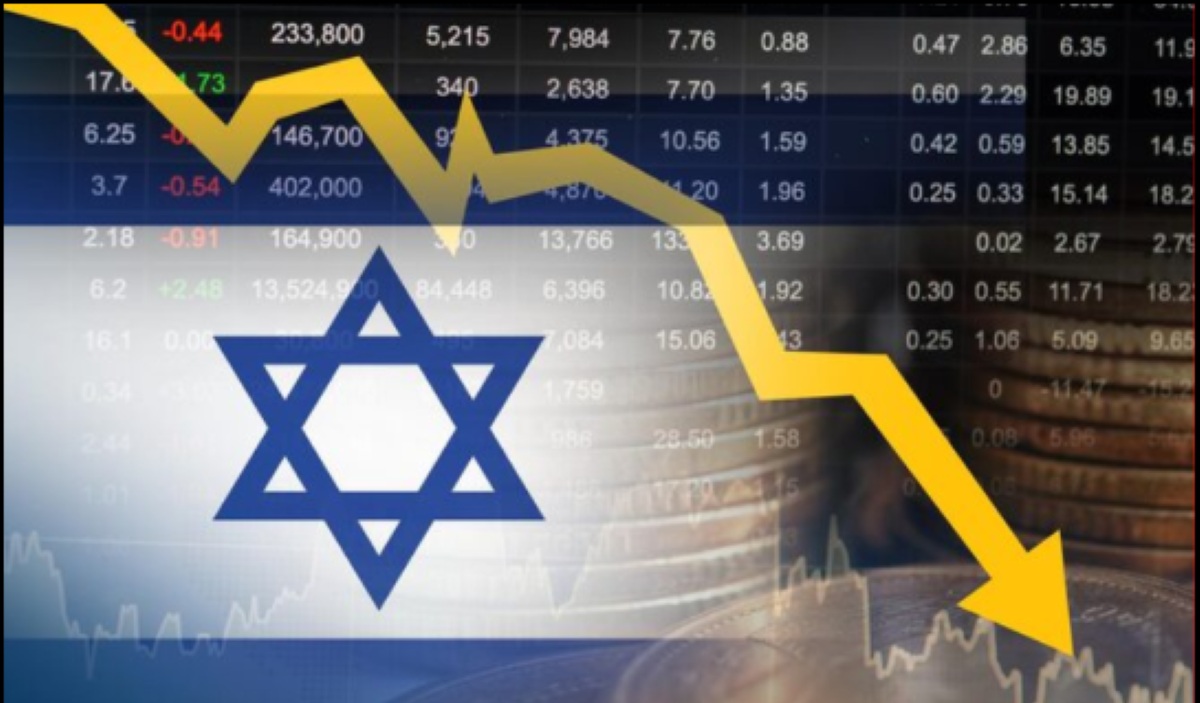
Israeli stocks and currency have reversed course to become some of the worst-performing assets globally in June. The pressure emerged amid investor concerns that a peace deal with Iran could place Israel in a weaker position against both its main enemy and its strategic allies.
The benchmark Israeli stock index, the Tel Aviv 35 or TA-35, plunged more than 12% in US dollar terms during the month. This decline was the largest among national benchmark indices. In percentage terms, the June sell-off is expected to be the deepest since October 2023, when the Hamas attack on Israel triggered a major war in the Gaza Strip that later expanded into Lebanon and Iran.
The pressure marks a sharp reversal after nearly three years of regional conflict had previously spurred a massive rally in Israeli assets. Investors had bet that Israel would emerge from the war with a stronger security position, supporting the growth prospects of its technology-based economy valued at around US$640 billion. From November 2023 until early this month, the shekel was the world’s best-performing currency, strengthening 42% against the US dollar. The Israeli stock market also nearly quadrupled, recording a larger increase than South Korea’s Kospi index and ranking just behind Ghana in global standings.
However, that rally has begun to unravel. Investors now assess that Israel risks losing peace as Iran and the United States start negotiating a cessation of hostilities. The shekel came under pressure alongside the TA-35, weakening about 5% against the US dollar throughout June, making it the currency with the largest decline globally during that period.
Bank Hapoalim, one of Israel’s largest banks, stated in a note to investors on Sunday (22/6) that the emerging deal between the US and Iran is perceived by local investors as insufficient to improve Israel’s long-term security position. “The developing deal between the US and Iran is viewed by local investors as failing to improve Israel’s long-term security posture,” Bank Hapoalim wrote. “More importantly, the deal does not meet the high expectations formed at the start of the military campaign against Iran.”
One of the most complex points in the US-Iran peace talks is Israel’s military operations in Lebanon. Israel is said to control a buffer zone stretching 10 kilometres from the border to confront Iran-backed Hezbollah. Prime Minister Benjamin Netanyahu on Sunday reiterated that Israel would maintain its presence in that area, as well as in controlled areas in Syria and Gaza, “for as long as necessary to protect our citizens.”
Israel itself is not participating in the US-Iran talks, although it is said to have initiated the war against Iran alongside the US at the end of February. Since negotiations began, repeated attacks in Lebanon have caused Iran to call for a halt to the talks. This has become a major source of tension between Netanyahu and US President Donald Trump. The deteriorating relationship between the two leaders has also become a market concern as the conflict appears to be easing. Piotr Matys, currency strategist at In Touch Capital Markets, said the worsening relationship between Trump and Netanyahu could be one factor prompting investors to take profits on the shekel. According to Matys, a breach of the 2.9800 shekel per US dollar level could signal further weakening. The shekel was trading at 2.9683 per US dollar at 10.30 London time.
The Tel Aviv Stock Exchange Research Division, in a weekly trading recap on Monday, noted that easing tensions in global markets have indeed supported lower energy prices and reduced economic and geopolitical uncertainty. However, the local capital market reacted negatively to news from the US-Iran negotiations. The decline on the Tel Aviv Stock Exchange pushed the TA-35 index below its 100-day moving average for the first time since April 2025. Valuations also fell to their lowest level since January based on the price-to-estimated earnings ratio. Over the last five weeks, analysts have cut earnings per share estimates for TA-35 member companies by around 4%.
Ronen Menachem, chief market economist at Mizrahi Tefahot Bank, assessed that the latest weakening could reflect profit-taking after Israeli assets surged strongly over the past year. “Israeli assets have soared over the last year, so the latest developments may simply provide the right momentum for some investors to take profits,” Menachem said. “For now, we see this as a tactical, not strategic, development.”
However, some analysts believe the market pressure also shows investors are beginning to adjust expectations for Israel’s economic conditions. Rafael Gozlan, chief economist at IBI Investment House, called the correction a healthy process because it narrows the gap between market prices and Israel’s economic fundamentals. “The market is now internalising that the war with Iran and its proxies is not permanently over and that this will burden the economy,” Gozlan said.
With the prospects of a US-Iran deal still overshadowed by issues in Lebanon, Syria, and Gaza, the Israeli market faces a new, more sensitive phase. After a long rally based on security expectations, investors are now reassessing whether the peace being negotiated will truly strengthen Israel’s position or instead add uncertainty for its economy and financial markets.
Source: jawawa.id (https://jawawa.id/newsitem/israeli-stocks-and-shekel-rank-among-worlds-worst-performers-in-june-1782294664)
Originally published by Media Indonesia (https://mediaindonesia.com/ekonomi/903849/saham-dan-shekel-israel-jadi-yang-terburuk-dunia-pada-juni), translated from Indonesian