
Israeli Settlements Increasingly Squeeze Palestinians in the West Bank
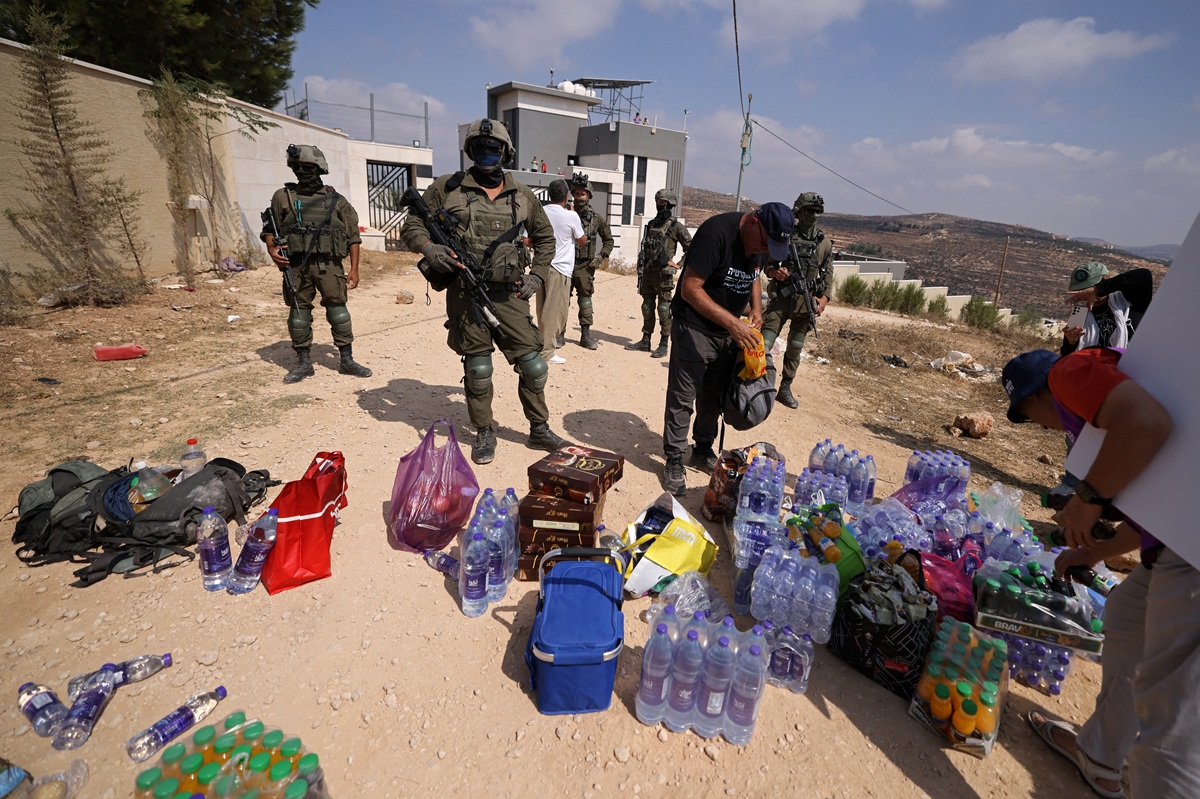
The presence of new Israeli settlements in the West Bank is increasingly constricting the living space of Palestinian residents. In several areas, residents are not only losing access to agricultural land but also facing movement restrictions, evictions and pressure from settlers living around them.
Amin Rahal, 31, and his three brothers stopped working for several weeks. They took turns guarding the family’s remaining land on a hill in the West Bank to anticipate the arrival of Israeli settlers from a new settlement area near their home.
“We never leave this place unless two people remain here,” Rahal told AFP.
He pointed to prefabricated houses belonging to settlers that were recently installed about 100 metres from his home. According to Rahal, since the settlers arrived, chickens have been stolen, olive trees damaged, plants in the yard affected by all-terrain vehicles, and settler livestock have entered his family’s yard.
Last week, settlers from the new Emek Dotan settlement below Rahal’s house strung a rope across his land. They prohibited Rahal and his family from crossing that boundary. Beyond the rope are a chicken farm and several olive trees belonging to Rahal’s family. The land is now inaccessible to them because they fear violence.
“We are afraid they will attack the children, burn one of the houses, attack us at night, and enter the house. Such things have already happened in other villages in the West Bank when settlers arrived,” he said.
Rahal’s story reflects a situation that is occurring more frequently in the West Bank. The United Nations Office for the Coordination of Humanitarian Affairs (OCHA) recorded an average of six incidents involving Israeli settlers every day throughout 2026. These incidents include theft, vandalism, arson, beatings and killings. Palestinian residents also complain that many cases of violence against them do not result in punishment.
The northern West Bank was previously relatively calmer because there were fewer Israeli settlements in the area. That situation began to change after several settlement sites that had been evacuated in 2005 were redeveloped. Four settlements—Homesh, Sa-Nur, Ganim and Kadim—were previously evacuated under the disengagement plan implemented by former Israeli Prime Minister Ariel Sharon. The move was intended to create a more unified Palestinian space in the West Bank.
However, under the current government of Prime Minister Benjamin Netanyahu, these sites have again become targets for settlement development. The Israeli government approved a plan in December to legalise 17 additional settlements in the northern West Bank. The plan is also directed at connecting those settlements.
This development has again raised issues related to the Oslo Accords, which were part of the Israeli-Palestinian peace process in the 1990s. Israeli Finance Minister Bezalel Smotrich, who is also a settler, has repeatedly called for the Oslo Accords to be annulled.
Outside East Jerusalem, which Israel has annexed, around 500,000 Israeli settlers now live in the West Bank. The territory has been occupied by Israel since 1967 and is home to around three million Palestinians.
The changing situation is increasingly felt around Jenin. In that city, an Israeli military base has been established in Area A, a territory that under the Oslo arrangements is under Palestinian control. Residents previously considered Area A and Area B relatively safe from settlement activity. Area B is under Israeli military control, but its civil affairs are managed by Palestinians. Recent developments have begun to change that assumption.
In August, Israeli forces demolished several shops located about 30 metres from the road leading to Ganim and Kadim. In that area, a number of settler caravans have begun to be connected to the electricity grid and occupied by Israeli residents.
Bara al-Damaj, the owner of a stone products shop whose premises was demolished, said he received an order to leave the building immediately before the demolition was carried out. He also said he saw an increase in military presence after a new base was built at the entrance to Ganim.
“They came directly to us and gave an official order to vacate the shop immediately, then immediately destroyed it,” al-Damaj said. “In an instant, they destroyed our dreams,” he continued.
The presence of settlers and the construction of new roads have also changed residents’ access to their land. Mohammed, a local resident who asked that his surname not be used for security reasons, said his son was recently detained and beaten by soldiers while walking in the fields. His family can also no longer access a second plot of land on the other side of the new road leading to the settlement. Several agricultural roads have been blocked with piles of material by military bulldozers. For residents, the severing of roads means the severing of access to Jenin.
In the village of Deir Abu Deif, these conditions have further restricted residents’ activities. Faij Rawajbi, 38, the owner of an agricultural produce shop whose shop was demolished near the road to the settlement, described the change as a situation that threatens residents’ daily lives.
“The situation is very frightening. We are surrounded from all directions,” he said.
Rawajbi also complained about the presence of armed security teams from the settlement who have begun checking residents’ identities. According to him, such actions make the settler security groups appear to act as official authorities.
“This white van terrorises us and the entire eastern Jenin area,” he said as the vehicle passed by.
“Everything here has become a settlement. They have turned our lives upside down,” Rawajbi said.