
Israeli Settlement Outposts Expand, Palestinians Claim Terror and Expulsion
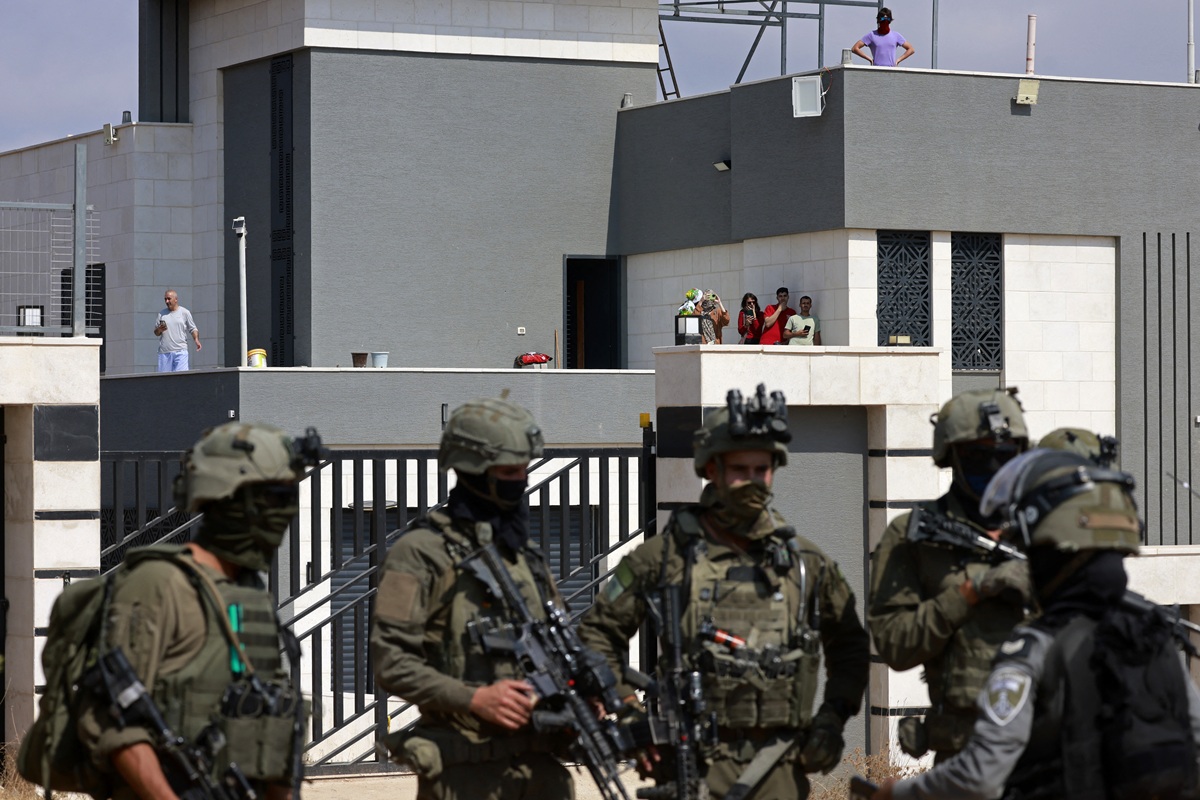
Israeli forces are reportedly increasingly using sieges, violence, and intimidation to pressure Palestinian residents to leave their homes and land in the occupied West Bank, according to a report by Israeli news portal Ynet on Monday (24/8).
Ynet stated that the siege of a Palestinian home in the town of Qusra in the West Bank, which recently drew international attention, was not an isolated incident. According to the report, young Israelis from illegal settlement outposts routinely block access to Palestinian villages and exert pressure on residents to leave the area.
In the past two weeks, Israeli forces, in some cases protected by Israeli military personnel, reportedly besieged three Palestinian homes in Qusra. Access to basic necessities for the families inside those homes was also said to be restricted.
In the village of Jalud, near Nablus, couple Mahmoud and Aida Tubasi said they finally left their home after months of threats and various acts of intimidation. According to the Ynet report, the couple faced arson, stone-throwing, and road blockades. These conditions made them feel it was no longer safe to remain in their home.
“There was no water, no flour, no rice allowed into the village,” Mahmoud Tubasi told Ynet. “We knew it was all over, and we left,” he said.
Although they have left their home, the Tubasi family can still see their residence from a temporary shelter located not far from the site.
Tubasi said settlers had doused his front door with fuel before setting it alight. He also accused settlers of erecting structures near his home, throwing stones at the residence, playing loud music at night, and issuing threats against his family.
“They told us, ‘We will burn you like the Dawabshe family,’” he said.
The threat referred to an arson attack in the village of Duma in the West Bank in 2015. That attack killed an 18-month-old Palestinian child and injured both parents and a four-year-old sibling. Both parents later died from their injuries. Their surviving child suffered burns to around 60 percent of his body and is now in the care of relatives.
Ynet reported that the Tubasi family’s case is part of a broader pattern of violence linked to Israeli settler activity in the West Bank.
According to the report, settlement outposts have been established in several areas that are nominally under Palestinian administration. Local Palestinian residents then face various forms of intimidation and violence aimed at pushing them to leave their homes and land.
Israeli anti-settlement group Peace Now said there are 26 settlement outposts established in Areas A and B of the occupied West Bank. These outposts are said to have taken control of around 100,000 dunams, or approximately 25,000 hectares, of land.
Meanwhile, Israeli human rights group Yesh Din said more than 60 percent of settler violence cases they documented in the first half of 2026 occurred in Areas A and B. In the previous year, around a third of all incidents documented by the group occurred in Area C.
“The deeper the settlement, the deeper the violence,” Yesh Din Research Director Yonatan Kanonich told Ynet.
Documented cases include beatings, stone-throwing, use of Molotov cocktails, shootings, and the burning of homes, vehicles, and agricultural crops.
United States Ambassador to Israel Mike Huckabee recently used strong language when commenting on attacks against Palestinians. “When you engage in activity designed to create fear in individuals, society, or a community, that is the dictionary definition of terrorism,” he said.
Ynet noted that reports of similar intimidation and violence have also emerged from several other Palestinian communities.
One such case occurred in Jaljulia, north of Ramallah. Local residents said the establishment of a settlement outpost around 10 months ago transformed an area that had previously been relatively quiet into a site of repeated attacks. According to residents, armed settlers entered agricultural land, damaged crops, and threatened workers with violence.
The West Bank is divided into Areas A, B, and C under the Oslo II Accord agreed in 1995. Area A is under Palestinian administrative and security control. Area B is under Palestinian administrative control, while security aspects are under Israeli control. Area C, which covers around 60 percent of the West Bank, is under full Israeli control. The situation in the territory continues to be a source of tension, particularly due to settlement activity, violence against Palestinians, and disputes over land control and use.