
Israeli Researchers Unravel Mystery of King Solomon’s Kingdom
Jakarta, CNBC Indonesia – The Prophet Solomon, known as Salomon in Hebrew, is said to have been a prophet of great wealth. The son of the Prophet David is believed to have ruled a kingdom in the area around what is now Israel about 3,000 years ago.
Traces of the kingdom attributed to Solomon drew renewed attention after an Israeli archaeological team discovered a hoard in Jerusalem’s Ophel area in 2012.
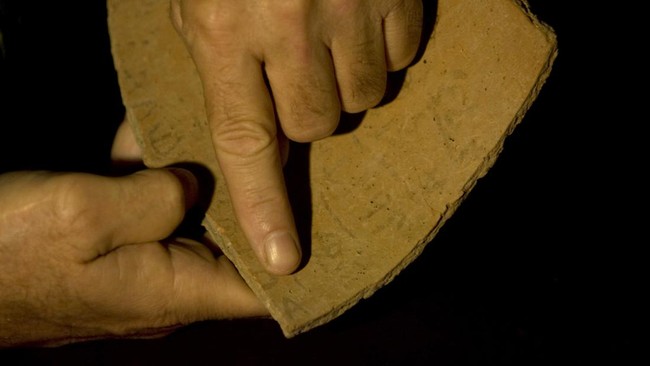
Although the discovery was made more than a decade ago, the meaning of the artefact was only established in 2023. Daniel Vainstub, an archaeologist at the Hebrew University of Jerusalem, deciphered an inscription carved into a fragment from the neck of a jar dating from the rule of King Solomon in ancient Israel.
The inscription on the jar
Over the past ten years, more than ten researchers have proposed interpretations of the word engraved on the jar’s neck, but none won agreement among other experts.
According to Live Science, in a study published in the Jerusalem Journal of Archaeology, Dr Daniel Vainstub said the inscription means “five ladanum”.
“Ladanum” refers to the resin of an aromatic plant used to make incense. The plant is labdanum, or Cistus ladanifer.
Dr Vainstub said the inscription was written in the ancient South Arabian script, in the Sabaean language. Sabaean was commonly used in biblical times in the Arabian Peninsula, particularly in the Kingdom of Sheba, in what is now Yemen.
Archaeologists believe this is the oldest inscription in ancient South Arabian script discovered in Israel.
Alongside the “Ladanium 5” jar fragment, experts found six other large jars during excavations at Ophel in Jerusalem in 2012. The fragments are believed to date from the 10th century BC.
In their research report, the researchers said the jars point to a “clear connection” between King Solomon and the Kingdom of Sheba, which played an important role in cultivating plants used to produce perfume and incense.
At the same time, Solomon’s kingdom controlled trade routes across the Negev desert to Mediterranean ports, where goods were exported.
“Deciphering the inscription on this jar teaches us not only about the presence of a Sabaean speaker in Israel during the time of King Solomon, but also about the system of geopolitical relations in our region at that time,” Vainstub said.