
Israeli Researchers Unravel Mystery of King Solomon's Kingdom
King Solomon is recognised in the three major Abrahamic religions—Islam, Judaism, and Christianity—as an immensely wealthy and wise ruler blessed with the ability to communicate with animals and command jinn. His kingdom is believed to have been located in what is now modern-day Israel, where he is thought to have reigned approximately 3,000 years ago.
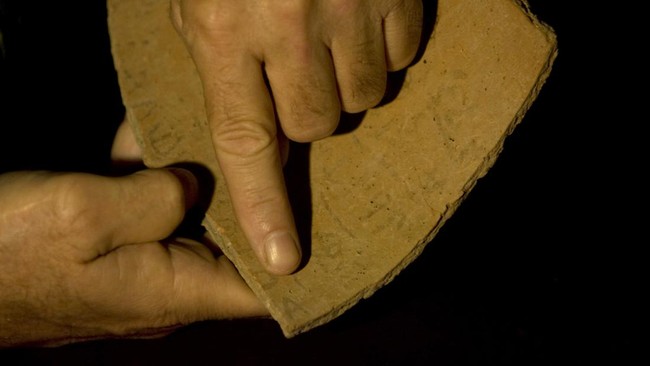
An excavation project by a team of Israeli archaeologists in the Ophel area of Jerusalem in 2012 unearthed a treasure trove of artefacts from the era of King Solomon’s kingdom. Although discovered over a decade ago, archaeologists only managed to solve the riddle of the artefact’s meaning in 2023. Dr Daniel Vainstub, an archaeologist from the Hebrew University of Jerusalem, successfully deciphered the word inscribed on a fragment of a jar neck from the administration of King Solomon in ancient Israel.
For ten years, more than ten researchers proposed meanings for the word carved into the jar neck, yet none were deemed suitable or approved by other experts. According to a study published in the Jerusalem Journal of Archaeology, Dr Vainstub revealed that the word inscribed on the jar neck means ‘Ladanium 5’. This term refers to the aromatic plant resin labdanum, derived from Cistus ladanifer, which was used to make incense or frankincense.
Dr Vainstub explained that the writing was carved using Ancient South Arabian script in the Sabaean language. This language was commonly used during the Biblical era on the Arabian Peninsula, specifically in the Kingdom of Sheba, which is now Yemen. The inscription is believed by archaeologists to be the oldest text written in Ancient South Arabian script ever found in Israel.
In addition to the ‘Ladanium 5’ jar fragment, experts also discovered six other large jars during the 2012 excavation at Ophel in Jerusalem. These jar fragments are believed to date back to the 10th century BCE. In their research report, the scholars consider these jars as indicating a clear connection between King Solomon and the Kingdom of Sheba, which played a crucial role in cultivating the plants needed to produce perfume and incense. At the same time, Solomon’s Kingdom controlled the trade routes crossing the Negev desert towards Mediterranean docks, from where goods were exported.
‘Deciphering the inscription on this jar teaches us not only about the presence of a Sabaean speaker in Israel during the time of King Solomon, but also about the geopolitical relationship system in our region at that time,’ Dr Vainstub stated.
Source: jawawa.id (https://jawawa.id/newsitem/israeli-researchers-unravel-mystery-of-king-solomons-kingdom-1780624271)
Originally published by CNBC Indonesia (https://www.cnbcindonesia.com/lifestyle/20260604142117-33-740153/peneliti-israel-temukan-misteri-kerajaan-nabi-sulaiman), translated from Indonesian